Do Trees Release Electric Sparks In Thunderstorms Study Reveals
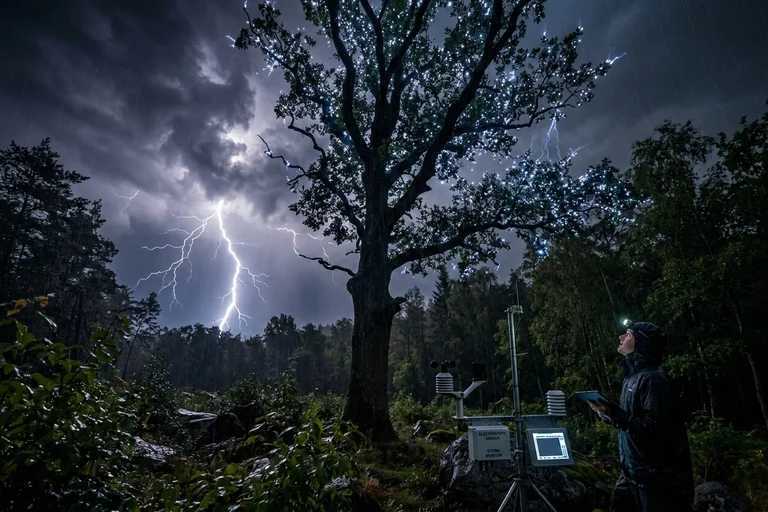
Have you ever looked at a forest during a burgeoning thunderstorm and wondered what those silent giants actually do as lightning streaks across the sky? Since childhood, we’ve all heard the warning: never stand under a tree during a storm. While that remains vital safety advice, a groundbreaking 2026 scientific study adds a shocking new dimension: trees release electric sparks during thunderstorms.
These sparks aren’t just a curious visual phenomenon. They represent a hidden, sophisticated process in which trees interact with the atmosphere, helping clean the air and influencing climate chemistry, a natural system humanity is only now beginning to understand.
The Invisible Release Electric Sparks: How Forest Coronae Work
What Are Forest Coronae?
Scientists use the term forest coronae to describe the faint electric fields that form around tree branches during thunderstorms. These fields develop when small electrical discharges, much weaker than lightning occur. They happen when the electric charge between storm clouds and the surface of the trees becomes strong enough to trigger them.
Blue Glow
Most of these sparks occur in the ultraviolet range, invisible to the human eye. While we don’t see forests glowing during thunderstorms, the energy is real and measurable with sensitive instruments.
The Physics of Sparks
Storm clouds carry immense electrical charge. Trees, with their height, moisture, and conductive bark, act as natural conductors. When the voltage difference reaches a critical point, tiny sparks jump from leaf tips or branches, balancing electric fields in the surrounding atmosphere.
Trees act as Natural Air Purifiers
The Role of Hydroxyl Radicals (OH)
One of the most remarkable things about these sparks is their chemical effect. When trees interact with storm electricity, they trigger reactions that create hydroxyl radicals—molecules often called the atmosphere’s detergents. These radicals break down greenhouse gases like methane and volatile organic compounds (VOCs), which helps reduce their heat trapping impact.
Dense forests make this effect even stronger. They create more tiny electrical discharges, which boosts air purification. In cities, trees can also improve local air quality by interacting with storm generated electric fields, although the impact is usually smaller.
Clarifying the Spark Misconception
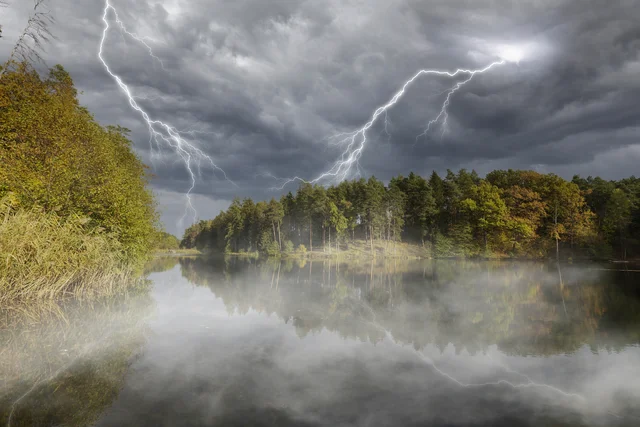
When we hear that trees release electric sparks, our minds often jump to images of crackling firework displays or visible lightning bolts shooting from branches. However, to understand the 2026 research correctly, we must look at the microscopic reality. This phenomenon is far more subtle and sophisticated than a simple flash of light.
What Sparks Really Mean in Nature
In reality, trees release electric sparks in the form of tiny electrical corona discharges. These are not “literal” sparks that you could use to light a match. Instead, they are energetic bursts occurring at a molecular level.
- The Role of VOCs: Trees naturally emit volatile organic compounds (VOCs), such as isoprene.
- Chemical Interaction: During a thunderstorm, the intense electrical field causes these VOCs to interact with nitrogen oxides (NOx) already present in the atmosphere.
- The Generation of Hydroxyls: This interaction, triggered by the “corona discharge,” creates the life saving hydroxyl radicals we discussed earlier.
Not a Fire Hazard
Many people think that if trees release electric sparks, they could start a forest fire. In reality, these sparks are cold, as noted in a scientific analysis on Earth.com. They have enough energy to break chemical bonds in the air effectively cleaning it, but they don’t generate the heat needed to ignite anything.
This shows that the forest isn’t sparking like a faulty wire. Instead, it acts as a massive, silent, and safe chemical reactor. Understanding this distinction is key to appreciating how ecosystems naturally manage and purify the air around them.
Research and Scientific Authority
Scientific insight into this process comes from researchers at Penn State University, particularly in the Department of Meteorology and Atmospheric Science. Scientists like William Brune have studied how forest emissions and electrical fields interact to produce hydroxyl radicals.
Using field towers, atmospheric sensors, and laboratory measurements, they analyze how tree emissions interact with storm electricity and pollutants. This work highlights the multidisciplinary nature of the phenomenon, combining forest ecology, atmospheric chemistry, and electrical physics.
The term electric sparks actually refers to corona discharges, not lightning. When these discharges interact with hydroxyl radical chemistry, they play a key role in cleaning the air and driving climate related chemical processes. This research shows that forests are more than just carbon sinks—they are active participants in maintaining the chemistry of our atmosphere.
Nature’s Shield: How Trees Survive Electrical Discharges
A natural question comes up when we hear that trees release electric sparks during thunderstorms: why don’t they get damaged? Over millions of years, forests have developed built in surge protectors that handle these tiny sparks. This adaptation lets trees help clean the atmosphere without harming themselves.
Biological Surge Protection
The secret to this resilience is in the tree’s physical structure.
- Protective Bark: The thick, rugged bark of most trees acts like a natural insulator. It shields the tree’s internal vascular system, which carries water and nutrients, from being affected by external electric fields.
- Moisture Management: During a thunderstorm, a thin layer of rainwater often coats the tree. This water acts as a bypass, allowing the electrical energy to travel along the surface of the tree rather than through its sensitive core.
- Branch Architecture: A tree’s branching pattern helps spread electrical energy safely into the air. Rather than concentrating it at a single point, the energy is distributed across thousands of leaves, reducing any risk of damage.
Species Variation: Broadleaf vs Conifers
While all trees participate, the frequency of these “sparks” varies widely between species.
Conifers (Pine and Fir): Because they have needle like leaves, they produce intense, concentrated sparks at the tips. They are like the high voltage workers of the forest.
Broadleaf Trees (Oak and Maple): Recent data shared by Earth.com suggests that broadleaf trees may actually produce more frequent corona discharges in total. This is due to their complex structural properties and the vast amount of jagged leaf edges, which provide more “exit points” for the electrical charge
The Evolutionary Advantage
Why would nature allow trees to release electric sparks in the first place? Some biologists believe this is a symbiotic relationship. By cleaning the air of harmful pollutants and volatile organic compounds (VOCs), the trees are essentially maintaining the very atmosphere they need to breathe. By evolving to handle these sparks safely, trees have become the ultimate guardians of our planet’s air quality.
The Future of Climate Science
This discovery doesn’t just sit in a lab; it fundamentally changes how we predict the future of our climate. For years, climate models had a missing piece. Scientists couldn’t quite explain how the atmosphere cleaned itself so efficiently in certain regions. Now that we know trees release electric sparks during thunderstorms, we have the answer.
Rewriting the Climate Models
Methane Reduction: Because trees release electric sparks that create hydroxyl radicals, they are much better at removing Methane than we previously thought. This means preserving old growth forests is even more critical for slowing down global warming.
Urban Planning: If trees act as natural air purifiers through these micro sparks, then planting “Electric Forests” in polluted cities could be a revolutionary way to scrub urban smog.
The Storm Factor: As global temperatures rise, thunderstorms are becoming more frequent and intense. Ironically, this might mean that forests will spark more often, potentially increasing their air cleaning capacity as a natural feedback loop.
A Final Insight from the Experts
According to ongoing analysis on Earth.com, researchers are now examining whether different climates, such as tropical rainforests versus temperate woodlands, produce different levels of “electrical cleaning.” This data will help governments decide which areas of the world need the most protection to keep our air breathable
In the end, the 2026 study from Pennsylvania State University offers a humbling lesson: nature is far more complex than we often realize. We once thought of a tree as just a plant rooted in the ground, but now we understand it as an active player in maintaining the planet’s electrical balance.
Every time a thunderstorm rolls in and trees release sparks of electricity, a silent, invisible battle against pollution takes place. These tiny corona discharges are nature’s way of keeping the air fresh and the climate in check. While you should still follow the age old advice and avoid standing under a tree during a lightning storm, you can now look at those “silent giants” with a newfound respect. They aren’t just surviving the thunderstorm; they are using it to save the world, one tiny spark at a time.
Understanding how trees release electric sparks is incredible, but knowing how to stay safe near them is even more important. Read more in our latest & detailed blog :
Thunderstorm Safety Tips Experts RevealFAQS
Q1. Are the electric sparks from trees dangerous to humans?
Ans. No, these sparks are actually “cold” molecular discharges that occur on a microscopic scale. They are strong enough to break down air pollutants but don’t generate enough heat to cause shocks or start fires.
Q2. How do electric sparks from trees help clean the air?
Ans. When trees release electric sparks, they create hydroxyl radicals, which act as “atmospheric detergents.” These molecules react with greenhouse gases like methane and nitrogen oxides, effectively scrubbing the air clean.
Q3. Can we see tree sparks with a normal phone camera?
Ans. No, these electrical discharges happen in the ultraviolet (UV) spectrum, which is invisible to both the human eye and regular cameras. Scientists rely on specialized UV telescopes to detect the faint blue “aura” surrounding the forest.