
Bamboo Plant 10 Surprising Benefits For Sustainable Living
The global conversation around climate change is no longer just about awareness; it is about action. As consumers in the United States, Europe, and other regions are actively looking for ways to reduce their carbon footprint, one powerful natural solution they are turning to is the bamboo plant. Often dismissed as a simple decorative grass, this resilient species is actually a powerhouse of regeneration. It offers a blueprint for how we can transition from an a take-make-waste economy to a truly circular, sustainable lifestyle.
Growing the bamboo plant isn’t just a trend for the eco-conscious; it is a strategic necessity. Whether it’s through replacing single-use plastics or serving as a carbon negative building material, bamboo is the ultimate renewable resource. In this deep dive, we explore ten surprising benefits of this “green gold” and examine why it is becoming the cornerstone of sustainable development across the globe.
Why Bamboo Plant Is Considered a Sustainable Resource
Before we explore its benefits, we first need to understand what makes bamboo so unique and why it stands out from other plants.
Unlike traditional timber, bamboo can grow up to 35 inches per day in ideal conditions. Most species mature within 3–5 years, while hardwood trees can take decades. Even better, harvesting bamboo doesn’t kill the plant because it naturally grows back from its root system.
According to the Food and Agriculture Organization (FAO) of the United Nations, bamboo plays a significant role in land restoration, rural livelihoods, and sustainable industry development. This makes it not just a plant, but a climate-smart solution.
10 Powerful Benefits Of Bamboo Plants
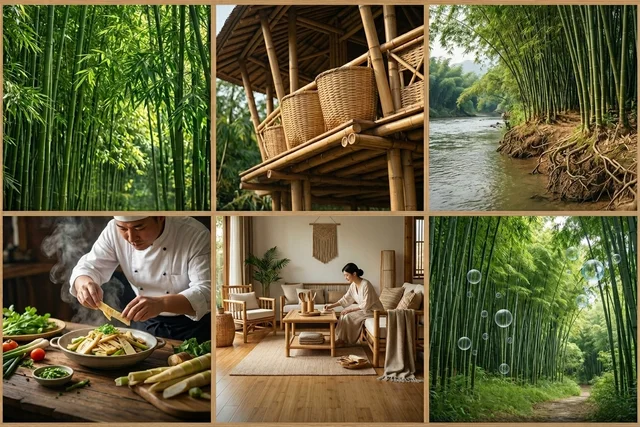
Here are 10 benefits of bamboo plants for sustainable living.
1. Powerful Carbon Absorption
The most significant environmental contribution of the bamboo plant is its ability to heal the atmosphere. While most trees take decades to reach a size where they can absorb significant CO2, bamboo starts working immediately. According to a verified report by the International Bamboo and Rattan Organization (INBAR), bamboo can sequester more carbon than many hardwood forests.
Specifically, a well managed bamboo grove can absorb up to 12 tons of carbon dioxide per hectare per year. For a global audience concerned with Net Zero goals, planting bamboo is one of the most effective ways to offset industrial emissions. It releases roughly 35% more oxygen into the air than an equivalent stand of trees, making it a literal “lung” for our planet.
2. Record Breaking Growth Without Chemicals
Sustainability depends on how quickly a resource can naturally replace or regenerate itself. The bamboo plant is the fastest-growing plant on Earth. Certain species, like 450 mm moso bamboo, can grow nearly 3 feet in just 24 hours. Unlike traditional timber (which requires 20–50 years to mature) or cotton (which demands heavy pesticide use), bamboo reaches full maturity in just 3 to 5 years.
Because it contains a natural bio-agent called bamboo kun, the plant is inherently resistant to pests and fungi. This means it grows organically without the need for toxic chemical fertilizers or pesticides that often contaminate groundwater in large-scale farming.
3. Soil Restoration and Preventing Erosion
Modern agricultural practices in the Midwestern US and parts of Europe have led to severe soil degradation. The bamboo plant offers a biological solution. Its extensive, shallow root system (rhizomes) acts like a natural net, binding the soil together. This makes it incredibly effective at preventing soil erosion, especially on sloped land or riverbanks prone to flooding. Furthermore, bamboo can grow in “marginal lands,” soil that has been stripped of nutrients, and slowly restores its fertility by shedding organic leaf mulch.
4. Water Conservation and Bio-Filtration
In regions facing water scarcity, such as California or parts of Australia, bamboo is a much more responsible crop than cotton or sugarcane. It requires significantly less irrigation to thrive. Beyond consumption, the bamboo plant acts as a natural water purifier. Its root system filters out excess nitrogen and heavy metals from the soil, preventing these pollutants from reaching deep-water aquifers. Urban planners now use this natural “phytoremediation” ability to clean and recycle greywater in sustainable city projects.
5. Using Bamboo as an Eco-Friendly Construction Material
Bamboo is now widely used in sustainable architecture. It is lightweight yet strong, in fact, its tensile strength rivals steel in certain applications.
Modern architects use bamboo for the following:
- Eco homes
- Flooring
- Roofing
- Wall panels
- Bridges
It reduces reliance on high-emission materials like concrete and steel, making it essential for green building projects
6. Bamboo Plant: The Future of Sustainable Textiles
The fashion industry is notorious for being the world’s second largest polluter. However, bamboo fabric is changing that narrative. By manufacturers, bamboo cellulose is processed to create a fabric that feels softer than silk and is more breathable than cotton.
For the global consumer, this fabric offers natural UV protection and moisture-wicking properties. Because the fabric is biodegradable, a bamboo T-shirt won’t sit in a landfill for 200 years like a polyester one; it will return to the earth, completing the cycle of sustainability.
7. Natural Strength: The Green Steel of Architecture
Architects in Colombia and Bali have long dubbed bamboo “green steel.” Its tensile strength (the ability to resist being pulled apart) is actually higher than that of mild steel. For modern sustainable living, engineered bamboo is now being used to create earthquake-resistant buildings and bridges. Using bamboo in construction reduces the demand for cement and steel, two industries responsible for nearly 15% of global CO₂ emissions.
8. Antibacterial and Hypoallergenic Benefits of Bamboo
One of the most practical benefits for the modern home is bamboo’s natural hygiene. The “Bamboo Kun” mentioned earlier remains present even after the plant is processed into towels or cutting boards. Bamboo naturally resists odor-causing bacteria. For families in the UK and North America, bamboo bedding and clothing offer a hypoallergenic haven, keeping them safe from dust mites and the chemical residues often found in synthetic fabrics.
9. Biodiversity and habitat protection for sustainable Bamboo
Choosing bamboo over traditional wood helps protect old-growth forests. By building a commercial market for bamboo, we reduce the demand for logging ancient rainforests in the Amazon and Southeast Asia. Bamboo forests also serve as vital habitats for thousands of species, not just pandas, but also rare birds and beneficial insects, supporting global biodiversity.
10. Economic Empowerment for Rural Communities
Sustainability isn’t just about protecting the environment,it’s also about supporting people. The Bamboo Economy offers rural farmers across the Global South a steady source of income. Since bamboo can be harvested every year without killing the plant it simply regrows from its roots, it provides a perpetual harvest. This allows small scale farmers to join the global green trade, improving their communities livelihoods while preserving their local landscapes.
Global Trends: Where Bamboo is Leading the Way
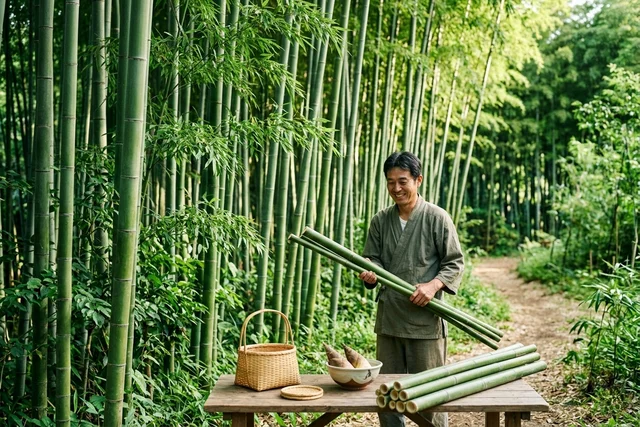
The move toward bamboo isn’t limited to one region; it’s a global movement.
- Europe: In countries such as Germany and the Netherlands, bamboo has become the preferred material for high-end, sustainable flooring and decking, replacing tropical hardwoods that drive rainforest deforestation.
- North America: In the USA and Canada, the Zero Waste movement has turned bamboo household products, such as toothbrushes, kitchenware, and toilet paper into a multi-billion-dollar industry.
- Asia: Countries like China and Vietnam are leading the way in industrial bamboo, using it to produce everything from wind turbine blades to eco-friendly drainage pipes.
The Growing Role of Bamboo in 2026
As governments promote sustainable development goals and consumers embrace eco-friendly lifestyles, bamboo is emerging as a key strategic resource.
Countries across Asia, Africa, and Latin America are investing in bamboo industries to cut emissions and drive green growth. Climate-conscious builders and designers increasingly choose bamboo for its low carbon footprint.
Bamboo is no longer just a traditional material; it’s becoming a cornerstone of the future green economy.
As we face a future of limited resources, bamboo plants offer limitless possibilities. Its fast growth, ability to capture carbon, and versatility in manufacturing make it one of the most powerful tools for sustainable living.
From the sustainable fashion runways of Paris to eco-friendly homes in Seattle, one trend stands out: bamboo is shaping the future. By bringing this remarkable plant into our homes and industries, we’re not just making a green choice; we’re helping keep the planet vibrant and livable for generations. The shift toward a circular economy is a journey, and few allies are as resilient and versatile as bamboo.
Read more related blogs: https://www.climatechallange.com/10-benefits-of-planting-trees-for-a-greener-healthier-environment/
FAQS
Q1. Why is bamboo considered better than wood for sustainability?
Ans. Bamboo grows much faster than hardwood trees and regenerates naturally after harvesting. This reduces deforestation and supports renewable material cycles.
Q2. Which countries are leading the bamboo sustainability trend?
Ans.While China is the global leader in bamboo production, the trend is exploding in the United States, Germany, and the Netherlands. These regions are adopting bamboo for eco-friendly construction, zero-waste packaging, and sustainable fashion to meet strict carbon-neutrality goals.