Clover Lawn Benefits, Care Tips, And Why It’s Trending In 2026
For decades, the American Dream garden was defined by a perfectly manicured, chemical-dependent carpet of Kentucky bluegrass. But as we move through 2026, the tide is officially turning. Homeowners are swapping out their thirsty, high-maintenance turf for something greener, literally and figuratively. Enter the Clover Lawn, the ultimate sustainable landscaping trend that has taken the gardening world by storm this year.
If you’ve been scrolling through social media lately, you’ve probably seen these lush, soft, and super-green yards. They look amazing, but the best part isn’t the look; it’s how little work they require. A clover lawn is basically nature’s way of giving you a break. It stays green when the grass dies, it doesn’t need chemicals, and it actually helps the environment. Whether you want to save money or just want a yard that doesn’t feel like a chore, switching to this eco-friendly grass alternative is a total game changer.
What is a Clover Lawn?
When we talk about a clover lawn, we don’t mean the random weeds you usually pull out of your flower beds. Instead, we’re referring to a deliberately grown, thick carpet of legumes, usually white clover or the increasingly popular microclover.
Before the 1950s, people actually included clover as a standard ingredient in high quality lawn seed mixes. Later, chemical companies began selling weed killers, and clover developed a bad reputation because those products killed everything except grass. Now, as we move into 2026, many people are realizing that clover was actually the beneficial plant all along. You can grow a pure clover lawn or mix clover into your existing grass to enjoy the best of both worlds.
Why the Clover Lawn is the Biggest Trend of 2026
It’s not just about saving money; it’s about a lifestyle shift. In 2026, more people are moving toward sustainable gardening. We are realizing that a perfect lawn shouldn’t come at the cost of the environment.
It’s a living fertilizer: This is the coolest part. Clover has a superpower called nitrogen fixation. It actually pulls nitrogen from the air and releases it into the soil. As a result, it feeds itself and even nourishes the grass growing around it. That means you can finally say goodbye to those heavy bags of chemical fertilizer.
Drought? No Problem: Traditional grass uses a lot of water, but clover grows deep roots that reach moisture far below the surface. Even during a hot 2026 summer, while your neighbor’s lawn turns dry and brown, your clover yard will likely stay bright green.
Built in Weed Control: Because clover grows in thick, dense clumps, it doesn’t leave any room for bad weeds (like crabgrass) to move in. It’s like having a natural mulch that stays green and soft.
Supporting the Local Ecosystem: One of the biggest reasons clover lawns are making a comeback is the benefit they provide to bees. Traditional grass offers no food for pollinators, but clover produces tiny flowers that act like a five-star buffet for honeybees and butterflies. If you’re worried about stings, you can simply mow the lawn before the flowers bloom. However, many eco-conscious homeowners choose to let the flowers grow so they can help support the bee population
The Rise of Micro clover: This is a major sub-trend. Micro clover is a special variety that grows shorter, has smaller leaves, and spreads more evenly than regular white clover. It gives your lawn a neat, manicured look while still offering all the low-maintenance benefits.
Let’s Get Real: Clover Lawn Pros and Cons
The Pros
I want to be completely honest, while I love clover lawns, they might not be perfect for everyone. Here’s a quick breakdown to help you decide:
Stays Green All Year: In many climates, clover stays green far longer than grass, both in winter and during hot summer peaks.
Pet Friendly: If you have dogs, you know the struggle with yellow spots on the lawn. Clover resists dog urine, keeping your yard lush and green even with pets running around.
Cost Effective: Clover seeds are usually cheaper than premium grass seeds, and since you don’t need fertilizer, the long-term savings are significant.
The Cons:
Durability: Clover is soft and comfortable, but it isn’t as tough as some grasses. If your backyard sees daily football games or heavy foot traffic, a pure clover lawn might get trampled.
Staining: Its lushness can make clover more likely to stain clothes compared to regular grass if you’re sliding or playing on it.
What the Experts Say (The Science Bit)
To show just how effective clover really is, consider the data from the Natural Resources Conservation Service (NRCS). Their research on soil health shows that legumes like clover have a special symbiotic relationship with bacteria. These bacteria live in the clover’s roots and fix nitrogen from the air, converting it into a form that plants can actually use.
In fact, studies often show that a healthy stand of clover can provide the equivalent of 2 to 3 pounds of nitrogen per 1,000 square feet every year. This is why a clover lawn stays so vibrant without you ever touching a bottle of chemical fertilizer. It’s literally a self-feeding ecosystem.
How to Start Your Clover Lawn (A Simple Step by Step Guide)
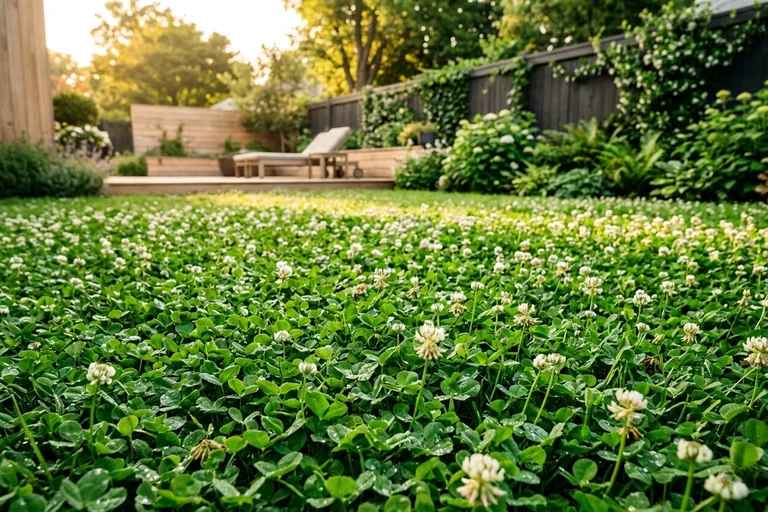
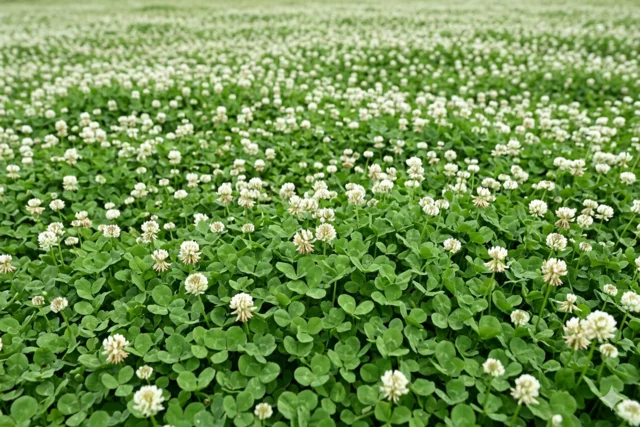
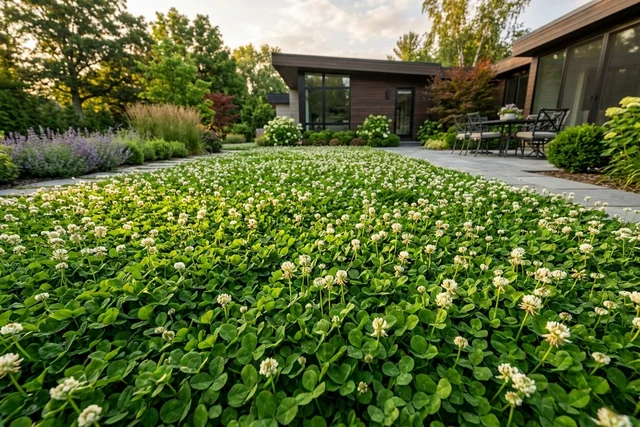
Lush white clover lawn with blossoms, a 2026 sustainable gardening trend
Ready to Make the Switch? Whether you want to replace your entire lawn or simply add clover to your existing grass, the process is surprisingly easy. You don’t need heavy machinery or a degree in botany, just the right timing and some quality seeds.
Here is how you can get your clover lawn growing:
1. Pick Your Timing:
In the gardening world, timing is everything. For most of us, the best time to plant clover is in early spring (after the last frost) or early fall. You want the weather to be cool and the soil to be moist so the seeds can settle in comfortably.
2. Prepare the Ground:
You don’t need to dig up your entire yard, unless you’re aiming for a completely pure clover lawn.
If You’re Mixing with Grass: Mow your existing grass very short and rake away any dead debris.
If You’re Starting Fresh: Remove weeds and lightly loosen the top inch of soil with a rake. Since clover seeds are tiny, they need direct contact with the soil to germinate.
3. The Sowing Secret (Don’t skip this)
Clover seeds are as small as grains of sand, which makes them hard to spread evenly by hand. Here’s a pro tip: mix the seeds with some dry sand or sawdust in a bucket. This dilutes the seeds, so when you scatter them, you get an even carpet instead of clumpy patches. Simply walk across your yard and spread the mix as evenly as possible.
4. Water is Your Best Friend (At First)
For the first 10 to 14 days, your new clover lawn needs to stay moist. Give it a light misting every day. You don’t want to drown it just keep the soil from drying out. Once you see those cute little green sprouts popping up, you can start cutting back on the watering.
5. Leave it Alone
The Hardest Part: Don’t mow too soon. Let the clover grow until it’s about 3–4 inches tall so the roots can strengthen. Once it’s established, you’ll find yourself spending far more time relaxing in your hammock and much less time behind the lawnmower.
Common Myths About Clover Lawns (Setting the Record Straight)
Even though planting a clover lawn is probably the smartest gardening move you can make in 2026, some people are still hesitant. Most of the hesitation comes from old myths dating back to the 1950s that just won’t go away. If you’re worried about neighbors gossiping or your yard looking unkempt, let’s set the record straight with some real facts.
Misconception no 1: Wait, isn’t a clover lawn just a bunch of weeds?
This is the biggest hurdle for most people. For decades, chemical companies spent millions on ads convincing us that any plant with a round leaf was a “weed.” In reality, clover was a standard part of high-quality lawn seed mixes until the 1950s. Calling it a weed is like calling a vintage car “junk” it’s actually a classic making a comeback. Unlike true invasive weeds, such as crabgrass or dandelions, clover is a beneficial legume that grows well alongside other plants.
Myth no 2: Will a White Clover lawn attract an army of bees?
It’s true that honeybees love the nectar in white clover flowers, which is fantastic for the environment! But if you have kids running around barefoot and worry about stings, there’s no need to panic. You can still enjoy a clover lawn without constant buzzing. Simply mow your lawn once every couple of weeks to clip the flower heads before they open. Or even better, choose micro clover, a special variety that produces very few flowers while keeping all the green, lush benefits.
Myth no 3: Is Clover Lawn maintenance harder in the winter?
Actually, clover is often easier to manage than you think. Many people assume it will just vanish and leave a muddy mess when temperatures drop. While clover may go dormant basically sleeping through the winter, it’s incredibly hardy. Its dense root system holds soil together better than traditional grass, preventing erosion and keeping your yard from turning into a swamp during messy spring thaws.
Myth no 4: Clover will take over my flower beds and ruin my garden?
Clover is a clumping plant. While it does spread, it’s not an aggressive vine that will climb your house or smother your prize-winning roses. In fact, because it fixes nitrogen, having some clover near your flower beds actually provides free nutrients to your other plants. It’s like having a tiny, invisible gardener working for you around the clock.
Transitioning to a clover lawn is the smartest way to enjoy a lush, green yard in 2026 without the constant stress of maintenance or high water bills. By choosing this sustainable landscaping path, you’re not just saving time and money, you’re creating a healthier, chemical-free space for your family, pets, and the local ecosystem to thrive.