
Future Of Mobility How EVs Are Saving Our Environment
In 2026, global greenhouse gas emissions remain a central climate concern—transportation alone accounts for nearly 24% of CO₂ emissions worldwide, with road transport as the dominant contributor. The future of mobility is now in focus, as nations race to meet net-zero goals and sustainable transport solutions become urgent. Conventional internal combustion engine (ICE) vehicles still dominate roads, but their reign is fading as zero-emission vehicles (ZEVs) and electric mobility surge, marking one of the most important climate transitions of this decade. The push for cleaner, smarter transport isn’t just about convenience; it’s about climate action and healthier urban air for generations to come.
The EV Revolution: From ICE to Electric Power
A Structural Shift in Vehicle Powertrains
The global automotive market is undergoing a landmark transformation. In 2025, global electric vehicle (EV) sales reached 20.7 million units—a 20% increase over 2024—, and forecasts suggest further expansion in 2026, even as growth rates shift by region. China remains the frontrunner, while Europe follows closely, and the United States continues to grapple with policy and price headwinds.
This transition reflects more than consumer preference—it underscores major investments by traditional and new automakers alike in battery electric and plug-in hybrid vehicles. By offering more models—from compact city EVs to electric SUVs—automakers give consumers more choices than ever, helping them rely less on petrol and diesel vehicles that emit high levels of CO₂.
Environmental Impact of EV Adoption
Carbon Footprint Reduction
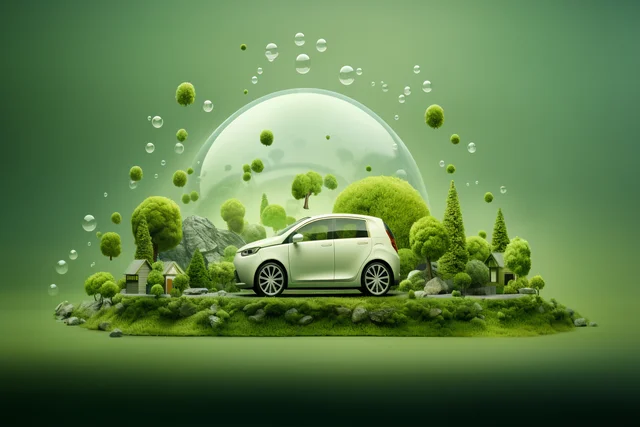
The clearest environmental benefit of EVs lies in their lower lifetime emissions. When powered by electricity—especially from renewable energy sources—electric vehicles can cut lifecycle carbon emissions significantly compared to ICE counterparts. Every time an internal combustion vehicle is replaced by an EV, millions of tonnes of CO₂ are prevented from entering the atmosphere each year.
EVs also play a crucial role in green urban planning by reducing urban smog and local pollutants such as nitrogen oxides (NOₓ) and particulate matter (PM2.5), which have direct health impacts in major cities worldwide, as highlighted by global transport and emissions data from the International Energy Agency (IEA).
EV Battery Life Cycle and Recycling Breakthroughs
One of the most pressing questions surrounding electric mobility is the lifecycle impact of EV batteries. In 2026, innovations in battery recycling are rapidly improving sustainability.
- Closed-loop recovery systems now let us reclaim materials like lithium, nickel, and cobalt from used batteries with high efficiency.
- Techniques such as modular recycling, hydrometallurgical refinement, and AI-assisted robotic disassembly boost material recovery rates and reduce energy use.
These advancements address not only waste but also critical mineral scarcity by reintegrating recovered materials into new battery production—a key component of carbon-neutral transport strategies.
Moreover, some recycling technologies aim for up to 95% material recovery by 2026, vastly reducing the environmental costs associated with mining and manufacturing new battery materials.
Beyond Cars: Electrifying Urban Mobility
Electric Public Transport
Urban planners across Western cities are aggressively electrifying public transport networks. Electric buses and trains are not only cutting urban emissions but also slowing the health toll of traffic pollution. Electrified public transport lets cities move away from private car dependence and toward cleaner, shared mobility.
Micro-Mobility: E-Bikes and Scooters
While cars grab headlines, e-bikes and electric scooters are quietly transforming short-distance travel—especially in dense urban areas. These micro-mobility options:
- Reduce congestion by replacing short car trips.
- Complement public transit.
- Expand access to mobility for people who can’t—or choose not to—drive.
Cities across Europe and the US are building dedicated bike lanes and shared e-scooter parking zones as part of their wider electric vehicle infrastructure plans.
Challenges in Making Transportation Fully Electric
Renewable Energy and the Charging Grid
The environmental benefits of EVs hinge on the source of the electricity they use. Where electricity still comes from fossil fuels, EVs don’t cut emissions as much. Moving to green grids powered by solar, wind, or hydro is crucial.
Utilities and policymakers are investing heavily in grid upgrades and energy storage technologies to support peak electricity demand from EV charging. While progress is promising in Europe and parts of the US, other regions still face infrastructure gaps that slow adoption.
Infrastructure and Consumer Incentives
Despite high sales volumes in some regions, EV adoption isn’t uniform. Policy shifts—such as the phase-out of federal tax credits in the US—have dampened consumer demand in certain markets, illustrating how incentives and regulatory frameworks affect EV growth.
The rise of electric mobility, from passenger vehicles to public transport and micro-mobility, is one of the most potent tools in the fight against climate change. EVs are changing the way we think about transport by cutting carbon emissions, improving city air quality, and driving innovation in sustainable technologies.
Yet the journey isn’t over—it demands continued innovation in battery recycling, grid decarbonization, and supportive policies. If these elements come together successfully, the future of mobility offers not just cleaner roads but a healthier planet.
As we accelerate toward 2030 and beyond, EVs will remain central to a carbon-neutral transport revolution—and a cornerstone of sustainable life on Earth.
Read more related articles: https://www.climatechallange.com/the-environmental-advantages-of-electric-vehicles/
FAQS
Q1. What percentage of new cars will be electric in 2026?
Ans. By 2025, electric vehicles accounted for over a quarter of all new car sales globally, driven mainly by strong growth in Europe and China. In 2026, adoption is expected to keep rising, especially in cities with strict emission rules. The US market is growing steadily, though policy and pricing still influence demand.
Q2. Are EVs truly zero-emission vehicles?
Ans. Electric vehicles produce zero tailpipe emissions, which means no direct CO₂ or air pollutants during driving. However, their overall environmental impact depends on how the electricity is generated. Charging EVs with renewable energy makes them far cleaner than petrol or diesel cars.
Q3. How does EV battery recycling help the environment?
Ans. Modern EV battery recycling recovers valuable materials like lithium, nickel, and cobalt from used batteries. This reduces the need for new mining, which is energy-intensive and harmful to ecosystems. By 2026, advanced recycling technologies will make the EV battery life cycle more sustainable.
Q4. Can electric public transport really reduce emissions?
Ans. Yes, electric buses, trains, and trams significantly cut emissions in crowded urban areas. They also improve air quality by reducing noise and harmful pollutants. When powered by clean energy, electric public transport becomes a cornerstone of carbon-neutral mobility.