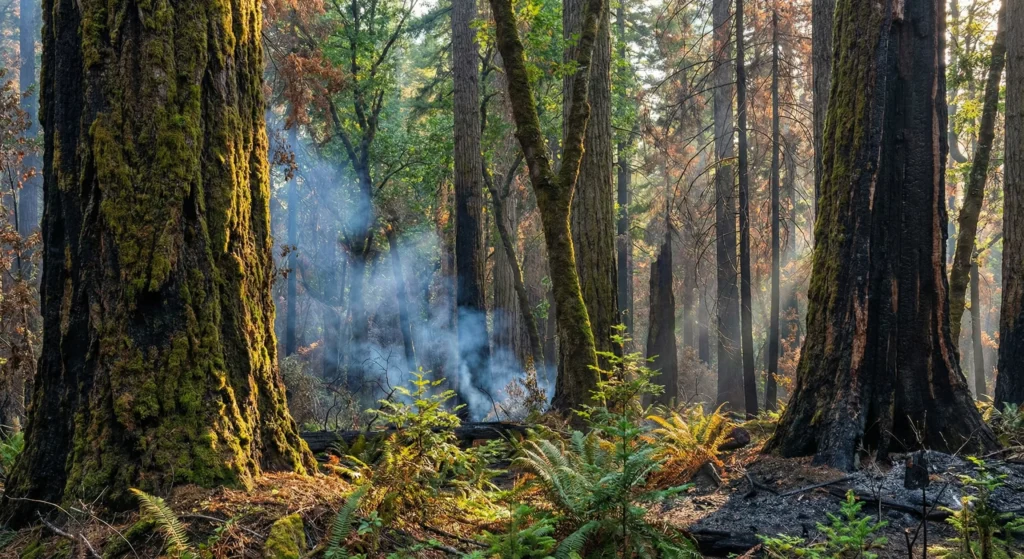
Old Trees And Wildfires What They Teach Us Today
As climate change accelerates, wildfires have become more severe, less predictable, and far more destructive. Yet in the middle of this growing crisis, one source of knowledge has been quietly guiding scientists: old trees. The relationship between old trees and wildfires reveals how forests have survived centuries of burning, how ecosystems naturally regulate fire, and why today’s fires behave so differently from the past.
Modern studies show that wildfires in many regions have become several times more intense than they were historically. This increase isn’t driven only by rising temperatures but also by a huge “fire deficit”—a buildup of fuel caused by decades of suppressing even small, natural fires. To understand how forests once stayed in balance, researchers are now studying ancient trees as living records of past environmental conditions.
Historic Fire Patterns Revealed by Tree Rings
Recent tree-ring research has completely changed what we know about fire history.
A large-scale 2024 analysis across North America found:
A recent tree-ring analysis across North America shows that 1748 remains the largest recorded wildfire year, with burn evidence stretching across nearly 29% of the continent’s forests. Despite this massive scale, these fires behaved very differently from today’s megafires. They moved slowly across the forest floor, burning leaf litter and small vegetation without destroying mature trees. This contrast helps scientists understand that historic fire behavior was far less destructive, even when widespread.
Why Old Trees Survived Historic Fires
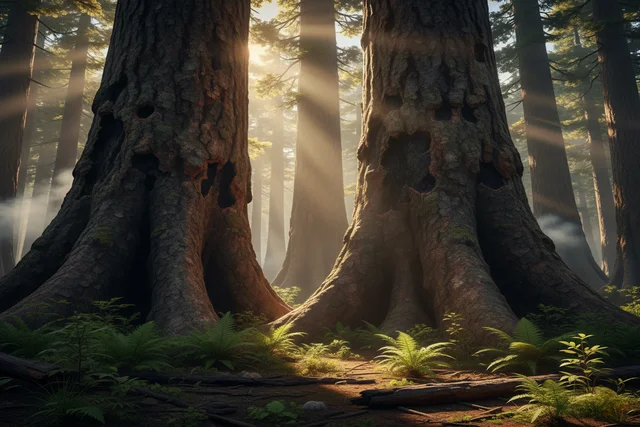
Old trees evolved several adaptations that allowed them to withstand centuries of fire. Thick bark on species like giant sequoias and redwoods insulated their trunks from intense heat, protecting vital tissues. Their high, widely spaced branches reduced the likelihood of flames reaching the canopy, while deep, moisture-retaining root systems helped them survive drought conditions.
Beyond their physical traits, old trees helped stabilize entire ecosystems. They regulated humidity, slowed the spread of fires, and supported plant and animal species that aided forest recovery after burns. This blend of natural defenses and ecological influence explains why ancient forests survived fires that would devastate younger, denser ones.
What Has Changed? Why Fires Are More Extreme Now
Although old trees offer lessons in resilience, today’s wildfires are fundamentally different.
1. A Century of Fire Suppression
For decades, forest agencies extinguished every fire, even small natural ones. This eliminated the ecological “reset” that kept forests clean. As a result:
- Dead wood accumulated
- Dry shrubs formed dense layers
- Fire-intolerant species spread into areas once dominated by fire-adapted trees
This created massive fuel beds that modern fires feed on.
2. Climate Change Intensifies Every Fire
Over the last 5 years, extreme conditions have increased sharply:
In recent years, global temperatures have climbed to record levels, directly influencing wildfire behavior. In 2024, Earth reached its hottest year on record, with average temperatures about 1.6°C above pre‑industrial levels, exceeding the critical 1.5°C threshold for the first time. Scientists project that 2025 will rank as the second- or third-warmest year ever recorded, continuing the long-term warming trend driven by greenhouse gas emissions. This warming amplifies drought and dries fuels, making landscapes far more fire‑prone. Satellite data also shows that the frequency and intensity of extreme wildfires have more than doubled over the past two decades, and the six most severe fire years have all occurred within the last seven years—evidence that hotter, drier conditions are accelerating wildfire risk worldwide.
3. Younger Forests Replace Old Growth
Large wildfires and logging have reduced the proportion of old trees in many regions.
Younger forests:
- Ignite more easily
- Contain denser vegetation
- Burn hotter and faster
This makes modern fires more dangerous than the burns that ancient trees survived.
Lessons From Old Growth: How Nature Manages Fire
Fire Maintains Forest Balance: In many regions, fire is a natural and essential process. Low-intensity surface fires remove dead vegetation, prevent fuel buildup, and promote the growth of fire-adapted species without destroying mature trees.
Fire-Dependent Reproduction: Certain trees, such as lodgepole pines and some eucalyptus species, rely on fire to release seeds from their cones or stimulate new growth. This ensures continuous forest regeneration and biodiversity.
Low-Intensity Fires Build Resilience: Frequent, mild fires strengthen forests by reducing undergrowth density, protecting soil and roots, and allowing old trees to survive repeated burns. This natural cycle reduces the risk of catastrophic megafires
Why Prescribed Burns Are Making a Comeback
Mimicking Natural Fire Cycles:
Prescribed burns are intentionally set under controlled conditions to replicate the natural role of fire in ecosystems. These low-intensity fires remove excess dead wood and reduce fuel loads while leaving mature trees unharmed, helping forests maintain their natural balance.
Protecting Communities from Megafires:
By reducing accumulated vegetation and dry undergrowth, controlled burns minimize the risk of large, uncontrollable wildfires. This practice not only safeguards forests but also protects nearby human settlements from catastrophic fire events.
Restoring Ecosystem Health:
Prescribed fires promote biodiversity by encouraging the growth of fire-adapted species and clearing space for new vegetation. They help recycle nutrients into the soil and create habitats for plants and animals, strengthening overall forest resilience.
Integrating Indigenous Fire Knowledge:
Many Indigenous communities have long used cultural burning practices to manage landscapes safely. These traditional methods, now increasingly integrated into modern forestry, demonstrate how strategic, frequent burns maintain healthy, fire-resilient ecosystems.
Benefits of Old Trees
Studies show that forests containing old trees recover more effectively after fires. Their deep root systems, higher moisture content, and stabilizing canopies moderate the forest floor’s temperature, slow down wind movement, and anchor the soil, making the ecosystem more resilient. They also serve as vital seed sources, allowing new growth to establish more quickly after fire events. Young forests, by comparison, struggle to reorganize after severe burns.
The study of old trees and wildfires offers critical guidance for navigating the challenges of modern fire seasons. Ancient trees reveal how low-intensity, frequent fires once maintained ecosystem balance, why historic burns rarely became destructive, and how old-growth forests foster resilience in the face of climate extremes. While today’s wildfires are more intense and unpredictable, lessons from these ancient giants can inform forest management practices, including controlled burns, protection of old-growth trees, and ecosystem-based planning. By applying these insights, we can enhance wildfire resilience, safeguard biodiversity, and build stronger, more sustainable landscapes for the future.
Read more related article> https://www.climatechallange.com/tropical-tree-deaths-have-increased-in-forest-areas/
FAQS
Q1. Why are old trees important in wildfire-prone areas?
Ans. Old trees have thick bark, deep roots, and high canopies that help them survive fires. They stabilize ecosystems, support wildlife, and provide seeds for forest regeneration, making forests more resilient to wildfires.
Q2. How do prescribed burns help prevent catastrophic fires?
Ans. Prescribed burns reduce accumulated vegetation and dry undergrowth, lowering fuel loads. They mimic natural fire cycles, protect mature trees, and decrease the risk of large, uncontrollable wildfires in the future.
Q3. How do old trees teach us about ecosystem resilience?
Ans. By surviving centuries of fires, old trees reveal how natural fire cycles maintain balance. Their presence helps regulate soil moisture, protect biodiversity, and guide sustainable forest management practices.