
Carbon Footprint Of AI In 2026 The Hidden Impact On Our Planet
In today’s rapidly evolving tech landscape, we often celebrate artificial intelligence for its efficiency and creativity. However, as we step further into the year, a silent crisis is brewing behind the server racks. The carbon footprint of AI in 2026 has reached a tipping point that no one predicted just a few years ago. From the massive cooling systems required for advanced LLMs to the skyrocketing energy demands of global data centers, the environmental cost is no longer “virtual.” If we want to truly understand the real cost of our digital convenience, we must look at the data. In 2026, AI’s carbon footprint is reshaping our climate goals and challenging what sustainable innovation really means.
The question is no longer whether AI impacts the planet—but how we manage it.
The Energy Hunger: Carbon Footprint of AI in 2026 and the Data Center Boom
AI doesn’t actually live in the cloud—it runs inside massive data centers filled with servers operating 24/7. In 2026, these facilities are rapidly expanding across the United States and Europe to meet the growing AI demand from homes, businesses, and governments.
A global electricity shock
As reported by the International Energy Agency (IEA), global electricity consumption from data centers is expected to reach approximately 1,000 terawatt-hours (TWh) by 2026.
That is equal to Japan’s total annual electricity use.
This surge in energy demand has made AI a major player in the climate conversation.
Why this matters for homeowners and cities
In the US and EU, data centers increasingly compete with households for power. Regions once known for affordable electricity are seeing grid stress, higher demand peaks, and rising infrastructure costs. While AI companies benefit from scale, communities bear the consequences.
Key facts worth understanding:
- AI workloads require constant high-power computing, unlike traditional web services.
- Many data centers still rely on fossil-fuel-heavy grids, especially during peak demand.
- In many regions, AI’s energy demand is rising faster than the growth of renewable energy.
This widening imbalance is directly increasing AI’s carbon footprint in 2026, particularly in regions where clean energy adoption has failed to keep up.
Europe vs the United States
Europe faces stricter climate rules, but grid limitations remain. In the US, especially in states like Virginia & Texas, data center clusters are expanding faster than grid upgrades. This growing demand increases reliance on gas and coal during peak periods, ultimately undermining climate commitments.
AI efficiency improvements do exist, but rapid and explosive growth in usage is currently outpacing them.
The Hidden Thirst: Carbon Footprint of AI in 2026 and Water Use
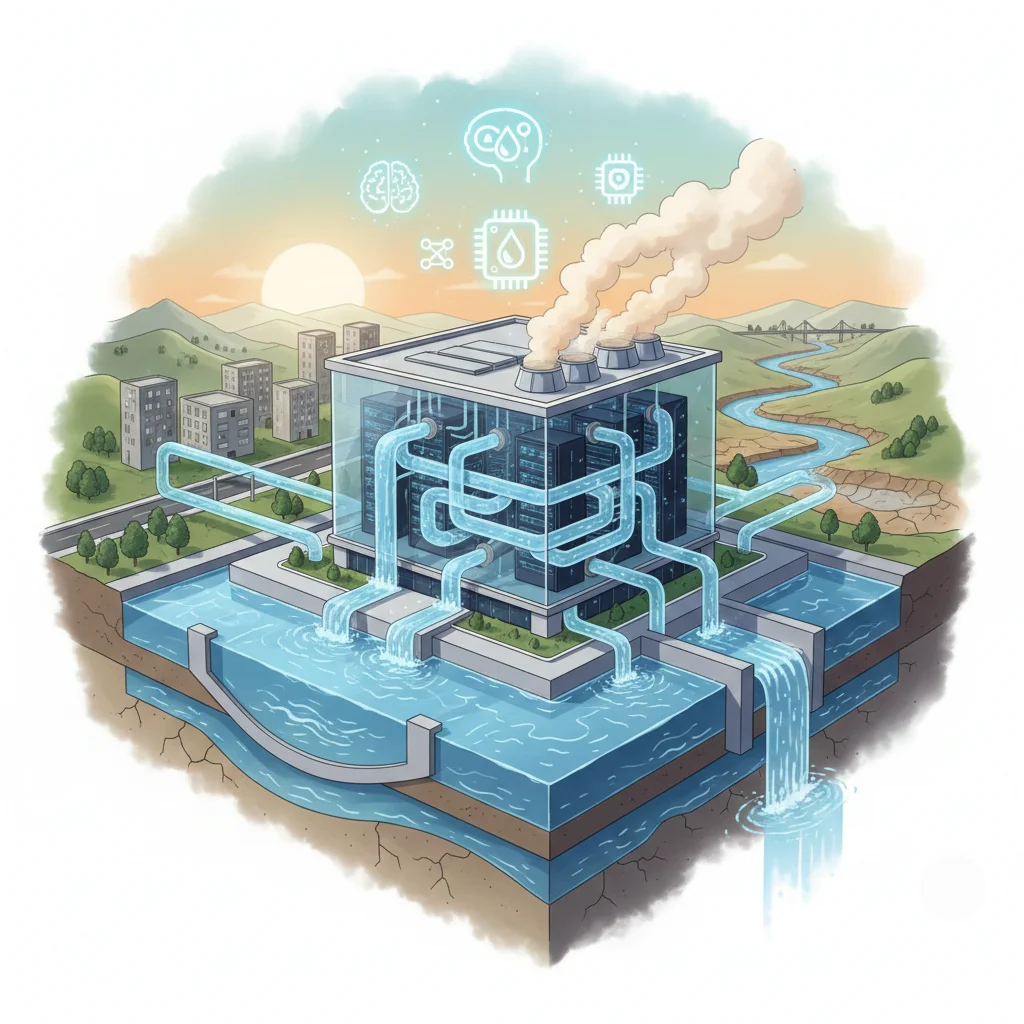
When people think of AI’s environmental impact, electricity comes first. Water rarely enters the conversation. Yet in 2026, water use has become one of AI’s most alarming hidden costs.
AI’s water reality
Modern AI data centers rely on water-based cooling to prevent servers from overheating. As models grow larger and workloads increase, cooling needs rise sharply.
Researchers estimate that a series of 10 to 50 AI prompts to a model like GPT-3 can consume roughly 500 milliliters of water (about one standard water bottle), depending on the data center’s location and cooling efficiency. While AI efficiency is improving, the massive scale of usage in 2026 means that a simple conversation with an AI can still ‘drink’ a bottle of water for cooling purposes. This hidden resource depletion is a major contributor to the growing carbon footprint of AI in 2026.
This means millions of daily prompts translate into vast water withdrawals—often from local freshwater sources.
Why is it a serious concern
Water stress is already a growing issue in parts of the US and Europe. AI-driven water demand now adds pressure to regions facing droughts, heatwaves, and declining groundwater levels.
The problem becomes more severe because:
- Data centers are often built near urban or semi-arid areas.
- Water use peaks during hot weather, when communities need it most.
- Cooling water is frequently evaporated, not recycled.
This water footprint quietly amplifies the carbon footprint of AI in 2026, linking AI growth directly to regional water insecurity.
The local impact most people never see
A homeowner may save time using AI tools, but nearby infrastructure may be drawing millions of liters of water monthly to support those same systems. Without transparency and regulation, communities remain unaware until shortages emerge.
Big Tech Emissions: Carbon Footprint of AI in 2026 vs Net Zero Goals
Major tech companies have publicly committed to net-zero emissions. Yet in 2026, reality tells a more complicated story.
The emissions gap
According to a Reuters report, despite sustainability pledges, Google and Microsoft have seen emissions rise by nearly 30%, largely driven by AI expansion.
This does not mean renewables are failing—but that AI growth is outpacing climate strategies.
Key reasons behind this increase include
- Rapid deployment of AI infrastructure without full clean-energy coverage.
- Reliance on backup fossil fuel systems to ensure reliability.
- Growing demand for energy-heavy model training.
Even when companies purchase renewable credits, real-world grids often still burn fossil fuels to meet AI’s immediate energy needs.
Why this matters to consumers
Tech users in the USA and Europe often assume AI services are “green by default.” In truth, the carbon footprint of AI in 2026 reflects a system still in transition—one where convenience currently outweighs environmental efficiency.
Transparency remains limited, making it hard for individuals to understand the real impact of their digital habits.
Solutions: How to Fix the Carbon Footprint of AI in 2026
The good news is clear: this problem is solvable. The path forward does not require abandoning AI but using it more intelligently.
1. Green Prompting: Small Changes, Big Impact
Green prompting means reducing unnecessary AI interactions and designing prompts that get results faster.
Instead of multiple trial-and-error prompts, users can:
- Write clearer, more specific requests.
- Avoid repetitive follow-ups.
- Batch related questions into one interaction.
These small behavior shifts reduce compute demand, lowering both energy and water use over time.
2. Shift from Large Models to Small Language Models (SLMs)
Not every task needs a massive AI model.
Small Language Models (SLMs) are designed for efficiency. They handle focused tasks like summarization, home automation, and customer support with a fraction of the energy.
Benefits of SLMs include:
- Lower electricity consumption.
- Reduced cooling and water demand.
- Faster response times for local applications.
For homeowners using smart systems or businesses running internal tools, SLMs offer a powerful way to cut the carbon footprint of AI in 2026 without sacrificing performance.
3. Choose Green-Hosted AI Providers
Not all AI providers are equal. Some data centers now operate on high percentages of renewable energy and use advanced water recycling systems.
When possible, users and organizations should:
- Support AI services hosted on renewable-powered infrastructure.
- Favor providers with transparent sustainability reporting.
- Encourage local governments to regulate data center water use.
Market pressure matters. Informed choices help push the industry toward cleaner practices.
Why Homeowners and Tech Users Must Care
AI may feel distant from daily life, but its environmental impact is increasingly local. From electricity bills to water availability and climate stability, the carbon footprint of AI in 2026 connects directly to community well-being.
As AI integrates deeper into homes—smart thermostats, assistants, security systems—the responsibility to use it wisely grows with it.
Balancing Innovation and the Planet
The carbon footprint of AI in 2026 is not a warning to stop innovation. It is a call to guide it responsibly.
AI has the potential to boost efficiency, cut waste, and even help combat climate change—but only if its own environmental footprint is managed with urgency and transparency. Energy-hungry models, hidden water use, and rising emissions show that unchecked progress carries real environmental costs.
The future depends on smarter systems, informed users, and transparent accountability. By embracing efficient models, mindful usage, and green infrastructure, we can ensure AI remains a tool for progress—not a silent burden on our planet.
Innovation should not come at the expense of Earth. In 2026, the choice is ours.
Read more related articles: https://www.climatechallange.com/environmental-impact-of-u-s-data-centers-2025-facts-and-figures/
FAQS
Q1. How does AI affect water resources?
Ans. AI data centers use large amounts of water to cool servers and maintain performance. As AI adoption grows, this water usage adds pressure on freshwater resources, especially in regions already facing water scarcity.
Q2. Is the carbon footprint of AI increasing in 2026?
Ans. In 2026, the carbon footprint of AI is still increasing due to rapid global adoption across industries. Although efficiency improvements exist, overall energy demand continues to rise as more AI systems come online.
Q3. What can companies do to reduce AI’s environmental impact?
Ans. Companies can cut AI’s carbon footprint by using green data centers, optimizing model efficiency, tracking emissions, and investing in sustainable infrastructure that balances innovation with environmental responsibility.