
Deforestation And Its Impact On Climate Change: The Silent Threat
The Earth’s forests are vanishing at an alarming rate, and the consequences go far beyond just losing trees. Deforestation and its impact on climate change is one of the most pressing environmental challenges of our time. Forests are more than just green landscapes; they are crucial carbon sinks, biodiversity hubs, and climate regulators. When these forests disappear, they disrupt the balance of nature and throw our climate out of harmony.
Recent studies reveal that we lose about 10 million hectares of forest every year—almost the size of Iceland. This massive decline in forest cover directly increases greenhouse gas emissions, disrupts weather patterns, and interferes with the global water cycle. Understanding how deforestation fuels climate change is essential if we want to reduce its silent but devastating impact.
What Is Deforestation?
Deforestation refers to clearing, thinning, or removing forests—usually to make room for farming, expanding cities, or commercial logging. While some forest loss happens naturally, humans cause most of it. Tropical regions such as the Amazon, the Congo Basin, and Southeast Asia are losing trees at the fastest pace.
The effects of deforestation spread through entire ecosystems and directly impact the global climate. Trees store carbon in their trunks, leaves, and roots; when we cut or burn them, that stored carbon enters the atmosphere, strengthens the greenhouse effect, and warms the planet.
How Does Deforestation Affect Climate Change
Deforestation directly contributes to climate change by removing trees that naturally absorb carbon dioxide from the atmosphere. When forests are cut or burned, the stored carbon is released, increasing greenhouse gas levels and accelerating global warming. This makes forest loss a major driver of rising temperatures worldwide.
Apart from carbon emissions, deforestation disrupts rainfall patterns and weakens ecosystems that regulate the climate. Without trees, soils erode faster, local temperatures rise, and areas become more prone to droughts and extreme weather. In short, deforestation removes nature’s natural defenses, worsening climate change impacts globally.
5 Main Ways Deforestation Affects Climate Change
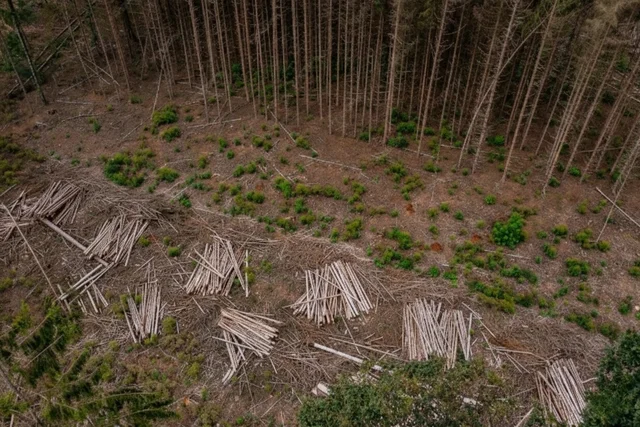
1. Increased Carbon Emissions
Trees act as natural carbon sinks, absorbing carbon dioxide from the atmosphere during photosynthesis. When forests are cut down or burned, millions of tons of CO₂ are released. According to the Global Forest Watch, deforestation contributes about 10% of global greenhouse gas emissions—more than the entire transportation sector. This direct link makes deforestation a major driver of climate change.
2. Disruption of Rainfall Patterns
Forests play a key role in regulating rainfall. Through a process called transpiration, trees release water vapor into the atmosphere, which helps form clouds and maintain precipitation patterns. When forests shrink, local and regional rainfall declines, leading to droughts and increasing the risk of wildfires. In places like the Amazon, deforestation has already reduced rainfall by up to 20% in some regions.
3. Loss of Biodiversity
Healthy forests support an immense variety of life. Deforestation destroys habitats, causing species loss and reducing ecosystem resilience. Biodiverse forests naturally regulate the climate by maintaining soil fertility and carbon storage. When species disappear, these systems weaken, making forests less capable of absorbing carbon and buffering against climate extremes.
4. Soil Degradation and Desertification
Tree roots hold soil in place and prevent erosion. Without forests, soils are exposed to heavy rains and winds, leading to soil degradation, nutrient loss, and even desertification. Degraded land cannot store carbon effectively, which intensifies global warming. Countries like Brazil, Indonesia, and parts of Africa are already facing increased desertification linked to deforestation.
5. Contribution to Extreme Weather Events
Deforestation can make extreme weather even worse. When there are fewer trees to absorb rainfall and regulate temperature, floods, heatwaves, and storms grow more intense. By disrupting natural landscapes, we reduce the Earth’s ability to control climate extremes, putting communities around the world at greater risk.
Deforestation’s Impact on the Amazon Rainforest
The Amazon Rainforest remains one of the world’s most vital natural buffers against climate change—but recent data shows deforestation and degradation are wearing down its power. Between August 2024 and July 2025, around 5,796 km² of forest was cleared in the Amazon, according to the official monitoring agency in Brazil.
Even more alarming is the surge in forest degradation (from fires, logging, drought & other damage), which in 2024 rose dramatically—by nearly 497% compared with the previous year—affecting over 36,000 km.
Beyond carbon loss, destruction of the Amazon damages biodiversity, disrupts rainfall cycles that stabilise regional and global climate, and weakens ecosystem resilience. If this trend continues, the Amazon may gradually lose its role as “lungs of the Earth,” accelerating global climate change rather than mitigating it.
Steps to Address the Silent Threat
- Protect existing forests: Prioritize conservation of tropical and primary forests for maximum carbon storage and climate regulation.
- Promote sustainable land use: Encourage agroforestry, reforestation, and sustainable agriculture instead of clearing new land.
- Policy and global cooperation: Countries and organizations must implement strong anti-deforestation measures.
- Consumer awareness: Reducing demand for forest-intensive products like unsustainable palm oil, soy, and industrial beef can lessen pressure on forests.
- Restore degraded lands: Replanting native trees and vegetation helps revive carbon sinks and stabilize local climates.
Forests are the lungs of our planet, and their destruction fuels climate change in ways that affect everyone. By understanding deforestation and its impact on climate change, we see that protecting trees is not just about nature—it’s about safeguarding our future. Mitigating deforestation through policies, sustainable practices, and global awareness is essential to slowing climate change and ensuring a livable world for generations to come.
Read more related articles https://www.climatechallange.com/human-impact-on-the-environment-8-major-activities-and-their-effects/
FAQS
Q1. Can forests recover after deforestation?
Ans. Small-scale or selective deforestation allows forests to regenerate over time. However, when we clear large areas—especially primary tropical forests—we cause long-term damage that can take centuries to repair.
Q2. What is the biggest threat to the Amazon rainforest?
Ans. The biggest threat to the Amazon rainforest is large-scale human activity, especially deforestation for agriculture and cattle ranching. Logging, both legal and illegal, also contributes heavily to forest loss. Additionally, infrastructure development, like roads and urban expansion, fragments the forest. These activities, combined with climate change, put the Amazon’s biodiversity and ecological balance at serious risk.
Q3. Why is biodiversity at risk due to deforestation?
Ans. Forests house around 80% of terrestrial species. Clearing forests destroys habitats, destabilizes ecosystems, and increases the risk of species extinction.