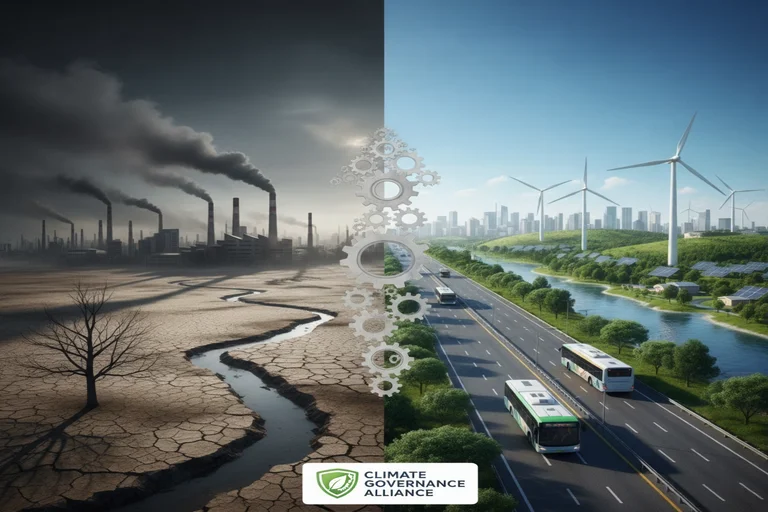
The Role Of Government In Combating Climate Change
Climate change is no longer a distant threat—it is a present reality affecting food, water, energy, health, and economies worldwide. The role of government in combating climate change is crucial because strong leadership determines whether societies can adapt and thrive or remain vulnerable to disasters. Governments are responsible not only for protecting forests, wetlands, and other natural carbon sinks but also for guiding national policies, investing in clean energy, and ensuring that vulnerable communities are not left behind.
Why Climate Governance Matters
Effective climate governance ensures that policies, regulations, and national strategies are aligned to address the growing threats of global warming. Governments guide how resources are used, how industries reduce emissions, and how communities adapt to climate impacts. Strong governance also balances environmental protection with economic and social needs, making sure that vulnerable populations are not left behind. Without it, even the best intentions may fail to translate into real action against climate change.
Climate Change: A Global Threat with Local Impact
Climate change impacts everyone—humans, animals, and ecosystems alike. Rising temperatures, unpredictable rainfall, and extreme weather events affect food and water supplies, human health, and infrastructure stability. Financial systems are also at risk, especially in countries whose economies depend heavily on climate-sensitive industries.
The role of government in combating climate change is to create policies that integrate climate considerations into all sectors—from urban planning and agriculture to energy production and transportation. Strong governance can protect natural ecosystems, ensure resilient infrastructure, and prepare communities for climate shocks.
Recent Global Momentum: COP30 and Its Significance (2025)
COP30, held in Belém, Brazil, in November 2025, pushed countries toward real action instead of repeating old promises. Nations are committed to tripling funds for climate adaptation and helping vulnerable communities shift to clean energy. The conference highlighted decarbonization, sustainable infrastructure, forest and biodiversity protection, and expansion of climate finance for developing countries.
However, COP30 did not produce a legally binding roadmap to phase out fossil fuels. Although this was a setback, the summit still underscored the urgency of government action. The government’s role in combating climate change is crucial because national policies ultimately decide whether global agreements turn into real, measurable results.
Climate Change Policy of the United States 2025
Withdrawal from Global Commitments
In 2025, the United States formally moved toward withdrawing from the Paris Agreement. This shift affects its international climate commitments, including funding for adaptation and mitigation programs. Despite this, domestic regulations continue to play a key part in emissions reduction.
Domestic Policies: Regulations, Rollbacks, and Mixed Signals
The EPA still upholds some climate protections, including limits on hydrofluorocarbons (HFCs) and certain emissions standards for power plants. But at the same time, several other regulations have been weakened or reversed, creating a policy landscape that feels inconsistent and sometimes even contradictory.
Even in this context, the role of government in combating climate change is critical. Decisions about energy, transport, and industrial regulations directly influence emissions levels, public health, and economic resilience. Policies that encourage renewable energy adoption, energy efficiency, and sustainable infrastructure can significantly offset the negative impacts of regulatory rollbacks.
What This Means in 2025 for Global Climate Action
- Global efforts remain fragile. COP30 agreements show progress, but without strong national policies, climate targets remain at risk.
- Major emitters matter more than ever. Countries like the U.S. have an outsized influence on global emissions trajectories.
- Domestic regulation still counts. Emissions standards, pollution controls, and clean energy incentives reduce greenhouse gases and improve health.
- Need for systemic, just transition. Climate policies must balance environmental, social, and economic considerations, ensuring support for vulnerable populations.
The role of government in combating climate change extends beyond regulation; it includes planning, funding, and implementing programs that secure both environmental and social resilience.
Why Governments Should Lead—Not Withdraw
Global impact:
Carbon emissions from one country affect the entire planet. Governments must take the lead on the international stage to make sure global efforts stay strong and keep global warming in check. Strong leadership encourages cooperation and shared responsibility.
Cost-effective action:
Early investment in adaptation and clean energy reduces long-term climate risks. It also brings economic, health, and social benefits, saving both lives and money over time.
Protecting vulnerable communities:
Climate change hits marginalized and low-income groups hardest. Governments must design policies that protect these populations while advancing climate solutions.
Long-term legacy:
Decisions made today shape energy systems, infrastructure, and natural resource management for decades. Effective governance ensures a sustainable and resilient future for the coming generations.
The role of government in combating climate change is more critical than ever in 2025. COP30 shows that global collaboration is necessary, but national policies ultimately determine real progress. Governments must implement practical regulations, incentivize clean energy, and protect natural ecosystems while supporting vulnerable populations.
While challenges persist—including regulatory rollbacks, withdrawal from global agreements, and uneven policy enforcement—governments still have the power to influence outcomes. Effective leadership today can reduce emissions, save lives, and build resilient communities for tomorrow. The climate crisis demands nothing less than decisive government action, and understanding this role of government in combating climate change is the first step toward a sustainable future.
FAQs
Q1: What is the significance of COP30 in 2025?
Ans. COP30 prioritized concrete actions to tackle climate change, including tripling adaptation funding and supporting clean energy transitions. The conference highlighted the need to transform global commitments into measurable results, with governments playing a central role in implementing agreements.
Q2: Why must governments prioritize vulnerable communities?
Ans. Climate impacts affect marginalized and low-income populations the most. Governments must design policies that provide protection and resources for these groups. Ensuring equity is essential for sustainable and effective climate action.
Q3: Can governments make a difference even if they leave global agreements?
Ans. Domestic policies on emissions, renewable energy, and infrastructure can significantly cut greenhouse gases. Governments can also safeguard public health and strengthen community resilience. Even when international cooperation falls short, strong local action can make a meaningful difference.