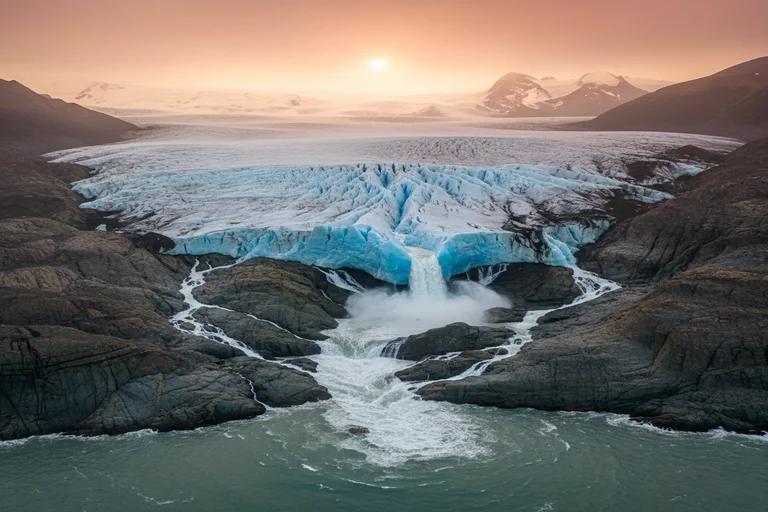
Glaciers Melting 2025 Record Ice Loss And Climate Threats
The phrase “Glaciers Melting 2025” is more than just a headline—it’s a global warning. Glaciers, the frozen giants shaping mountains and coastlines for centuries, are retreating at unprecedented rates. Rising temperatures, changing precipitation, and unstable ice beds are causing glaciers to shrink dramatically. This trend threatens sea levels, freshwater availability, ecosystems, and human societies dependent on glacial water. In this blog, we explore the latest trends, the regions most affected, the scientific causes behind glacier melt, and the global consequences, including a close look at Antarctica’s Hektoria Glacier.
Glacier Melt Trends: 2000 to 2025
Since 2000, glaciers worldwide have been losing ice at alarming rates. On average, glaciers have lost over 273 billion tonnes of ice per year, totaling more than 6,542 billion tonnes over the last 25 years. The pace of melting has accelerated significantly in the past decade, with nearly 40% of the total mass lost since 1976 occurring in the last ten years.” Mostly the numbers are in line with recent scientific studies, though it needs a small update to match the latest published data.
Certain years have been particularly devastating. Between 2019 and 2024, glaciers lost massive volumes of ice, with some retreating multiple meters per season. 2025 continues this trend, marking another record-breaking year for ice loss. “Glaciers Melting 2025” is not just a label — it is evidence of ongoing and accelerating climate impacts.
Why Glaciers Are Melting Faster Than Ever
Glaciers melt due to a combination of climate change, local weather patterns, and geological factors:
Rising Global Temperatures
The primary driver behind glacier melting is global warming caused by greenhouse gas emissions. As average temperatures rise, glaciers melt faster during summers and get less snowfall in winters, which reduces their ability to rebuild. This imbalance—more melting, less accumulation—forces glaciers into a net ice loss each year.
Changing Precipitation Patterns
Glaciers depend on consistent snowfall to sustain their mass. But in many regions, precipitation patterns have changed—winters now bring less snow or more rain instead of snow. Because of reduced snow accumulation, glaciers can’t rebuild what melts away; instead, they gradually lose mass. This shift doesn’t only affect mountain glaciers but also ice in polar and high-altitude regions—accelerating global ice loss and contributing to uneven but widespread melting.
Ice Calving:
Many glaciers—especially polar ones like Hektoria Glacier—rest on flat “ice plains” that stretch out toward the sea. When warm ocean water reaches their base, it undercuts the glacier front. This weakens the ice support and causes large chunks of ice to suddenly break off—a process called glacial calving. Once calving begins, the glacier becomes unstable, accelerates thinning, and retreats rapidly.
Ice-Albedo Feedback and Ocean Warming:
Glaciers reflect sunlight due to their bright white surfaces, keeping the region cool. As glaciers shrink, darker surfaces like land or water are exposed, absorbing more heat and accelerating melting. Additionally, warmer ocean currents erode the glacier from below, particularly for polar glaciers, further destabilizing ice fronts and contributing to faster retreat.
Regions Most Affected By Glacier Melting
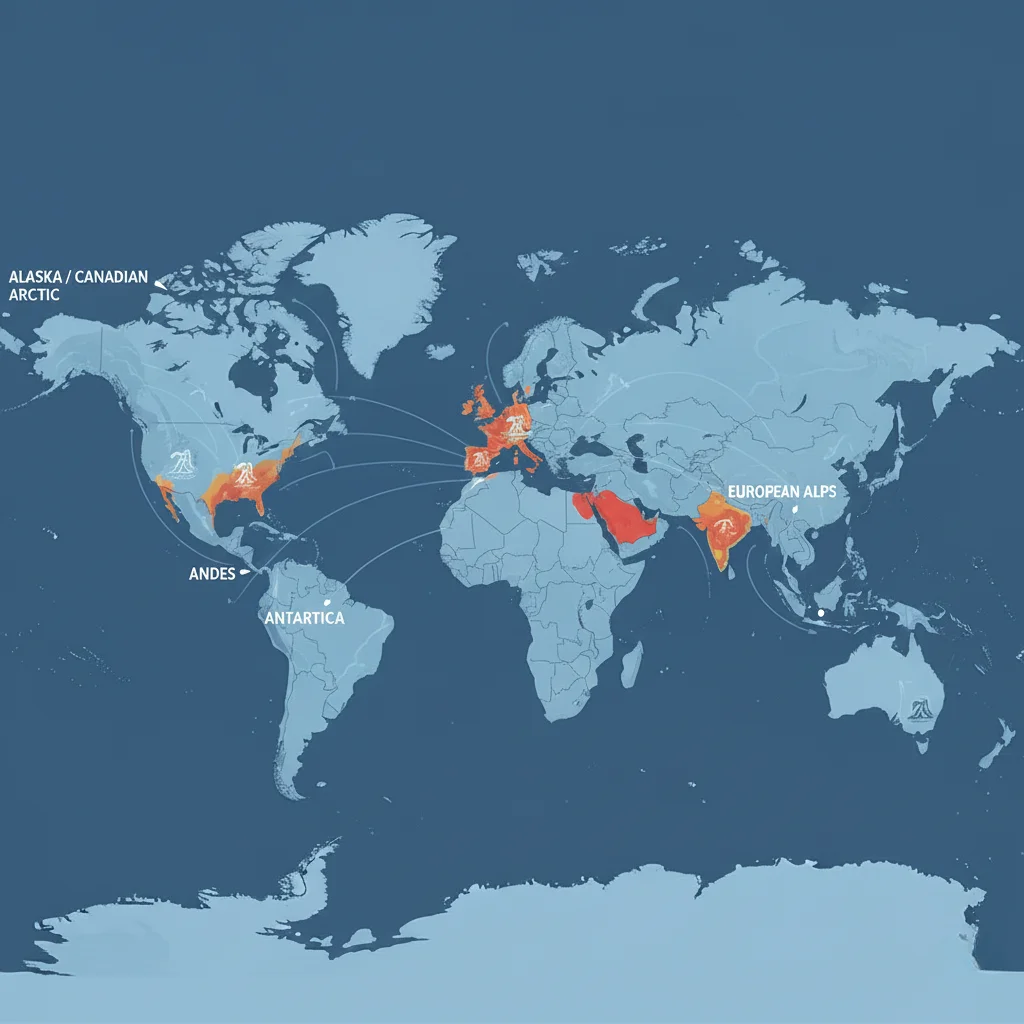
Glacier retreat is uneven, with some areas experiencing faster losses:
Central Europe (Alps): In the European Alps (Central Europe), glaciers have lost nearly 39% of their ice volume since 2000. Warmer summers and declining snowfall have sped up their retreat, causing glaciers to shrink both in surface area and thickness. This dramatic shrinkage threatens freshwater supplies and hydropower generation, undermines Alpine‑region tourism, and increases the risk of landslides and slope instability as ice that once supported mountain terrain disappears.
North America (Alaska, Western Canada, Rockies): In Alaska and western Canada (including the Rockies), glaciers are retreating rapidly—many now melt so fast that seasonal snow and ice reserves are shrinking dramatically. This threatens freshwater supplies that feed rivers and streams used for drinking water, irrigation, and hydropower. Cold meltwater—crucial for salmon and other cold‑water species—is decreasing or warming up, stressing aquatic ecosystems. As glacial runoff becomes unreliable, downstream agricultural communities and regional ecosystems face growing water shortages and ecological disruption.
Scandinavia, Svalbard, and the Russian Arctic: In Scandinavia, Svalbard, and the Russian Arctic, thinning glaciers are reducing the region’s ice mass and weakening sea‑ice formation. As protective ice shrinks, darker ocean and land surfaces are exposed—which absorb more heat and accelerate regional warming. This warming triggers feedback loops that further destabilize glaciers, causing them to shrink faster. Over time, this destabilization can disrupt regional climate, ecosystems, and sea‑ice-dependent environments.
Southern Andes, New Zealand, and Tropical Mountains: In the Southern Andes, New Zealand, and tropical mountain regions, glaciers are extremely sensitive to temperature shifts. As they melt rapidly, rivers fed by their ice lose consistency—threatening water supply for drinking, irrigation, and hydropower. Agriculture and local ecosystems suffer when meltwater declines or becomes erratic, impacting both human and wildlife communities. Tourism and mountain‑region livelihoods also face disruption, as glaciers shrink and the landscapes they depended on change drastically.
These regions demonstrate the global nature of glacier melt, with local consequences feeding into larger-scale climate issues.
Hektoria Glacier—Antarctic Alarm Bell
Hektoria Glacier in the eastern Antarctic Peninsula has become a stark example of accelerated glacier melt. Between January 2022 and March 2023, it retreated approximately 25 kilometers, with 8–8.2 kilometers lost in just two months during November–December 2022.
The rapid retreat is caused by Hektoria resting on a flat ice plain. Thinning at the base combined with calving led to sudden ice loss. Although smaller than other Antarctic glaciers, Hektoria demonstrates that previously stable glaciers can collapse rapidly.
This example reinforces “Glaciers Melting 2025,” showing that polar glaciers are also highly vulnerable. If similar processes occur in larger glaciers, global sea-level rise could accelerate dramatically.
Global Impacts
Sea-Level Rise
Global glacier melt has pushed up sea level by about 18 millimeters since 2000. As a result, low‑lying regions, small island nations, and coastal cities face growing threats from flooding, coastal erosion, and stronger storm surges. For millions of people and critical infrastructure along coasts, this means increased risk of displacement, property damage, and economic loss.
Freshwater Shortages
Glaciers supply freshwater for drinking, irrigation, and hydropower. Shrinking glaciers disrupt seasonal flow, particularly in high-mountain Asia, the Andes, and North America. Agricultural productivity, energy supply, and daily water use are all at risk.
Increased Disaster Risk
Melting glaciers form unstable glacial lakes that can burst suddenly, causing Glacial Lake Outburst Floods (GLOFs). These floods threaten downstream communities, infrastructure, and farmland. Monitoring glacial lakes is critical for early warning and disaster prevention.
Ecological and Climate Feedbacks
Glaciers reflect sunlight, helping regulate Earth’s temperature. As glaciers shrink, darker surfaces like land or water become exposed—these absorb more heat and accelerate global warming. This increased warming disrupts freshwater ecosystems, alters seasonal water cycles, and harms mountain biodiversity. As a result, plants, animals, and human livelihoods that depend on stable glacier-fed water and cold‑climate habitats come under serious threat.
Mitigation and Hope
Although the situation is alarming, action can slow glacier loss:
- Reduce Greenhouse Gas Emissions: Limiting global warming to 1.5°C could preserve many glaciers.
- Sustainable Water Management: Communities reliant on meltwater must adapt resource planning for changing availability.
- Early-Warning Systems: Monitoring glacial lakes and ice fronts helps prevent disasters like GLOFs.
- Global Awareness and Policy Enforcement: Educating the public and implementing strong climate policies are essential for slowing glacier retreat.
Glaciers, symbols of Earth’s ancient stability, are under unprecedented threat. “Glaciers Melting 2025” is not just a phrase—it is a global alarm. Record ice loss, accelerating melt rates, and shrinking mid-latitude and polar glaciers demonstrate the urgent need for climate action.
Hektoria Glacier exemplifies how even previously stable ice can collapse suddenly, highlighting the global scale of the crisis. Without immediate action, rising seas, water scarcity, biodiversity loss, and natural hazards will intensify.
Yet hope remains. By acting globally and locally—reducing emissions, enforcing sustainable policies, and managing water resources—we can slow glacier melt and protect ecosystems. Glaciers Melting 2025 is a wake-up call. The time to act is now.
Read more related articles> https://www.climatechallange.com/california-glaciers-are-melting-away-for-the-first-time/
FAQs
Q1: Are all glaciers retreating at the same speed?
Ans. No. High-altitude glaciers are more resilient, while mid-latitude and low-altitude glaciers shrink fastest. Polar glaciers like Hektoria show rapid collapse is also possible.
Q2: Could glaciers disappear entirely by 2100?
Ans. Limiting global warming to 1.5°C could save a large share of the world’s glaciers. At higher warming—around 2–4 °C — scientists expect 50–80% of many mid‑latitude glaciers could disappear. In such a scenario, even large polar and mountain glaciers face the risk of rapid collapse, with severe consequences for sea‑levels, water supplies, and ecosystems.
Q3. Which regions are experiencing the highest glacier loss?
Ans. The fastest glacier melt is happening in the Himalayas, the Alps, Alaska, Patagonia, Iceland, Greenland, and West Antarctica. In these regions temperatures are rising above long-term averages, while snowfall is decreasing. Some glaciers, like Hektoria Glacier, are retreating due to ocean-driven ice loss.