Snow In Florida 2026 Rare Snowfall And Climate Change Trends
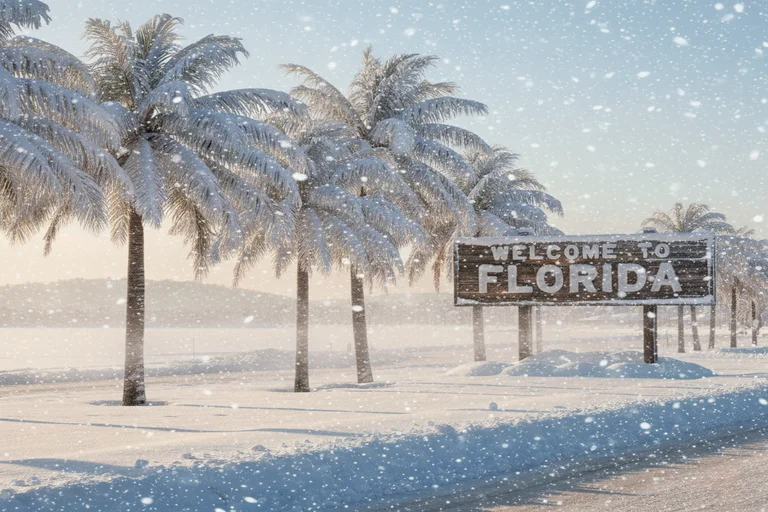
On January 18, 2026, residents across parts of northern Florida woke up to a sight few ever expect to see—snow on palm trees, rooftops, and highways. For a state known worldwide for sunshine, beaches, and mild winters, this event quickly became national news. The Snow in Florida 2026 event was not only rare but also historic, marking the second year in a row that measurable snowfall has been recorded in the Sunshine State.
This unusual weather moment has sparked curiosity, debate, and concern. Is this just another once-in-a-lifetime event, or is it part of a bigger shift in climate change weather patterns? Scientists and climate researchers are paying close attention because back-to-back snow years in Florida are not normal by any historical standard.
In this detailed guide, we break down where it snowed, how much fell, why it happened again, and what it may tell us about the future of climate and weather extremes.
What Happened During Snow in Florida in 2026?
On January 18, 2026, a powerful Arctic blast pushed temperatures to record lows across the Southeast. Although Florida is known as the “Sunshine State,” the Florida Panhandle was covered in white after measurable snow fell for the second year in a row. Areas like Laurel Hill recorded up to 2 inches, while Marianna saw 1.3 inches. This rare event caused major travel disruptions on the I-10 corridor, as local authorities issued warnings for black ice and freezing conditions that Floridians rarely encounter.
Where it Snowed: Florida Snowfall Totals 2026
The snowfall during this event was mostly limited to North Florida and the Florida Panhandle, where colder air had the best chance of reaching the ground. While totals were not extreme by northern standards, they were significant for Florida.
Here are the confirmed snowfall totals recorded on January 18, 2026:
Laurel Hill: 2 inches
Marianna: 1.3 inches
Milton: 0.5 inches
Pensacola: 0.2 inches
For communities like Laurel Hill and Marianna, this was enough snow to briefly cover roads, fields, and rooftops, creating both excitement and disruption. Schools delayed opening, local officials issued cold-weather advisories, and residents shared photos across social media showing snow-dusted landscapes rarely seen in the state.
A narrow stream of cold air mixed with moisture from the Gulf of Mexico caused the snowfall in the Florida Panhandle. This kind of weather setup is very rare, which is why snow hardly ever falls in this region.
How Rare Is Snowfall in Florida?
Historically, snowfall in Florida has been one of the rarest weather events in the United States. However, with measurable snow falling in both 2025 and 2026, we are witnessing a significant shift in historical patterns that challenges our previous understanding of Florida’s winter climate.
Most recorded snow events in Florida have been limited to the following areas:
- The Panhandle region
- Northern cities like Pensacola and Tallahassee
- Brief flurries that melt quickly
Historically, snow in Florida is very rare. Records show snowfall events usually occurred in specific locations only. The Panhandle region saw brief flurries before. Northern cities like Pensacola and Tallahassee experienced similar light snow. It melted quickly.
South Florida, including cities near the coast, rarely sees snow. Temperatures usually remain above freezing, even during intense cold waves.
Snow in Florida in 2026 stands out in history. Even light snowfall signals that atmospheric conditions are unusually aligned now. This event points to shifting weather patterns.
A Rare Pattern: Why Is It Snowing in Florida Again?
Snow in Florida 2026 is remarkable. It follows measurable snowfall in 2025. This makes it the second consecutive year Florida has experienced snow accumulation. Historically, decades separated Florida’s snow events, not years.
So what changed?
Comparing 2025 vs 2026 Snow Events
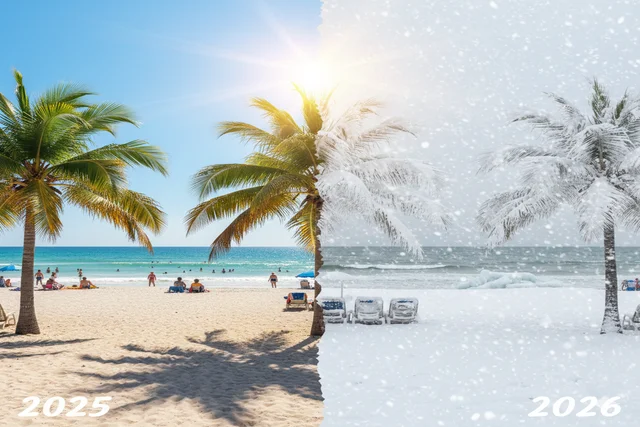
Both snow events shared similar atmospheric conditions:
- A strong Arctic cold front pushed unusually far south.
- A weakened and wavy jet stream allowed cold air to linger (as explained in recent studies on Arctic climate shifts).
- Moisture from the Gulf interacted with freezing temperatures.
In the past, Florida experienced freezing temperatures without precipitation. Sometimes it had rained without enough cold air. In both 2025 and 2026, the timing aligned almost perfectly.
Climate scientists note that this kind of repeat pattern suggests system-level shifts, not random chance. According to the NOAA Climate Monitoring reports, these shifts are part of a broader trend in global atmospheric instability.
Jet Stream Variability
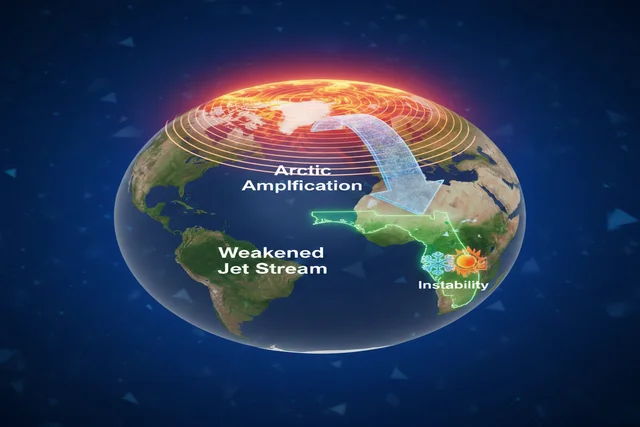
The jet stream acts like a fast-moving river of air. It keeps cold Arctic air locked in the north. When the jet stream weakens or becomes more uneven, cold air can spill southward—sometimes deep into the southern United States.
In recent years, the jet stream has become more wavy, allowing stronger cold outbreaks to reach unexpected areas such as Florida.
Snow In Florida 2026 and Climate Change Trends
Snow in Florida in 2026 fits into a larger pattern of climate variability and extremes. Across the United States, weather records are breaking more frequently. Globally, 2025 was ranked as one of the warmest years on record, making these sudden cold snaps even more significant. This includes not just heat records but also cold snaps, heavy rainfall, and unusual winter storms. For a deeper look, see our analysis on why 2025 is ranking among the warmest years in history.
Climate data shows clear trends:
- Winters are becoming more erratic.
- Temperature swings are more extreme.
- Rare events are happening more often.
Florida has seen rising average temperatures over the decades. It also experiences stronger hurricanes and heavier rainfall. Against this warming background, a sudden cold outbreak may seem confusing. But scientists warn that extreme cold events can still occur in a warming world.
Rather than disproving climate change, rare snow events often highlight the climate system’s increasing instability.
The Climate Change Connection: Is This the New Normal?
This is the most important question surrounding the rare snowfall in Florida. The answer is more complex than it may seem.
Climate change does not mean every place simply gets warmer all the time. Instead, it increases weather instability, leading to more extremes on both ends of the spectrum.
How Warming Can Lead to Colder Extremes
As the Arctic warms faster than the rest of the planet, a process known as Arctic amplification occurs. This reduces the temperature difference between the Arctic and mid-latitudes, which weakens the jet stream. Learn nore arctic implications here
When the jet stream weakens:
- Cold Arctic air escapes more easily.
- Weather systems move more slowly.
- Extreme cold and heat events last longer.
This helps explain why Florida can experience record warmth one year and rare snowfall the next.
Arctic Oscillation and Polar Disruptions
Another factor is the Arctic Oscillation (AO), a climate pattern that controls how tightly cold air stays near the North Pole. When the AO enters a negative phase, cold air spreads southward.
In both 2025 and 2026, scientists observed signs of polar instability, which increased the likelihood of cold outbreaks reaching the southern regions. These patterns don’t guarantee snow every year, but they raise the odds of unusual events like snow in Florida happening more often than before.
Impact on Local Communities and Environment
While snowfall may seem harmless or even fun, it can have real impacts on communities not built to handle cold weather.
Effects on Daily Life
- Roads became slick due to the lack of snow treatment infrastructure.
- Power demand surged as residents relied on heating.
- Schools and businesses faced short-term closures.
Even small amounts of snow can cause outsized disruption in regions unfamiliar with winter conditions.
Environmental Effects
Florida’s ecosystems are especially sensitive to temperature changes:
- Tropical plants and citrus crops face frost damage.
- Sudden exposure to cold temperatures can stress wildlife.
- Wetlands may experience a short-term ecological shock.
Repeated cold events can force plants and animals to adapt faster than they naturally would, increasing long-term environmental pressure.
What This Means for Florida’s Future Weather
Climate experts agree that snow in Florida in 2026 does not mean Florida is becoming a snowy state. However, it does signal a future with greater unpredictability.
Key takeaways for the future:
- Rare events may become less rare
- Weather records could be broken more frequently
- Emergency planning must consider new climate realities
Florida is already facing the front lines of climate change, dealing with rising sea levels, stronger hurricanes, and intense heat waves. Cold extremes are now joining the list of climate challenges the state must prepare for.
A Wake-Up Call Hidden in Snowflakes
The Snow in Florida 2026 event is more than a weather headline—it is a reminder that climate systems are shifting in real time. Two consecutive years of measurable snowfall in Florida would have been almost unthinkable a few decades ago.
While snowfall totals like 2 inches in Laurel Hill or 0.2 inches in Pensacola may seem small, their significance is large. These snow events reveal how climate change is driving surprising and occasionally disruptive weather extremes.
Understanding these changes helps communities adapt, prepare, and respond more effectively. As Florida continues to face climate-driven extremes, awareness and informed discussion are more important than ever.
What do you think—was this just an unusual coincidence or a clear sign of a changing climate? Share your thoughts and experiences, and let the conversation continue.
Read more related articles: https://www.climatechallange.com/what-is-the-safest-place-in-florida-during-hurricane/
FAQS
Q1. Does it actually snow in Florida?
Ans. Yes, snow does occasionally fall in North Florida and the Panhandle region, although it is very rare for accumulation to occur. Since 1886, more than 80 instances of snowfall have been documented in the state.
Q2. When was the last time it snowed in Florida?
Ans. The most recent snowfall in Florida occurred on January 18, 2026, when parts of the Panhandle saw a light dusting of snow for the second consecutive year. The last major snowfall occurred in January 2025, setting a state record with up to 10 inches in certain areas.
Q3. Does rare snow in Florida disprove climate change?
Ans. No, climate change does not mean constant warming everywhere; instead, it increases overall weather instability and the frequency of extreme events on both ends of the spectrum. These rare cold snaps highlight how a warming Arctic can disrupt typical weather patterns such as the jet stream, pushing frigid air south.