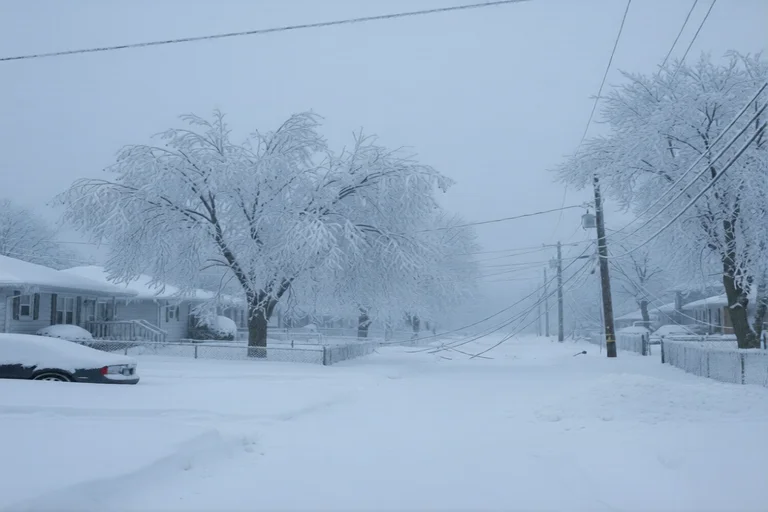
Winter Storm Fern 2026 Rare Polar Vortex Is Freezing US States
While the world discusses rising global temperatures, a brutal reality is unfolding across the United States. Winter Storm Fern 2026 has transformed the American landscape into an icy fortress, leaving millions to wonder how such extreme cold is possible in a warming world. This isn’t just a typical winter chill; it is the direct result of a disrupted polar vortex that has slipped from the Arctic to the US heartland. From the Great Plains to the East Coast, record-low temperatures have paralyzed daily life, highlighting the growing vulnerability of our infrastructure to these intense, Arctic-driven weather events.
What is the science behind Winter Storm Fern?
The polar vortex is a massive, spinning pool of frigid air that circulates around the Arctic. Under normal conditions, it stays confined to high latitudes. However, when the Arctic warms, a trend documented by NOAA, the jet stream weakens and becomes more wavy. In late January 2026, this pattern allowed Arctic air to plunge southward, helping trigger Winter Storm Fern, while its cold effects lingered into early February. This exact phenomenon triggered Winter Storm Fern. A “stretched” vortex allowed intensely cold air to spill south, deep into the continental United States.
This disruption is not a random accident. Scientists point to Arctic Amplification as the culprit. As the North Pole warms twice as fast as the rest of the planet, the jet stream loses its stability. During the first week of February 2026, this instability created lobes of freezing air that plunged thousands of miles south, reaching regions that rarely see subzero temperatures.
When this Arctic air collided with moist air from the Gulf of Mexico, it fueled the blizzards and ice storms we are seeing today. The Arctic blast 2026 isn’t just a cold snap; it’s a textbook example of how a warming planet can, ironically, freeze our front doors. It highlights a growing pattern where Arctic changes directly paralyze life thousands of miles away.
How Severe is the Impact of Winter Storm Fern 2026 Across the US?
The impact of Winter Storm Fern 2026 is severe, transforming this Arctic Blast into a national weather emergency. Millions across the US face historic cold, infrastructure failures, and significant economic disruption. This event is quickly proving more intense in certain regions than previous cold snaps, testing the limits of critical infrastructure.
Regional Paralysis: Midwest & Northeast
Illinois (Chicago) and New York are among the hardest-hit states right now. During the first week of February 2026, Chicago record wind chill of -30°F. Heavy snow and icy winds have paralyzed public transit. Authorities have canceled thousands of flights; major airports like Chicago O’Hare and JFK alone grounded over 5,000 flights. New York faces widespread frozen water mains, creating severe water shortages for homes and businesses.
Texas Power Grid on High Alert
In the South, Texas’s struggles are the most striking example. This region rarely sees such cold. Its power grid is buckling under intense pressure. Utilities have initiated rolling blackouts to prevent a total system collapse. These conditions highlight major questions about power grid resilience. Frozen pipes and heating failures significantly affect daily life here.
Economic & Agricultural Damage
This storm brings more than just cold; it is causing real economic damage. Natural gas prices have spiked as demand far exceeds supply. The Midwest agriculture sector now faces major threats to livestock and crops. Several states have deployed the National Guard to assist with emergency rescue operations. The Arctic Blast 2026 exposes how climate extremes reveal weaknesses in our economy and infrastructure.
Why Is This Extreme Cold Happening During Global Warming?
Many people wonder: If the Earth is warming, why is it so cold in places like the Midwest and Northeast? This question highlights what scientists call the Climate Change Paradox. The answer lies in how the Arctic is warming faster than the rest of the planet, a phenomenon known as Arctic amplification, and how it affects the atmosphere far beyond the North Pole.
As the Arctic heats up, the temperature difference between the North Pole and lower latitudes decreases. This shift weakens the normally steady jet stream, which usually keeps frigid Arctic air contained near the poles. When the jet stream becomes wavier, it creates what meteorologists call “jet stream instability,” allowing cold Arctic air to push southward into the United States. The result is the stretched polar vortex seen during Winter Storm Fern 2026, sending frigid temperatures to regions unprepared for extreme cold.
This is part of a broader trend sometimes referred to as Global Weirding. While the planet overall is warming, unusual patterns in atmospheric circulation mean some areas experience intense cold events even as the Arctic heats up. In other words, extreme cold and rising global temperatures are not opposites—they are connected by the same climate dynamics.
During the historic US Polar Vortex, the stretched polar vortex created long lobes of Arctic air, allowing temperatures to plummet below -30°F in certain regions. Scientists emphasize that these events are becoming more frequent as Arctic Amplification continues to destabilize the polar circulation. Each extreme cold outbreak is a reminder that global weirding doesn’t contradict climate change; it illustrates how warming disrupts traditional weather patterns.
Understanding the connection between a warming Arctic and extreme cold in mid-latitudes is essential. The Climate Change Paradox shows that what seems counterintuitive—record-breaking freezes during a warming planet—is actually a predictable outcome of Jet Stream Instability and the stretching of the Polar Vortex. Recognizing these links helps communities prepare for the next Arctic-driven cold events, even as overall temperatures rise.
How Often Will We See These Stretched Vortex Events?
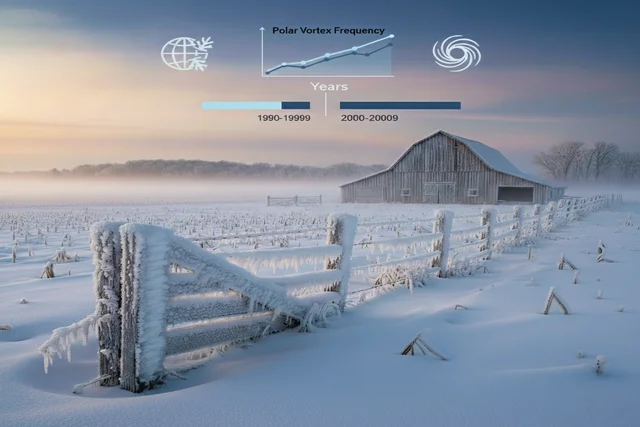
Predicting future weather patterns is challenging, but climate science gives us strong indicators. If we want readers to trust us, we must rely on data from credible sources like the National Oceanic and Atmospheric Administration (NOAA).
Historically, major sudden stratospheric warming (SSW) events, which disrupt the polar vortex and cause it to stretch south, occurred roughly every two years on average. However, there is significant decadal variability. NOAA records show that between 1990 and 1999, there were only two major warmings, but ten occurred between 2000 and 2009.
Right now, scientists do not see a robust systematic trend toward more frequent polar vortex disruptions in the historical record. The actual frequency of the initial disruption (SSW) has not significantly changed over the last 40 years.
The real issue is the impact and intensity when they do happen. The Intergovernmental Panel on Climate Change (IPCC) reports that human-caused greenhouse gases have increased the frequency and intensity of extreme weather events, particularly heatwaves and heavy rainfall.
While climate models do not consistently show an increase in the frequency of polar vortex events, the severity of surface-level cold air outbreaks is increasing due to their interaction with other warming climate patterns, such as rising ocean temperatures. Therefore, the extreme weather frequency we experience at ground level, like this Arctic Air Outbreak, is changing.
Winter survival tips in Arctic Blast 2026
When an Arctic Blast 2026 hits your region, immediate action can protect you and your family. Extreme cold poses serious risks, and preparedness makes all the difference. Follow these essential guidelines during the US winter storm safety alerts:
- Limit Outdoor Exposure: Wind chills of -30°F can cause frostbite in as little as 10 minutes. If you must go outside, dress in layers and cover all exposed skin.
- Prevent Frozen Pipes: Leave internal doors open and let a small stream of water drip from faucets. This constant movement helps prevent freezing and expensive damage.
- Check on Neighbors: Vulnerable individuals, especially the elderly, need extra attention during a national weather emergency. Make sure they have adequate heating and supplies.
- Stock Emergency Supplies: Ensure you have enough non-perishable food, water, medicine, flashlights, and a charged power bank in case of a power outage.
- Stay Informed: Continuously monitor local US winter storm updates from official channels like the National Weather Service.
Final Thoughts: Preparing for the New Climate Normal
Winter Storm Fern 2026 is more than a temporary cold snap; it highlights Global Weirding, where climate change drives weather to dangerous extremes. A stretched polar vortex causes immediate disruption, but systemic climate shifts create the conditions for these events.
We cannot assume such storms will remain rare. Strengthening power grids, resilient infrastructure, and emergency planning across the US is essential. Communities must prepare, but meaningful change also requires policy action to address the root causes of climate instability.
The frequency and intensity of events like the Stretched Polar Vortex Event demand immediate, sustained attention. Ignoring the science leaves millions exposed to the next Arctic blast.
Read more related articles: https://www.climatechallange.com/snow-in-hawaii-over-10-inches-of-snow-blanket-mauna-kea/
FAQS
Q1. What exactly is the polar vortex?
Ans. The polar vortex is a large area of low pressure and cold air surrounding the Earth’s North and South Poles. Normally, a strong jet stream keeps this cold air contained in the Arctic. A “stretched” or disrupted vortex allows this frigid air to push south, causing extreme cold weather events in the US.
Q2. Which US states are most affected by the current Arctic Blast 2026?
Ans. The Arctic Blast 2026 has heavily impacted the Midwest and Northeast. States like Illinois (Chicago), New York, and Texas have experienced record-low temperatures, widespread power outages, and significant travel disruptions, including over 5,000 flight cancellations.
Q3. What is the difference between “Global Warming” and “Global Weirding”?
Ans. Global Warming refers to the average temperature rise of the planet. Global Weirding is a term used to describe the increase in the frequency and intensity of all extreme weather events, both heatwaves and intense cold snaps like this Stretched Polar Vortex event.