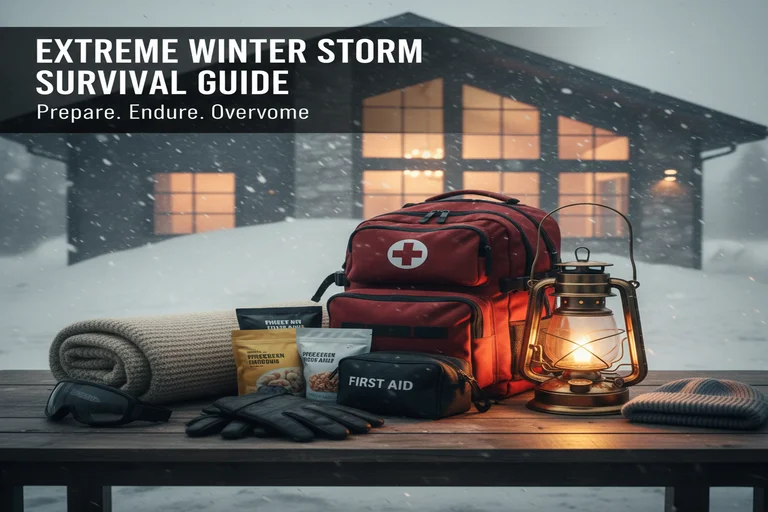
- Flashlights and extra batteries: Always carry bright LED flashlights with extra lithium batteries (they work better in cold) and a loud whistle for SOS signals.
- Portable chargers and power banks: During a multi-day outage, a high-capacity portable charger is your only link to weather alerts and emergency services.
- SOS signals and a whistle are very important if you get stuck outside.
- The 72 Hour Rule: Ensure you have enough non-perishable food and bottled water to last every family member at least three days.
- A first aid kit: Besides bandages and antiseptics, make sure you have a 7 day supply of any prescription medications.
- Multi tool and duct tape: Use for quick repairs and improvised solutions.
- Winter clothing layers: You should always wear thermal underwear, insulated jackets, and waterproof boots.
This 72 hour survival kit is your first line of defense during a winter power outage. Preparation is a continuous process, not a one time task. Don’t wait for the first snowflake to fall; make it a habit to regularly check and replenish your kit before the peak of winter. For the most up to date safety recommendations, always consult the official emergency guidelines from Ready.gov to ensure your family is fully protected.
Home Safety for Extreme Winter Storm Survival
Proactive home care is a pillar of extreme winter storm survival.
Learning how to thaw frozen pipes safely can save you from expensive home repairs. When it gets very cold, your house can be damaged by freezing winds and heavy snow. Problems like frozen pipes, ice building up on roofs, and heat escaping through poor insulation can end up costing thousands of dollars if you don’t take steps to prevent them.
How to Prevent Frozen Pipes and Water Damage
One of the most frequent winter emergencies is a burst pipe. To prevent this, you should maintain a slow, steady drip in your faucets to keep water moving. Additionally, opening cabinet doors under sinks allows warmer indoor air to circulate around exposed plumbing. For unheated areas like garages or basements, installing foam pipe insulation is a simple yet effective way to avoid a plumbing disaster.
Energy Saving Tips: Keeping Your House Warm Without Power
Retaining heat is just as important as generating it. You can significantly reduce heat loss by sealing windows with weather stripping or using heavy thermal curtains to block drafts. It’s also vital to check your attic’s insulation levels; proper airflow here prevents ‘ice damming,’ a condition where melting snow refreezes at the roof’s edge and causes structural leaks.
Alternative Heating Sources During Power Outages
When the power goes out during a blizzard, your home can get dangerously cold very quickly. Using alternative heating is necessary, but it must be done very carefully to prevent fire risks or invisible dangers like carbon monoxide.
If you use a portable generator, the most important rule is to always run it outdoors—at least 20 feet away from windows or vents. Never use it in a garage or basement, because carbon monoxide can be deadly. If you have a fireplace, make sure the chimney is professionally cleaned and always use a strong fire screen. For portable propane heaters, only use ones rated for indoor use and make sure the area is well ventilated to keep the air safe.
Cold Weather Survival: Recognizing Hypothermia & Frostbite
Extreme winter storms create life-threatening conditions like hypothermia and frostbite. You need to recognize the early warning signs so you can act quickly. According to the CDC’s health safety protocols, early detection can save lives during cold-weather exposure
Recognizing Hypothermia and Frostbite
Hypothermia happens when your body loses heat faster than it can make it. Look out for shivering, slow speech, tiredness, and confusion. If your skin turns bluish, get warm immediately. To prevent frostbite, keep your hands, feet, and face covered and dry, and avoid staying outside too long when temperatures fall below 32°F (0°C).
The Power of Layered Clothing
Wearing the right clothing is your best protection against the cold. Start with a moisture-wicking base layer to keep sweat off your skin. Add an insulating middle layer to hold in heat, and finish with a waterproof outer layer to block wind and snow. This combination keeps you warm and dry, even in strong winds.
Winter Safety for Pets and Livestock
Animals are just as vulnerable to the cold as humans. You can protect them by following these simple steps;
- Move pets indoors or provide heavily insulated shelters.
- Ensure livestock have dry bedding and constant access to unfrozen water.
- Check paws, ears, and tails regularly for signs of frostbite.
Your proactive care ensures the whole family stays safe until the storm passes.
Winter Driving Safety: Emergency Car Kit & Stranded Survival
Driving in a blizzard is dangerous, but preparation can save your life. Before you travel, check the National Weather Service for road conditions and learn how to protect your holiday from climate change to ensure your seasonal plans stay safe and resilient against extreme weather.
Building Your Winter Car Emergency Kit
Never travel in winter without a survival kit in your vehicle. Your kit should include blankets, a first-aid kit, extra food, and bottled water. You must also pack an ice scraper, a shovel, jumper cables, and a high lumen flashlight. These tools are essential if you get stuck or face a mechanical failure in the cold.
What to Do if Stranded in a Blizzard
Secondly, always check road conditions and have a winter car emergency kit before traveling in a snowstorm. If a storm traps you on the road, stay inside your car; it’s your safest shelter from wind and snow. Run the engine for heat, but only for about 10 minutes every hour. Most importantly, keep the exhaust pipe clear of snow to prevent dangerous carbon monoxide from building up inside.
Communication and Safety
Always carry a fully charged mobile phone and an extra power bank. Before you leave, inform a friend or family member of your exact route and expected arrival time. This ensures that help knows where to look if you don’t arrive as planned.
The Climate Connection: Why Winter Storms are Getting Worse
Many people ask why winter storms are becoming so severe. The answer lies in the changing polar vortex and global climate patterns. This large area of low pressure and cold air usually stays near the North Pole. However, climate change is now causing this vortex to shift southward more often.
The Impact of a Shifting Polar Vortex
When the polar vortex shifts, it sends extremely cold Arctic air into mid-latitude regions. This leads to more frequent and unpredictable snowstorms, along with more ice events and longer cold spells across North America. These changing patterns make preparing for extreme winter storms essential, not optional.
Why Planning for Extreme Winter Storm Survival is Now Critical
Warming oceans are also adding more moisture to the atmosphere. This moisture turns into heavy snowfall when it meets the arctic air. Because these storms are getting more intense, households must stay climate-ready. Understanding this connection helps you prepare for the next big freeze.
Extreme winter storms are no longer just seasonal events; they are part of a changing climate. Preparing for these arctic blasts is the best way to protect your home and family. By building an emergency kit and following extreme winter storm survival strategies, you can face the next big freeze with confidence. Don’t wait for the storm to hit—start your climate-ready journey today.
Read more related articles: https://www.climatechallange.com/best-countries-to-survive-in-climate-change-2025-top-10-list/
FAQS
Q1. How do I know if a winter storm is dangerous enough to stay indoors?
Ans. Check official alerts from the National Weather Service for your area. If you see heavy snow, ice, or winds above 35 mph, it is safest to stay indoors. These conditions can cause whiteouts and dangerous road freezes.
Q2. How can I keep my pets safe during a snowstorm?
Ans. Bring your pets indoors whenever you can. If they must stay outside, give them a well-insulated shelter and make sure their water doesn’t freeze. After being in the cold, always check their paws and ears for signs of frostbite.
Q3. What should be included in a winter car emergency kit?
Ans. A comprehensive kit includes blankets, food, water, a first-aid kit, a flashlight, an ice scraper, a shovel, jumper cables, and emergency signaling devices like flares or whistles.
Q4. How can I keep my house warm during a winter power outage?
Ans. To keep your house warm during a power outage, seal all drafts using towels or weather stripping and close off unused rooms to concentrate heat in a single area. Use heavy thermal curtains and wear multiple synthetic or wool layers to retain maximum body heat.