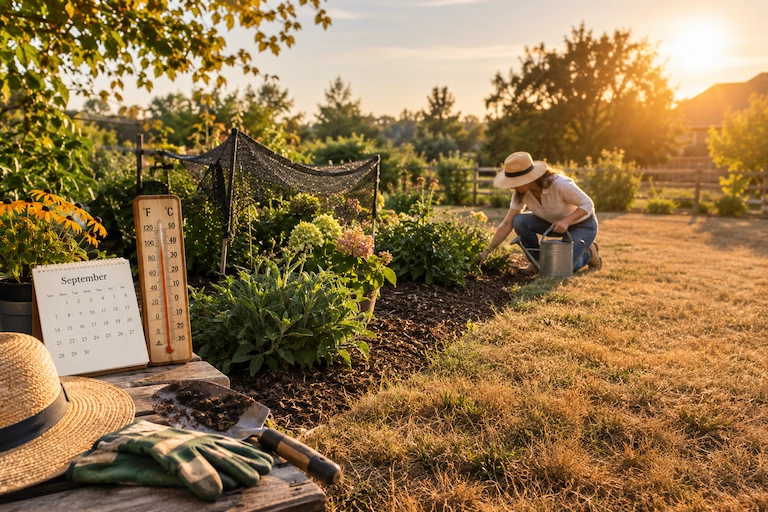
September Heat What U.S. Gardeners Need to Know
September heat is catching many U.S. gardeners off guard this year. Early September brought record breaking temperatures across large parts of the country. Gardeners who expect cooler fall conditions are instead facing another round of heat stress on plants. Here is what is happening and how to protect your garden through it.
What’s Happening: September 2026’s Record Heat
The first week of September 2026 turned out to be one of the hottest on record for many U.S. regions. The National Weather Service confirmed record early September heat in several areas, with some records dating back to the late 1800s. Heat index readings stayed near or above 105 degrees for several days in a row. This September heatwave followed a summer that NOAA has already confirmed as the hottest summer on record in the contiguous United States.
For gardeners, this means the usual fall transition is being delayed. Soil temperatures remain high, and plants are still under the kind of stress typically seen in July and August.
How Late Season Heat Stresses Your Plants
Most garden plants grow best between 59 and 86 degrees Fahrenheit. When temperatures climb above 90 degrees for extended periods, growth slows down. Above 104 degrees, many plants show visible heat stress even if they survive.
Common signs include leaf curling, wilting during the hottest part of the day, and blossom drop on tomatoes and peppers. Late season heat is especially hard on newly planted fall crops, since their root systems have not had time to establish before the heat hit.
Watering Rules During a September Heatwave
Correct watering matters more than almost anything else right now. Water in the early morning, ideally before 9 AM, so the soil can absorb moisture before it evaporates. Watering plants during a heatwave should always be deep rather than frequent. Aim for about 1 inch of water per week, delivered in two or three deep soakings rather than daily light watering
Shallow, frequent watering encourages roots to stay near the surface, which makes plants more vulnerable to heat stress. Deep watering builds stronger root systems that can reach cooler, moister soil.

For a complete visual walkthrough on keeping your garden hydrated, watch this brilliant Summer Watering Masterclass by Adam’s Garden Guides, which covers deep root soaking and drought protection techniques.
Quick Perspective: During a heatwave, a plant’s water needs can roughly double because higher temperatures speed up transpiration, the process plants use to release moisture through their leaves.
Protecting Vegetables and Fall Crops Drought stressed plants and newly planted seedlings need extra attention during a September heatwave. A few practical steps can make a real difference.
- Add a 2 to 3 inch layer of mulch to help the soil hold moisture longer
- Provide temporary shade cloth for vegetables during peak afternoon sun
- Delay transplanting new seedlings until temperatures ease slightly
- Check soil moisture daily rather than relying on a fixed watering schedule
These steps protect both established plants and the fall crops many gardeners are trying to get started right now.
Helping Your Lawn Recover After a Heatwave
When September brings cooler weather, your plants may still need time to recover from the heat.
- Wait before fertilizing: Do not use heavy fertilizer right after a heatwave. Wait until the plant starts showing new, healthy growth.
- Prune only dead leaves: Remove leaves that are completely dry, brown, or crispy. Avoid heavy pruning while the plant is still recovering.
- Keep watering regularly: Slowly adjust your watering schedule as the weather cools. Do not stop watering suddenly.
Heat Tolerant Plants to Consider Now
If late season heat keeps returning each year, it may be worth adjusting what you plant. Heat tolerant plants bred for hot conditions handle these swings far better than traditional varieties. Options include heat resistant tomato varieties, cowpeas, okra, and heat tolerant pepper types built for extended warm spells. Building soil with more organic matter also helps. Soil with 5 to 9 percent organic matter, such as compost or aged manure, holds water far better than mineral poor soil, which gives plants a buffer during unexpected heat.
Adjusting Your Fall Planting Schedule
Most fall planting calendars assume cooler soil by early September. This year’s heat is throwing that timeline off. Planting too early into hot, dry soil can stress seeds before they even germinate, especially for cool season crops like spinach, lettuce, and broccoli. A better approach is to check soil temperature directly instead of relying on the calendar. Most fall vegetables germinate best once soil temperatures drop below 75 degrees. If a soil thermometer is not available, waiting for a stretch of nights in the 60s is a reasonable substitute. Delaying planting by one or two weeks during a September heatwave is usually safer than pushing seeds into overheated soil.
Protecting Your Lawn and Turfgrass
September is usually a good time for lawn care and overseeding in many parts of the U.S. But when late season heat continues, it’s better to adjust your plans.
- Wait on overseeding: Hold off on new grass seed or sod until the soil cools down. Hot soil can make it harder for grass seed to germinate and establish.
- Mow a little higher: Raise your mower blade. Taller grass helps shade the soil, slows moisture loss, and keeps the roots cooler.
- Water deeply: Water your lawn deeply in the early morning, especially during dry periods. This helps the roots grow deeper and gives the grass better support during heat.
Final Takeaway
September heat has arrived earlier and stronger than most gardeners expected this year, with several regions setting new records in just the first week of the month. The best response is to keep watching local conditions closely rather than assuming fall has cooled things down. Adjusting watering habits, protecting new seedlings, and choosing heat tolerant varieties can help gardens handle this kind of late season heat. As fall planting season continues, staying flexible with timing will matter more than following a fixed calendar date.
Read more related articles: March Heat Wave Garden Tips 5 Easy Ways To Save Your Plant
FAQs Q1: Why is September so hot this year?
Ans: Multiple U.S. regions saw record breaking heat in early September 2026, following the hottest summer on record. Warmer overall climate patterns are extending the heat season later into fall.
Q2: How much extra water do plants need during a September heatwave?
Ans: Water needs can roughly double during extreme heat since plants lose moisture faster. Deep watering two to three times a week works better than daily light watering.
Q3: Should I still plant fall crops during a heatwave?
Ans: It’s better to wait until temperatures ease slightly. Newly planted seedlings are more vulnerable to heat stress than established plants.
Q4: What are signs of heat stress in plants?
Ans: Leaf curling, wilting during peak afternoon heat, and blossom drop are common signs. These usually appear when temperatures stay above 90 degrees for several days.