Hunga Tonga Eruption Destroyed Methane, Scientists Find
The Hunga Tonga eruption of 2022 is still teaching scientists new things about the atmosphere. New research 2026 shows the giant underwater blast triggered chemical reactions that rapidly increased methane oxidation in its volcanic plume. The discovery is giving climate scientists fresh insight into how volcanic chemistry can affect methane in the atmosphere.
What Happened During the Hunga Tonga Eruption
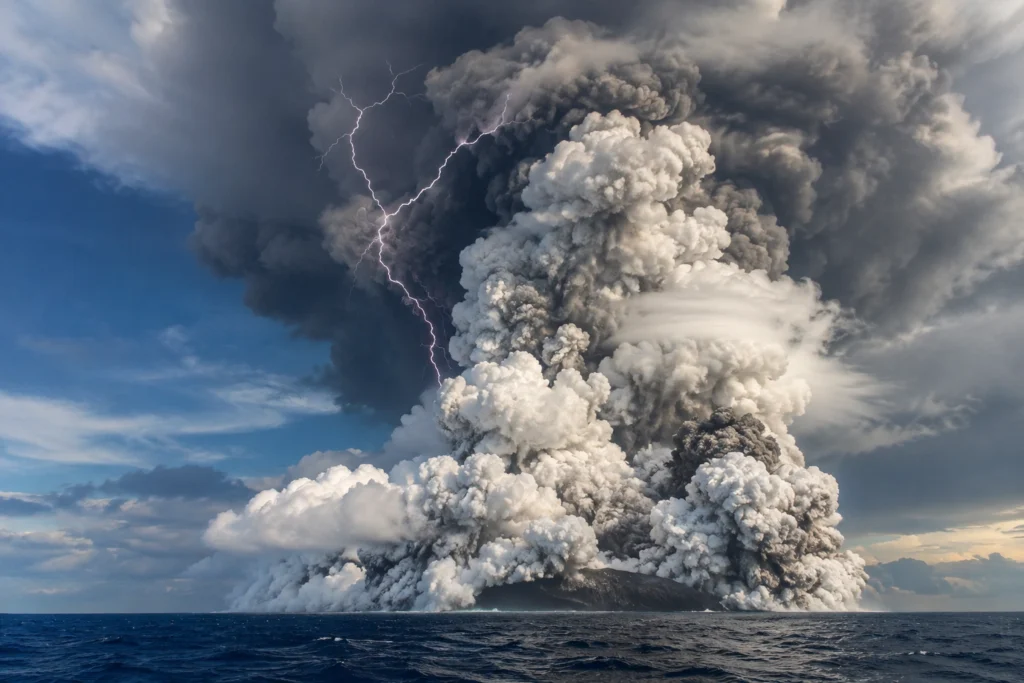
In January 2022, the Hunga Tonga-Hunga Ha’apai volcano in the South Pacific erupted with rare force. The blast sent a massive plume of ash, gas, and seawater soaring more than 55 kilometers into the sky. It reached all the way into the stratosphere. Along with ash, the eruption pushed an enormous amount of stratospheric water vapor into the upper atmosphere, more than any single eruption on record.
Because so much seawater was vaporized instantly, the Tonga volcanic plume behaved differently than a typical eruption cloud. This unusual mix of water vapor, salt particles, and volcanic gas set the stage for a chemical reaction nobody expected.
How the Tonga Volcanic Plume Destroyed Methane
Researchers studying satellite data noticed something strange in the plume. Levels of formaldehyde formation were unusually high. Formaldehyde is a telltale sign that methane in the atmosphere is breaking down. This pointed scientists toward a chain reaction they had not seen at this scale before.
The likely explanation involves reactive chlorine. Volcanic ash mixed with the salty seawater that got swept up during the eruption. Sunlight then triggered a reaction that produced chlorine particles. These particles are highly effective at breaking apart methane molecules through a process called methane oxidation. In simple terms, the volcano created its own natural cleanup crew. It went after part of the greenhouse gas it had just released.
This kind of atmospheric chemistry is rare on this scale. That is one reason the Hunga Tonga volcano eruption has become such an important case study for climate researchers.
Quick Perspective: To put this into context, researchers estimate the volcanic plume destroyed around 900 metric tons of methane every single day. That is roughly equal to wiping out the daily methane emissions of about 2 million cows.
The Science Behind It
The findings were detailed in research connected to Nature Communications and echoed by a University of Copenhagen research team. Scientists used advanced satellite measurements to trace the formaldehyde signal back to its source, confirming that the plume itself was responsible for breaking down methane rather than an unrelated atmospheric event.
Methane is currently responsible for roughly a third of global warming, and it is about 80 times more potent than carbon dioxide over a 20 year period. The upside is that methane does not stick around as long as CO2, usually breaking down within about a decade. That short lifespan is exactly why researchers are so interested in anything that can speed up its removal from the atmosphere.
How Volcanoes Impact Climate Change
Volcanoes have always been one of the natural forces that can affect the climate, though usually not in this direction. Large eruptions typically release sulfur dioxide, which converts into sulfate aerosols and can actually cool the planet for a year or two by reflecting sunlight. At the same time, volcanic carbon dioxide adds to the greenhouse effect over the long run.
The Hunga Tonga volcano eruption stood out because its main climate impact came from water vapor rather than sulfur. That water vapor has been linked to short term warming effects, which makes the methane destroying reaction even more interesting, since it shows the same eruption producing effects that pull in different directions.
Can Volcanic Eruptions Reduce Global Warming?
It is tempting to see this as a natural solution to climate change, but scientists are cautious. Underwater volcano methane destruction on this scale required a very specific combination of ash, seawater, and sunlight that is not easy to recreate or rely on. Researchers describe it as a valuable natural experiment rather than a repeatable climate fix.
Even so, the discovery is useful. It gives scientists a real world example of how chlorine chemistry can break down methane quickly, and that knowledge could eventually help shape future strategies for cutting methane emissions through engineered or atmospheric approaches.
What This Means for Future Climate Science
This discovery is opening new doors for climate science. Scientists now have real proof that natural chlorine reactions can break down methane fast, and that changes how researchers think about methane removal. Some experts are already exploring whether this same iron salt aerosol process could be replicated on purpose to speed up methane cleanup in the atmosphere.
The Hunga Tonga eruption also gave researchers a new tool. Satellites can now be used to track methane destruction in real time by watching for formaldehyde signals. That method could help verify whether future methane reduction technologies are actually working, rather than relying on estimates alone.
Final Verdict
The Hunga Tonga eruption continues to surprise researchers years after it happened. Its role in accelerating methane oxidation shows just how complex atmospheric chemistry can be, and while it will not solve climate change on its own, it offers scientists a rare glimpse into natural processes that could one day inform how greenhouse gases are reduced.
For another look at recent volcanic activity, see our Volcano Eruption in Ethiopia update.
FAQs
Q1: What is the Hunga Tonga eruption known for?
Ans: It is known for its record breaking stratospheric water vapor release and, more recently, for accidentally destroying part of its own methane pollution.
Q2: How did the volcanic plume destroy methane?
Ans: Volcanic ash mixed with seawater and sunlight created reactive chlorine, which broke down methane through oxidation.
Q3: Can volcanoes help reduce global warming?
Ans: Not directly. This event is being studied as a rare natural process, not a reliable or repeatable climate solution.
Q4: What is stratospheric water vapor?
Ans: It is water vapor that reaches the stratosphere during major eruptions, where it can linger for years and affect atmospheric temperature.