Endangered Amazon Trees Why Protected Areas Aren’t Enough
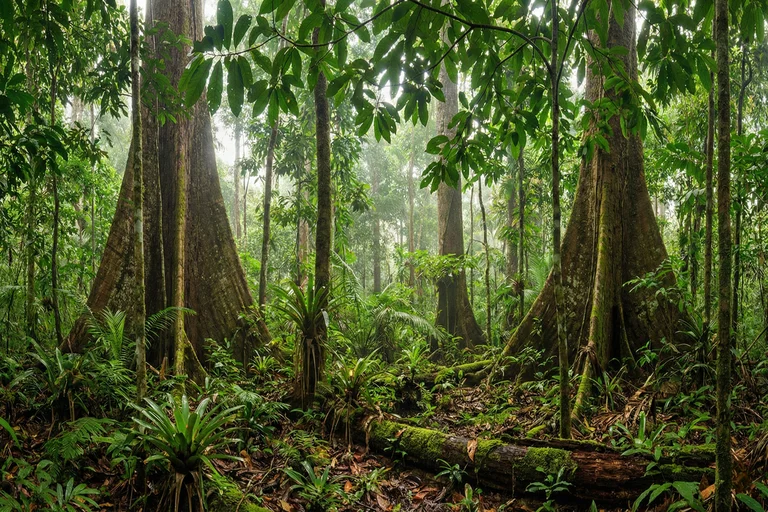
The Amazon rainforest is one of the most iconic landscapes on Earth—a vast web of life that supports an astonishing array of species, regulates regional and global climate, and stores more carbon than almost any other forest on the planet. But beneath its emerald canopy, a less visible crisis is unfolding. Many of the endangered Amazon trees are now at risk of extinction—not just because forests are being cleared, but because the threats they face go far beyond the lines on a map marking protected areas.
Scientists estimate that the Amazon is home to more than 15,000 different tree species—a richness unmatched anywhere else on the planet. Recent research demonstrated that up to 53% of those species could be classified as threatened if current trends continue. This is a critical warning: the future of the endangered Amazon trees is closely tied to how we manage not just protected areas but entire forest landscapes.
How Big Is the Threat to Amazon Trees?
To understand the scale of the problem, consider this: the Amazon contains more than 15,000 tree species, from towering canopy giants to rare understory species found nowhere else on Earth. But scientific models combining deforestation data with climate projections estimate that by 2050, up to 58% of these species may lose most of their suitable habitat, and 53% could be classified as threatened under IUCN criteria.
This is because tree species are sensitive not just to losing ground but also to shifts in temperature, rainfall patterns, and soil conditions—all of which are changing rapidly as the climate warms. Satellite-based monitoring in Brazil shows that more than 6,500 square kilometers of the Amazon could face deforestation in 2025 alone—an increase compared to recent years. The states of Pará, Amazonas, and Mato Grosso appear to be among the most at risk.
Satellite-based monitoring in Brazil shows that more than 6,500 square kilometers of the Amazon could face deforestation in 2025 alone—an increase compared to recent years. The states of Pará, Amazonas, and Mato Grosso appear to be among the most at risk.
Why Protected Areas Alone Aren’t Enough

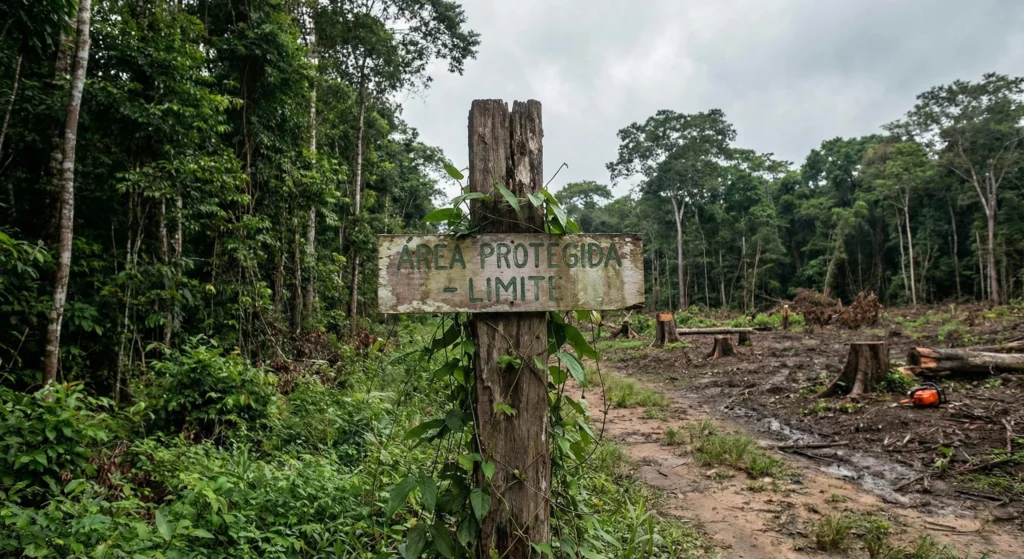
For decades, governments and conservation groups have worked to create national parks, reserves, and Indigenous lands as a way to preserve the Amazon. These areas are crucial — but they’re proving to be only part of the solution.
1. Deforestation Still Happens Inside Protected Borders
Protected areas do help slow forest loss, but they aren’t impregnable. A recent example comes from the Triunfo do Xingu Environmental Protection Area in Brazil, where more than 40% of primary forest cover was lost despite its protected status. Satellite data show that deforestation continued inside the reserve and even spread into neighboring ecological stations.
This happens because protected status doesn’t automatically mean effective enforcement. Illegal logging, land grabbing, and agricultural expansion can still push into these areas when resources and monitoring are limited.
2. Fragmentation and Edge Effects Weaken Forest Resilience
Even when trees aren’t completely cleared, fragmentation—breaking continuous forest into smaller patches—weakens the entire ecosystem. Trees along the edges of these fragments face tougher conditions, including higher temperatures, stronger sunlight, and drier soil. These edge effects put the trees under stress, making the forest less resilient, increasing tree mortality, and reducing biodiversity.
For small and rare species—many of them classified as endangered Amazon trees—even subtle environmental changes can push them toward local or even complete extinction.
3. Climate Change Is Redrawing the Survival Map
Protected areas are designed around current ecological conditions. But the climate is moving faster than many conservation plans. Hotter temperatures and shifting rains are already altering the Amazon’s hydrological cycles. This affects water availability, soil moisture, and the resilience of tree species that evolved under more stable conditions.
While some giant trees show surprising resilience—for example, recent research found that certain large species are actually growing faster with higher CO₂ levels in the atmosphere — this doesn’t guarantee long‑term survival if droughts, fires, and heat stress intensify.
That means endangered Amazon trees might be clinging on in protected areas today but may not find suitable conditions there tomorrow.
How Indigenous Lands Help—and Why They Matter
Research shows that deforestation rates in Amazon territories managed by Indigenous peoples are significantly lower than in neighbouring unprotected lands—sometimes by as much as 83%. This isn’t a coincidence. Indigenous communities protect forests as part of their cultural identity and economic survival. Their stewardship underscores an important truth: written protections aren’t enough—forests need active guardianship on the ground.
Innovations and Gaps in Protection
Monitoring and Enforcement Tools
New satellite monitoring technologies (like Brazil’s real‑time deforestation alert systems) are improving enforcement and showing that deforestation can be detected and deterred faster than ever before. However, enforcement remains inconsistent across jurisdictions and often lacks the resources for sustained impact.
Conservation Planning Must Evolve
Experts now argue that measures focused solely on setting aside land must shift toward active, adaptive management. This means:
- Prioritizing enforcement and capacity building, not just area expansion.
- Designing reserves that include climate refugia and ecological corridors.
- Supporting Indigenous management systems as core conservation partners.
- Integrating climate response strategies, not just static conservation lines.
Protected areas still matter, but they must be better managed to confront evolving threats.
To ensure Amazon tree species not only survive but flourish, conservation must go beyond mapping reserves. Key priorities include:
- Curbing illegal deforestation and land conversion.
- Strengthening governance and law enforcement in and around reserves.
- Expanding networks to include climate‑refuge zones.
- Supporting Indigenous forest stewardship.
- Increasing scientific research in under‑studied regions before species disappear.
Protecting trees in the Amazon is not just a local concern—it’s integral to the global climate, water cycles, and planetary biodiversity.
The survival of endangered Amazon trees is not guaranteed by maps or laws alone. Protected areas provide a necessary foundation, but active management, Indigenous stewardship, and climate-adaptive strategies are essential. Conservation must go beyond static boundaries, integrating enforcement, ecological planning, and local community engagement.
If these steps are taken, the Amazon can remain a vibrant forest—a home to countless tree species, a carbon sink for the planet, and a living testament to the power of effective, human-centered conservation.
Read more related articles> https://www.climatechallange.com/what-will-happen-if-amazon-forest-is-destroyed/
FAQS
Q1. Why are so many Amazon trees endangered?
Ans. Amazon trees are endangered mainly due to deforestation, illegal logging, habitat fragmentation, and climate change. These pressures reduce their habitat, affect reproduction, and weaken forest resilience, putting hundreds of species at risk of extinction.
Q2. How do Indigenous communities help protect Amazon trees?
Ans. Indigenous lands often experience far less deforestation because communities actively manage and monitor forests. Their traditional knowledge and stewardship practices safeguard biodiversity and maintain ecological balance.
Q3. Can reforestation help endangered Amazon tree species?
Ans. Reforestation with native species restores degraded areas, reconnects fragmented habitats, and provides shelter and resources for wildlife, helping endangered trees and other species recover.
Q4. What immediate actions can save Amazon trees from extinction?
Ans. Combining stronger law enforcement, Indigenous stewardship, climate-adaptive management, and forest restoration is critical. Collaborative action ensures that endangered tree species can thrive despite ongoing threats.