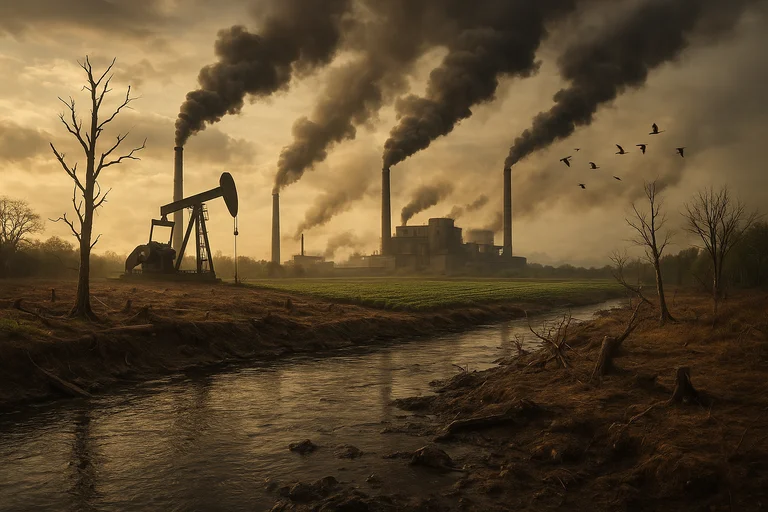
Fossil Fuel Environmental Damage $5 Billion Lost Every Hour
Fossil fuels power much of our modern world, but the hidden costs are enormous. Every hour, the planet suffers roughly $5 billion in environmental damage, from polluted air and water to climate disasters and economic losses. Understanding how fossil fuel environmental damage is essential, as it reveals how they harm our health, threaten our future, and put the well-being of our planet at risk.
How Do These Billions Affect Our Lives? The Shocking Reality Revealed
Fossil fuel environmental damage is not just a distant, abstract problem—it directly affects our lives every day. The burning of coal, oil, and natural gas powers modern life, from electricity to transportation, but at an enormous hidden cost. Experts estimate that fossil fuel-related environmental damage costs the world around $5 billion every hour. These losses go beyond money—they represent human lives, health crises, and ecosystems on the brink of collapse.
Communities around the world are already feeling the harsh effects of fossil fuel dependence: floods that wipe out homes, wildfires that ravage forests, heatwaves that endanger human health, and polluted air that exacerbates chronic diseases. Even everyday activities like commuting or heating our homes come with hidden costs—both financial and ecological. This is the devastating reality behind the $5 billion hourly toll of fossil fuel environmental damage.
Fossil fuel damage also threatens food production. Climate change, driven by greenhouse gas emissions, disrupts rainfall patterns and extends droughts, while heatwaves damage crops and reduce yields. Industrial agriculture itself depends heavily on fossil fuels—for fertilizers, machinery, and transport—creating a cycle where energy use and food production amplify environmental harm.
The $5 Billion Price Tag: How Is This Damage Calculated?
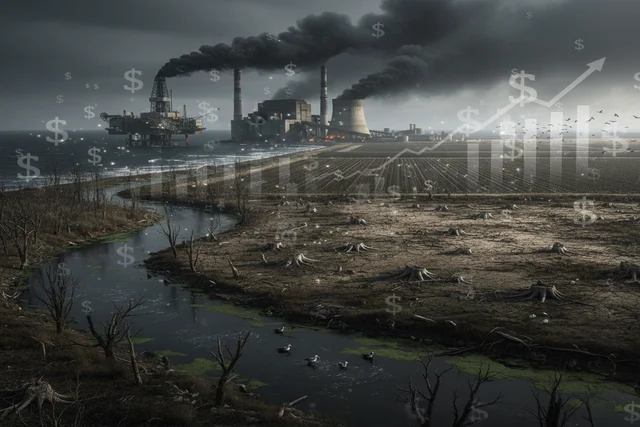
Calculating the economic impact of fossil fuel environmental damage is complex, but experts have developed sophisticated models that consider multiple factors. These calculations include:
1. Healthcare costs:
Air pollution from fossil fuels causes illness, hospital visits, chronic disease, and lost work productivity, burdening health systems worldwide.
2. Extreme Weather and Infrastructure:
Climate change, fueled by greenhouse gas emissions, leads to storms, floods, and fires that destroy homes, roads, and power grids — all of which cost billions to rebuild.
3. Ecosystem degradation:
Loss of wetlands, forests, and coral reefs that act as natural buffers against storms and floods.
4. Agricultural losses and food system contribution:
Droughts, extreme temperatures, and soil degradation driven by climate change destroy large amounts of crops each year. Food production that relies on fossil fuels—such as industrial farming, fertilizers, irrigation systems, machinery, and transportation—also contributes heavily to environmental damage. Globally, environmental damage amounts to roughly $45 trillion per year. Of that total, the food system accounts for about $20 trillion, transportation for about $13 trillion, and fossil-fuel-powered electricity for about $12 trillion, as highlighted in the UN Global Environment Outlook (GEO) report. These figures show that food production is also a major part of the estimated $5 billion per hour in environmental damage, alongside the impacts of fossil fuels, and it continues to affect ecosystems, food security, and local economies across the globe.
By factoring in these costs, researchers estimate that the world loses an average of $5 billion every hour due to fossil fuel-related environmental damage. This encompasses both immediate financial losses and long-term consequences for human health, biodiversity, and economic stability. Every dollar spent repairing the damage could have been invested in preventing it.
A Price on Our Health: Water Pollution and Ecosystem Damage
Air pollution is one of the most direct ways fossil fuel environmental damage impacts human life. Power plants, industrial facilities, and vehicles release particulate matter (PM2.5), nitrogen oxides, sulfur dioxide, and other toxic substances into the air. Prolonged exposure leads to asthma, lung cancer, cardiovascular disease, and premature death. Children, the elderly, and communities near industrial zones are most at risk, making air pollution a major public health crisis.
Water contamination is another hidden yet critical threat posed by fossil fuel damage. Oil spills, chemical runoff from coal mining, and industrial wastewater seep into rivers, lakes, and oceans, contaminating drinking water, fisheries, and agricultural systems. These pollutants not only disrupt local economies and livelihoods but also devastate ecosystems, leading to higher healthcare and economic costs. This escalating damage adds to the staggering $5 billion hourly toll of fossil fuel pollution.
The Climate Emergency: When Nature Fights Back
Fossil fuel environmental damage is a primary driver of climate change. Carbon dioxide and methane emissions trap heat in the atmosphere, causing global temperatures to rise, glaciers to melt, and sea levels to increase. Extreme weather events such as hurricanes, wildfires, and floods are becoming more frequent and severe, displacing millions and destroying infrastructure.
To underscore the urgency, the latest IPCC report warns that global greenhouse gas emissions must peak by 2025 at the latest, then drop by about 43% by 2030 to have any chance of limiting global warming to 1.5°C. Without immediate action, the risks of irreversible environmental damage, economic losses, and human suffering will grow exponentially.
The economic implications are staggering. Hurricanes obliterate homes and businesses, wildfires ravage forests and infrastructure, and floods destroy crops and contaminate water systems. Each disaster costs billions to repair and leaves lasting social and psychological scars on affected communities. Fossil fuel environmental damage isn’t just an environmental or health issue—it’s an escalating economic crisis that demands urgent, systemic action.
Whose Responsibility Is It? The Public or Big Oil?
Assigning responsibility for fossil fuel environmental damage is a complex challenge. On one hand, corporations that extract, process, and burn fossil fuels carry a significant portion of the blame. Big oil and gas companies reap enormous profits while shifting the environmental and social costs onto society. Their operations directly release harmful greenhouse gases, pollutants, and toxic chemicals into the environment.
On the other hand, public demand fuels fossil fuel consumption. Cars, airplanes, heating systems, and industrial energy use all contribute to harmful emissions. While individuals do play a role in their energy choices, systemic change is the key. Governments, corporations, and citizens alike must take active responsibility in reducing emissions, transitioning to clean energy, and embracing sustainable practices. The responsibility is collective, but large-scale action and strong regulation are essential to prevent further damage.
Securing Our Future: 3 Essential Steps to Take Now
Reducing the $5 billion per hour cost of fossil fuel environmental damage requires immediate, targeted action. Here are three essential steps:
1. Transition to Renewable Energy—Wind, solar, and hydroelectric power generate electricity without harmful emissions, cutting air pollution and climate risks. Investment in renewable infrastructure creates jobs while protecting communities and ecosystems.
2. Strengthen Environmental Policies—Governments must implement stricter emission regulations, carbon pricing, and incentives for clean energy adoption. Policies that penalize pollution while rewarding sustainable practices encourage corporations and consumers to make greener choices.
3. Adopt Innovative Technologies— Beyond renewable energy, technological solutions like Carbon Capture, Utilization, and Storage (CCUS) are gaining traction. In 2025, CCUS projects have increased by 54% year-on-year, with companies employing advanced techniques, including AI, to capture CO₂ directly from the air. When combined with renewable energy, these innovations can dramatically reduce fossil fuel environmental damage and help secure a sustainable future.
These steps strike a balance between traditional renewable energy solutions and emerging technologies, offering a comprehensive approach to addressing the environmental and economic costs of fossil fuels.
The Time for Action is Now: Let’s Build a Better World
Fossil fuel environmental damage is not a future threat—it is happening right now, costing $5 billion every hour and affecting millions of lives globally. From air and water pollution to climate disasters and economic instability, the consequences are both immediate and long-term.
Acting now is imperative. By transitioning to renewable energy, implementing strong environmental policies, and adopting innovations like carbon capture, we can reduce environmental damage, protect human health, and preserve ecosystems. The IPCC warns that emissions must peak by 2025 to avoid catastrophic warming, reinforcing that the window for meaningful action is short.
Every policy, corporate decision, and individual choice matters. Reducing fossil fuel environmental damage today means lower healthcare costs, stronger economies, safer communities, and a sustainable planet for future generations. The challenge is significant, but so is the opportunity. Together, we can transform energy systems, mitigate climate risks, and build a cleaner, safer, and more resilient world.
Read more related articles> https://www.climatechallange.com/cop30-2025-report-fossil-fuels-forests-climate-finance/
FAQS
Q1: What is fossil fuel environmental damage?
Ans. Fossil fuel environmental damage refers to the economic, health, and ecological costs caused by burning coal, oil, and natural gas. This includes air and water pollution, climate change, and ecosystem destruction.
Q2: Can renewable energy and technology help reduce these losses?
Ans. Renewable energy sources like solar, wind, and hydro reduce greenhouse gas emissions and pollution. Additionally, technologies such as Carbon Capture, Utilization, and Storage (CCUS) are becoming more effective in removing CO₂ from the air. Together, they lower health risks and long-term costs.
Q3: What are the main environmental disadvantages of using fossil fuels?
Ans. The primary disadvantages include the release of large amounts of greenhouse gases such as CO2 and methane that link to climate change, air pollution that causes millions of premature deaths annually, and water contamination from extraction and spills.
Q3: What immediate actions can help secure our future?
Ans. Investing in renewables, enforcing stricter environmental policies, and adopting carbon capture technology are crucial. Individuals and communities can also contribute through energy efficiency, sustainable transport, and local environmental initiatives.