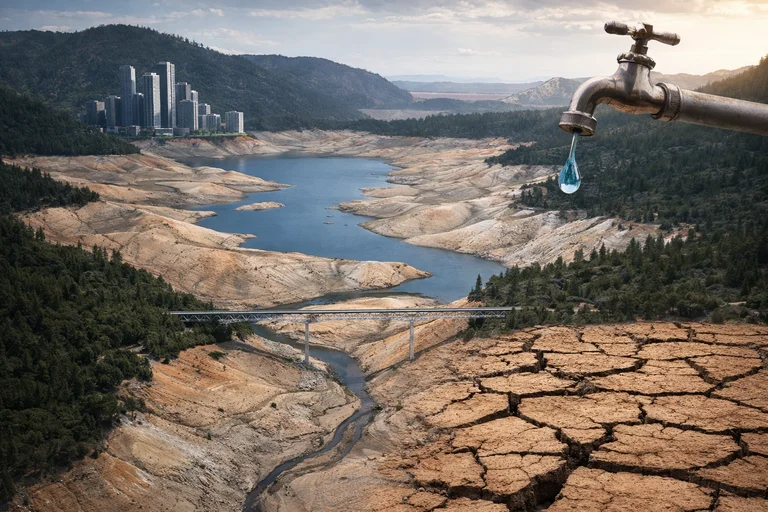
Global Water and the Future Who Will Control Dwindling Resources
Global water and the future of our planet are now linked in a way we never expected. Honestly, the days of taking a glass of clean water for granted are quickly fading away. While we’ve spent decades talking about saving the environment, the situation in 2026 has turned into a fight for survival. It’s no longer just a headline; it’s a reality where blue gold is becoming more valuable than oil, and everyone from big governments to giant corporations wants a piece of it.
But here’s the real talk: as our freshwater sources dry up, the world is moving towards a massive power struggle. It’s not just about thirst anymore; it’s about who holds the keys to the world’s remaining reservoirs. If we don’t understand who is trying to control these dwindling resources right now, we might find ourselves paying a heavy price for a basic human right in the very near future.
Water in 2026: Why We Are Running Out of Blue Gold
If you think the next major conflict will be over oil or gold, take a closer look at your local water supply. As global water and the future of nations become more unstable, a new kind of power dynamic is emerging. It’s a mix of government control and private interest.
In many parts of the world, we are seeing water sovereignty become a tool for political leverage. If a country controls the headwaters of a major river, they essentially hold the lifeblood of every nation downstream. But it’s not just governments; private corporations are quietly buying up land with massive groundwater reserves. They know that in the near future, owning a clean well will be more profitable than owning an oil well. The GWFO (Global Water Futures Observatories) has been highlighting these shifting hydrological limits, warning us that without global cooperation, the control of these resources will fall into the hands of a very small, very powerful elite.
The Fight for Control Who Owns the Rain?
When we talk about global water and the future, we have to address the elephant in the room: Power. In a world where freshwater is disappearing, whoever controls the source controls everything. It’s no longer just about farming or drinking; it’s about national security. Countries that share rivers are already seeing tensions rise. If one nation builds a dam upstream, the one downstream faces a direct threat to its existence.
This is no longer just a battle between countries. Major corporations now treat water as a private asset. They are purchasing thousands of acres of land not for farming, but for the vast aquifers beneath it.
The Global Water Futures Observatories (GWFO) describes this trend as the privatization of survival. According to its research, if this pattern continues, the divide between the water rich and the water poor could become the largest inequality in human history.
The Global Impact From US Plains to European Rivers
Many people once believed that the water crisis was only a third world problem, but 2026 has proven that assumption wrong. Take the United States as an example the massive Ogallala Aquifer, which supplies water to America’s agricultural heartland, is declining at an alarming rate. Farmers are watching wells that have supported their families for generations run dry.
The situation in Europe isn’t much better. Major rivers that were once the highways of trade are hitting record low levels, disrupting everything from transport to energy production. The Global Water Futures Observatories has been sounding the alarm on this for a while, pointing out that Europe’s hidden water reserves are much more fragile than we thought. When the GWFO monitors these regions, they see the same pattern everywhere: we are taking more than we can give back, and the future we were worried about is officially here.
The 2026 Crisis in Figures: Latest GWFO Global Water Insights
If we look at the cold, hard facts, the future of global water becomes even more urgent. The latest reports from the Global Water Futures Observatories (GWFO) show that nearly 2 billion people about a quarter of the world’s population, now live in countries facing high water stress.
The economic impact makes the situation even more alarming. The World Bank warns that water scarcity, intensified by climate change, could reduce some regions’ GDP by up to 6% by 2050.
In the United States, the situation is visible in the shrinking Lake Mead and Lake Powell, which have hit their lowest levels since they were filled. Data from the Global Water Futures Observatories shows that the Colorado River basin, which supports 40 million people, has lost nearly 20% of its flow over the last two decades.
Moving over to Europe, the Old Continent is facing its worst drought in 500 years. The GWFO (Global Water Futures Observatories) has highlighted that major rivers like the Rhine and the Po have seen their water levels drop by over 30% during peak summer months, disrupting not just agriculture but also the cooling of nuclear power plants and cargo shipping. These aren’t just random dry spells the GWFO monitoring confirms that we are seeing a permanent shift in the planet’s hydrological balance.
The Rise of Blue Gold Why Water is the New Oil
When we talk about the future, we also have to talk about money. Investors are no longer focusing only on tech stocks; they are actively buying water rights. In some parts of the world, traders already buy and sell water futures on Wall Street, just as they do with gold or oil. This shift shows that global water resources and our future are rapidly turning into commodities.
As the Global Water Futures Observatories points out, when a basic necessity becomes a tradable asset, the risk of “water inequality” skyrockets. The GWFO’s research into global resource management warns that if we don’t implement strict international laws, the wealthy will always have lush gardens while the poor struggle for a clean glass of water. It’s a harsh reality, but it’s the one we are currently building.
Innovations for Survival Can Technology Save Global Water and the Future?
While the data paints a grim picture, the race for a technological fix is accelerating like never before. Desalination, turning seawater into drinkable water, is expanding rapidly. But there’s a catch: it’s costly and consumes enormous amounts of energy.
For our cities and global water resources to have a sustainable future, we can’t rely solely on expensive machines. We need green desalination methods that provide water without harming our oceans in the process.
Beyond big tech, AI powered irrigation is transforming farming. By analyzing satellite data, farmers can now save up to 40% of the water that used to go to waste.
These smart resource management tools could determine which countries survive the water bankruptcy and which ones falter. If we pair this technology with stronger regulations, we may still be able to protect our Blue Gold before it’s too late.
In the end, the struggle for global water and the future of our planet isn’t just a science project; it’s a human rights issue. We are moving into a period where every single drop counts, and whether we treat water as a private product or a shared resource will define the next century.
The data is clear: we are rapidly approaching the limits of our shrinking water resources. If we fail to change how we manage what remains, the water bankruptcy we see in 2026 will be just the beginning.
Organizations like the Global Water Futures Observatories (GWFO) are sounding the alarm, but the real solution lies with us. Whether through innovative technology, stricter regulations, or simply reducing our water footprint, the time to act is now. The future is arriving fast, let’s make sure we aren’t left high and dry.
Read more related articles: https://www.climatechallange.com/the-global-water-crisis-causes-consequences-and-solutions/
FAQS
Q1. What are the main causes of our planet’s dwindling resources?
Ans. The main drivers are overconsumption, industrial pollution, and a growing global population that places enormous pressure on natural systems. When it comes to global water and the future, our freshwater resources are being drained because we treat them as limitless instead of finite assets. Pollution and climate driven droughts are only speeding up this depletion.
Q2. Who will control the world’s water resources in the next decade?
Ans. Control is shifting toward a mix of powerful governments and private corporations. As global water and the future of economies become linked, water is being treated as (blue gold). Nations that control river headwaters and companies that own massive groundwater aquifers will likely hold the most power.
Q3. Can technology solve the global water crisis?
Ans. Technology like desalination (removing salt from seawater) and AI driven smart irrigation can help, but they aren’t magic bullets. High costs and energy needs remain a challenge. True sustainability for our future depends on combining these innovations with strict conservation laws and protecting our natural ecosystems.
Q4. What is the water bankruptcy predicted for 2026?
Ans. This term refers to the point at which a region’s water debt surpasses its income from rainfall and snowmelt. By 2026, many major aquifers in the US and Europe are projected to reach record low levels, making it impossible to sustain current agricultural and industrial demands without drastic reductions.