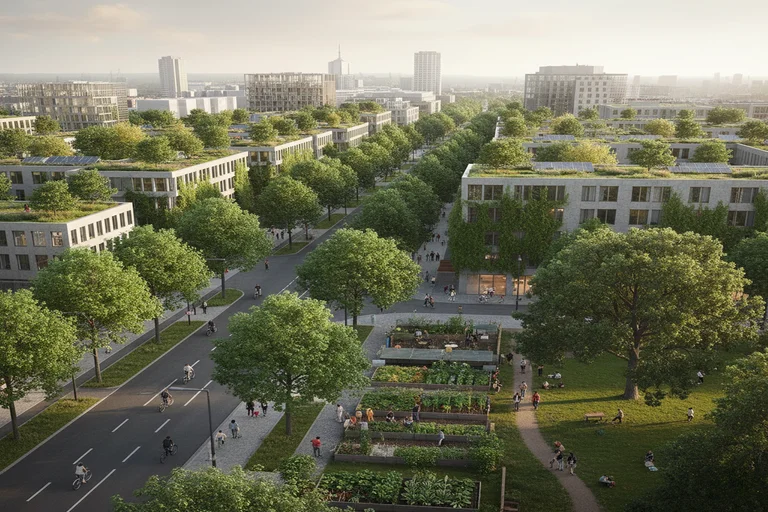
Urban Green Spaces How US And Europe Fight Climate Stress
Cities in the United States and Europe are feeling the impact of climate stress, which is directly affecting daily life. Summers are becoming hotter, rainfall is more intense, and air quality in crowded urban areas keeps worsening. As cities with heavy concrete development face greater risks, urban green spaces are proving to be one of the most effective solutions to combat these challenges.
Urban greenery is no longer just about aesthetics; it’s now a practical solution to rising temperatures, flood risks, and public health issues. Whether it’s large parks or rooftop gardens, cities are increasingly turning to nature to absorb environmental shocks that traditional infrastructure can no longer manage.
What Are Urban Green Spaces
Urban green spaces include parks, street trees, urban forests, green roofs, wetlands, and community gardens located within city boundaries. These spaces can be publicly owned or community-managed, permanent or seasonal, and large or small.
In the US and Europe, urban green spaces have now become an essential part of climate infrastructure. Unlike traditional systems that serve just one function, these green spaces cool cities, manage water, improve air quality, and boost mental well-being all at once.
Why Climate Stress Is Intensifying in Cities
Urban areas heat up faster than rural ones because of dense construction, restricted airflow, and materials that absorb heat. This leads to the formation of urban heat islands, where temperatures can be much higher than in nearby rural areas.
Climate stress in cities commonly appears as prolonged heatwaves, sudden flooding from heavy rainfall, and worsening air pollution. These issues not only raise health risks and strain energy systems but also hit vulnerable populations the hardest.
If left unaddressed, these challenges will only get worse. That’s why urban green spaces are being seen as long-term solutions, not just quick fixes.
How Cities Are Using Green Spaces to Reduce Heat Islands
Cities across the US and Europe are redesigning urban landscapes to counter rising temperatures.
Berlin has expanded tree-lined streets and redesigned public squares with shaded green zones that lower surface temperatures during heatwaves. London is increasing its urban tree canopy and investing in green corridors to improve airflow and cooling across neighborhoods.
In the United States, New York has committed to planting and protecting thousands of street trees, especially in areas most vulnerable to heat. Meanwhile, San Francisco encourages the use of green roofs and vertical gardens to reduce heat absorption by buildings and lower the demand for indoor cooling.
These initiatives demonstrate how urban green spaces help reduce heat island effects by replacing heat-trapping surfaces with living systems that naturally cool the air.
EPA Insights: Using Green Infrastructure to Reduce Urban Heat
One of the most well‑documented ways cities reduce the urban heat island effect is through green infrastructure, according to the US Environmental Protection Agency (EPA). , the EPA report explains that urban “heat islands” occur when natural surfaces are replaced by heat‑absorbing pavement, buildings, and other hard materials, causing cities to become significantly hotter than their surroundings. To counter this, adding vegetation such as trees, shrubs, and green roofs helps cool city environments by shading surfaces and releasing moisture into the air, which naturally lowers temperatures and improves comfort during heat waves. The EPA also highlights examples like roadside trees and green roofs that not only cool communities but also improve air quality, reduce energy costs, and enhance overall health and safety during hotter conditions
The Role of Trees, Green Roofs, and Community Gardens
Trees are the cornerstone of urban green strategies. They provide shade, release moisture into the air, and filter out pollutants. Mature trees can dramatically lower street-level temperatures and make outdoor spaces much more comfortable during extreme heat.
Green roofs are becoming increasingly important in dense cities where ground space is scarce. By covering rooftops with plants, cities can lower surface temperatures, manage rainwater, and enhance building insulation.
Community gardens add another important layer of climate resilience. They boost local food access, help cool surrounding areas, and strengthen social bonds. Together, all these elements transform urban green spaces from isolated features into interconnected climate systems.
Flood Control and Stormwater Management
Climate change has brought heavier rainfall to many US and European cities, overwhelming traditional drainage systems. Green infrastructure in cities absorbs rainwater through soil and vegetation, slowing runoff and reducing flood risks. Parks designed with wetlands or permeable surfaces temporarily store excess water during storms, protecting nearby neighborhoods.
Cities now see sustainable city planning as cost-effective flood management solutions that complement engineered infrastructure.
Air Quality and Public Health Benefits
Poor air quality remains a major urban challenge, especially during heatwaves. Trees and plants help by absorbing pollutants and trapping fine particles, which cleans the air.
Health agencies in the US and Europe have found a direct link between increased green coverage and lower rates of heat-related illnesses, respiratory issues, and stress-related conditions. Access to green spaces also boosts mental health, promotes physical activity, and encourages social interaction.
As a result, urban parks and gardens are crucial not just for adapting to climate change but for enhancing public well-being overall.
Practical Gardening Tips for City Dwellers
Urban residents also play a role in expanding green spaces. Even small-scale gardening contributes to climate resilience when done thoughtfully.
For city environments, experts recommend drought-tolerant plants that require less water and withstand heat. Native species are particularly effective because they adapt well to local conditions.
Rooftop and balcony gardens can reduce building temperatures and provide habitat for insects. Pollinator-friendly plants such as lavender, native grasses, and flowering herbs support bees and butterflies while improving urban biodiversity.
Credible Climate and Green Space Authorities
Urban green strategies are increasingly guided by science and policy research. Institutions such as the US Environmental Protection Agency highlight green infrastructure as a key climate adaptation tool.
In Europe, the European Environment Agency highlights nature-based solutions as key strategies for reducing heat and managing water. Meanwhile, the UK Forestry Commission advocates for expanding urban tree cover to enhance climate resilience and improve public health.
These organizations reinforce the growing consensus that Urban Green Spaces are essential for climate-ready cities
Challenges Cities Still Face
Despite progress, not all communities benefit equally from urban greenery. Low-income and marginalized neighborhoods often have fewer trees and parks, even though they face higher climate risks.
Challenges such as maintenance costs, limited land availability, and the need for long-term planning still persist. Ensuring fair access to green spaces is crucial if cities want these solutions to be effective and inclusive for everyone.
Climate stress is reshaping urban life across the US and Europe. Cities that rely only on concrete and technology will struggle to adapt.
By investing in urban green spaces, cities are choosing solutions that cool streets, protect health, manage water, and improve quality of life. As climate pressures grow, nature is no longer optional — it is essential to the future of urban survival.
Read more related articles: https://www.climatechallange.com/urban-greening-checklist-grow-a-cooler-greener-city/
FAQS
Q1. How do urban green spaces reduce heat islands?
Ans. Urban green spaces, including trees, parks, and green roofs, lower city temperatures naturally. They provide shade and release moisture into the air, cooling surrounding areas. This reduces the urban heat island effect and improves comfort during heatwaves.
Q2. Which cities are leading in urban green planning?
Ans. Cities like Berlin, London, New York, and San Francisco are expanding trees, green roofs, and green corridors. Their strategies help reduce heat, manage stormwater, and improve public health. These examples show how urban green spaces can reshape city living.