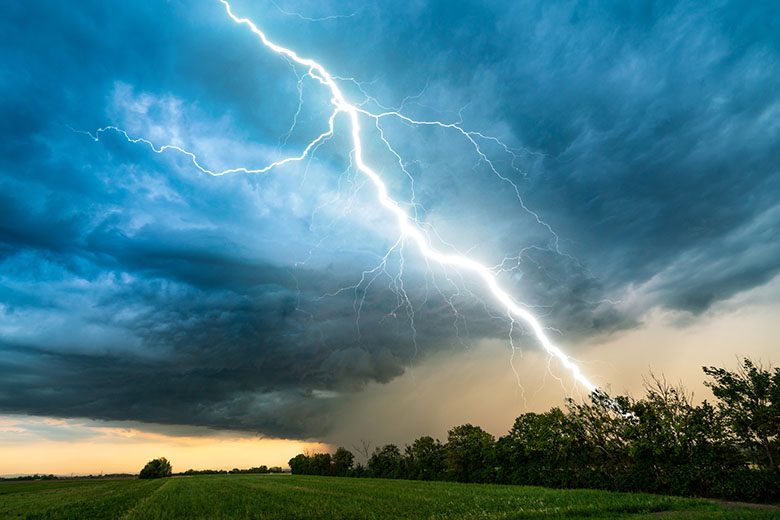
Thunderstorm Safety Tips Experts Reveal What Most People Miss
When the sky darkens and the first bolt of lightning strikes, most people think they know exactly what to do. But did you know that some common habits during a storm, such as washing dishes or taking a shower, can actually put you at risk? In this guide, we dive into essential thunderstorm safety tips and reveal the critical mistakes experts say most people miss. Whether you are at home, in your car, or caught outdoors, these life-saving insights will keep you and your family protected in 2026.
What Is a Thunderstorm?
A thunderstorm is a weather event characterized by lightning, thunder, heavy rain, and sometimes hail or strong winds. It forms when warm, moist air rises rapidly into colder layers of the atmosphere, creating strong updrafts. These conditions produce charged particles in clouds, which generate lightning as the electrical energy seeks a path to the ground.
Although thunderstorms are common, people often underestimate how powerful they can be. Lightning can strike miles away from the storm itself, and the dangers are not limited to outdoor exposure. This is why following scientifically backed thunderstorm safety tips is critical for anyone caught in or near a storm.
Essential Thunderstorm Safety Tips for 2026
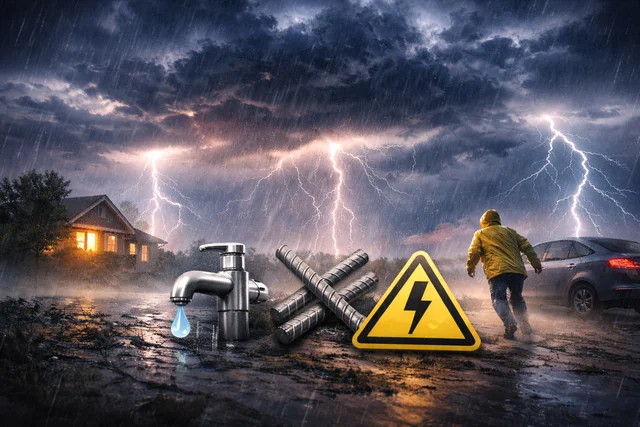
Thunderstorms are unpredictable, and understanding how to stay safe can make all the difference. While many people know the basics—like staying indoors—experts reveal several critical precautions that are often overlooked. From avoiding contact with plumbing and concrete surfaces to recognizing the dangers of ground currents, these Essential Thunderstorm Safety Tips for 2026 combine scientific insights with practical advice. Following them can significantly reduce your risk and help you protect yourself, your family, and your property during severe storms.
The Science of Lightning Conductivity
Lightning is a powerful electrical discharge seeking the shortest path to the ground. While it often strikes obvious targets like trees or tall buildings, its behavior around humans and structures is less intuitive. Scientists highlight that electricity can travel through unexpected pathways, including metal and water, putting people indoors at risk.
The key takeaway is that lightning doesn’t have to strike you directly to cause injury. Electric currents can jump through conductive materials, including plumbing, wiring, and even reinforced concrete. Understanding these pathways helps explain why experts advise precautions that may seem unusual but are scientifically justified.
Indoor Safety: Why Your Plumbing is a Risk
Many people believe they are completely safe indoors during a storm—but certain indoor activities can be dangerous. Metal pipes in homes can conduct lightning if it strikes nearby. This means that showering, washing dishes, or running water during a thunderstorm can put you at risk.
Even the water itself isn’t entirely safe; small impurities can carry electricity. Researchers note that lightning can travel through water with surprisingly low resistance, making seemingly mundane activities surprisingly hazardous. Experts stress: avoid all contact with plumbing during a thunderstorm. This is one of the most overlooked but scientifically supported thunderstorm safety tips.
Concrete Walls: A Danger Most People Miss
Another commonly missed hazard involves reinforced concrete. Many assume that being inside a concrete building is automatically safe, but the metal bars (rebar) inside concrete can conduct electricity. Leaning against concrete walls or lying on concrete floors can put you directly in the path of a lightning strike’s electrical current.
Experts at NOAA and other scientific institutions caution that while concrete buildings generally provide safety from direct strikes, the internal wiring and rebar can create indirect pathways. Stay away from these surfaces until the storm has passed.
Debunking the Myths of Rubber and Metal
A persistent myth is that being inside a vehicle automatically guarantees protection because of its rubber tires. However, atmospheric scientists and experts at NOAA have clarified that rubber tires provide zero insulation against a bolt that has already traveled through miles of air. In reality, the protection comes from a scientific phenomenon known as the ‘Faraday cage’ effect. You can find more information about lightning safety myths, including the one about rubber tires, on the National Weather Service.
The metal frame of a car acts as a conductive shell, directing the electrical discharge around the exterior and into the ground. This is one of the most critical thunderstorm safety tips to remember: your safety depends on the metal “skin” of the vehicle, not the tires. Consequently, experts warn that convertibles or vehicles with fiberglass shells offer no such protection. To stay safe indoors, avoid touching metal parts, radio controls, or GPS devices connected to the car’s frame, since these can conduct electricity.
Understanding the 30-30 Rule
The 30-30 rule is a widely recognized safety guideline used to determine when to seek cover and when it is safe to emerge. It suggests that if you hear thunder within 30 seconds of seeing a lightning flash, you must find indoor shelter immediately. The second part of the rule advises staying inside for at least 30 minutes after the last clap of thunder to ensure the storm has fully passed.
H3: The Physics Behind the 30-30 Rule
Many safety guides recommend this method because it relies on the significant difference between the speed of light and the speed of sound. While light travels at an incredible 186,282 miles per second—making the flash nearly instantaneous—sound travels at a much slower pace of roughly 1,125 feet per second.
Experts use this “Flash-to-Bang” calculation to reveal a critical truth: if the interval is 30 seconds or less, the strike is within a dangerous 6-mile radius. However, one of the most vital thunderstorm safety tips that people often miss is that the trailing edge of a thunderstorm can still produce “bolts from the blue” up to 10 miles away. According to National Weather Service research, this is why waiting the full 30 minutes is non-negotiable for your safety in 2026.
Ground Current: The Silent Killer
Most people think only a direct strike is dangerous—but the real threat often comes from what scientists call ground current. When lightning hits the earth or a nearby object, the electrical discharge doesn’t just stop; it radiates outward along the ground surface. This current can travel through soil, grass, and even wet pavement, affecting anyone in its path.
According to NOAA experts, ground current is actually responsible for more lightning-related injuries and fatalities than direct strikes. Experts reveal a phenomenon called “step potential,” where electricity flows up one leg and down the other if you are standing with your feet apart near a strike point. This is one of the most critical thunderstorm safety tips to understand: staying fully indoors is the only way to isolate yourself from these invisible currents. Stay away from open fields, tall trees, and storm-damaged areas, as the ground there may still carry electrical energy.
Indoor Hazards: Plumbing and Concrete
Most people assume that stepping inside a building makes them 100% immune to lightning, but experts reveal that your home’s infrastructure can actually act as a conductor. Scientific research shows that lightning can travel through metal plumbing and even through impurities in tap water. This is why safety experts strictly advise against showering, bathing, or washing dishes during a storm.
Furthermore, there is a hidden danger in modern construction: concrete. While concrete itself isn’t highly conductive, it often contains metal reinforcing bars or wires called “rebar.” Lightning can travel through these metal grids, making it dangerous to lean against concrete walls or lie down on concrete floors in garages or basements. To maintain maximum safety, stay in the center of a room and avoid contact with anything connected to the building’s skeletal structure.
Protecting Your Electronics and Appliances
In 2026, our homes are more connected than ever, which increases the risk of electrical surges during a storm. A common mistake people make is simply turning off their devices. However, experts warn that a nearby strike can send a massive surge of electricity through power, cable, and even phone lines.
One of the most critical thunderstorm safety tips is to completely unplug expensive electronics—like computers, smart TVs, and gaming consoles—before the storm arrives. Using a surge protector is helpful, but it is not a 100% guarantee against a direct or near-direct strike. Additionally, avoid using corded phones or any device that is physically plugged into a wall outlet, as the electrical path can lead directly to the user.
Lightning is far more complex and dangerous than most people realize. From plumbing conductivity to ground currents, reinforced concrete hazards, and the physics behind the 30-30 Rule, experts reveal that the smallest oversights can have serious consequences. By integrating these proven Thunderstorm Safety Tips into your routine, you can protect yourself, your family, and your property during severe weather.
Remember, awareness and preparation are the first lines of defense. Don’t underestimate the hidden pathways lightning can take—understand the science, follow the rules, and stay safe.
Read more related articles: https://www.climatechallange.com/what-is-a-cloudburst-and-why-does-it-happen/
FAQS
Q1. What should I do if I’m caught outside during a thunderstorm?
Ans. If you’re outdoors, avoid open fields, hilltops, and isolated trees. Seek shelter in a fully enclosed building or a metal-topped vehicle and stay away from conductive surfaces like fences and water.
Q2. What is the 30-30 Rule in thunderstorm safety?
Ans. If you hear thunder within 30 seconds of seeing lightning, the storm is within six miles and poses a real risk. Stay sheltered until 30 minutes after the last thunderclap.
Q3. Do rubber tires protect you in a car from lightning?
Ans. No, it’s the car’s metal frame that protects occupants, not the tires. Avoid touching metal parts inside the vehicle for maximum safety.