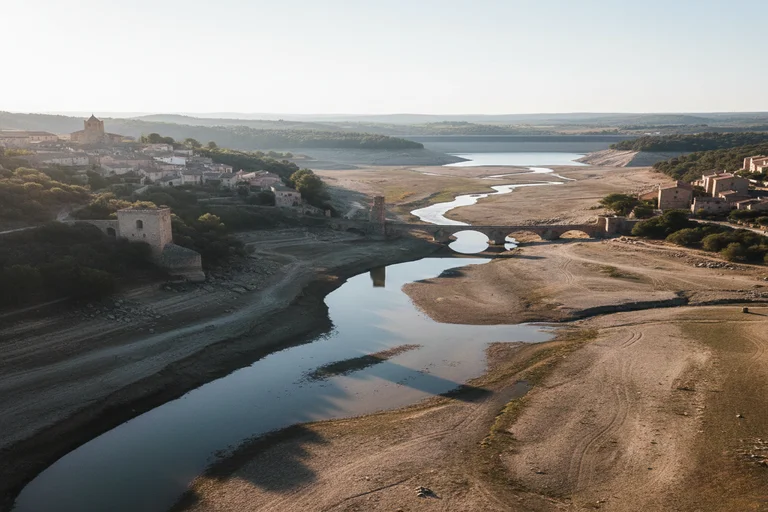
Europe’s Water Reserves Are Drying Up Fast: A Hidden Crisis
Europe is facing a hidden but growing threat—its freshwater reserves are disappearing faster than ever. While heatwaves, wildfires, and floods dominate headlines, the silent depletion of rivers, lakes, and underground aquifers is quietly reshaping Europe’s environment, agriculture, and urban life. Europe’s water reserves are drying up faster due to climate breakdown, and the consequences are more serious than most people realize.
Understanding Europe’s Water Crisis
Freshwater resources are the lifeblood of ecosystems, agriculture, and human settlements. Europe’s water comes from rivers, lakes, glaciers, and underground aquifers. These reserves provide drinking water, irrigation for crops, industrial water, and support biodiversity. However, the balance is being disrupted due to several factors.
Unveiling Why Our Water Supplies Are Disappearing
Climate Change and Rising Temperatures
Europe is warming at an unprecedented rate. Hotter summers, prolonged droughts, and shifting rainfall patterns are reducing water availability, particularly in southern and central Europe. Rising temperatures increase evaporation from rivers, lakes, and soils, which accelerates the depletion of freshwater reserves.
According to the European Environment Agency, nearly 28% of the EU territory experiences water scarcity during at least one quarter of the year. This is a clear sign that Europe’s water reserves are drying up fast.
Over-Extraction for Agriculture and Industry
Agriculture accounts for a major share of Europe’s water use. Countries like Spain, Italy, and France heavily rely on irrigation, which drains groundwater faster than it can naturally recharge. Industrial water use for energy production and manufacturing further stresses these reserves. Even with reduced freshwater abstraction over the past two decades, localized depletion continues, highlighting unsustainable water practices.
Mismanagement and Outdated Infrastructure
Many European regions lack integrated water management strategies. Existing water governance policies are often outdated or poorly adapted to rapid climate change and rising demand. Inefficient irrigation, aging pipelines, and inadequate reservoir management worsen the crisis.
10 European countries face extremely high water stress
Europe is witnessing a growing water crisis, and several countries are facing extremely high water stress. These nations are losing 20–40% of their available freshwater due to a combination of climate change, over-extraction, seasonal droughts, and inefficient water management. Rivers, lakes, and aquifers are under pressure, threatening agriculture, urban water supply, and natural ecosystems. Rising temperatures and prolonged dry periods are making sustainable water use more urgent than ever.
1. Spain
Spain consistently faces one of the highest-stress water resources in Europe, with up to a 35% reduction in available water in many regions. Europe’s water reserves are drying up fast, particularly in southern Spain, where long, hot summers and over-extraction of rivers and groundwater for agriculture intensify the problem. Reservoirs frequently run dangerously low during dry months, affecting both cities and farmland. Careful water management and conservation efforts are essential to prevent worsening shortages.
2. Italy
Italy faces a 25–30% drop in water availability across several regions. Northern Italy relies heavily on rivers fed by alpine snowmelt, but that snowmelt is decreasing, while southern Italy depends on aquifers that are already overused. Intensive farming—especially vineyards and olive groves—further increases water demand. On top of this, seasonal tourism puts added pressure on water supplies, especially in coastal and resort areas.
3. Greece
Greece faces 30–35% less water than what is considered sustainable. Limited rainfall, hot, dry summers, and irrigation for olives, citrus, and other crops strain available water reserves. Islands and coastal regions are hit hardest, with water often rationed in peak tourist season. Tourism and agriculture combined make this shortage a persistent annual challenge.
4. Cyprus
Cyprus suffers from a 40% water deficit, making it one of the most water-stressed nations in Europe. Natural freshwater sources are scarce, and heavy reliance on groundwater and desalination is necessary to meet household, agricultural, and tourism needs. In the summer months, intensified shortages have occurred, and aquifers have been significantly depleted over time. Efficient water use and conservation are critical for survival.
5. Malta
Malta experiences a 35–40% water shortage due to low rainfall, small aquifers, and seasonal tourist influx. The country relies heavily on desalinated water and imported supplies to meet daily demand. Hot, dry summers exacerbate the stress on natural resources. Sustainable water management practices are crucial to avoid crises in agriculture and urban supply.
6. Portugal
Portugal faces a 20–30% reduction in water availability, particularly in southern regions. Hot summers and irrigation-heavy agriculture drain rivers and aquifers. Urban centers also contribute to high seasonal water demand. Recurrent droughts put pressure on both agriculture and local communities, highlighting the need for improved water planning.
7. France
Southern France faces a 20-25% water shortage, primarily caused by heatwaves and the heavy irrigation demands of vineyards and other crops. During the summer, rivers and reservoirs often run low, impacting both urban and rural water supplies. On top of that, seasonal tourism puts even more strain on the already stressed water systems. To tackle this, better water management and conservation efforts are becoming more critical than ever.
8. Hungary
Hungary experiences 20–25% less water than sustainable levels, primarily in agricultural regions along the Danube. Low rainfall, combined with intensive irrigation, depletes both surface and groundwater. Seasonal droughts have become more frequent, affecting crop yields and municipal water supply. Water-efficient practices are needed to mitigate future shortages.
9. Bulgaria
Bulgaria faces a 25–30% water shortage in its southern and eastern regions, where rivers and reservoirs often run low during the summer. Agriculture—especially vegetable and sunflower farming—uses a large share of the available water. Hot, dry summers and inefficient water management make the shortage even worse, leading to repeated supply issues for both rural and urban communities.
10. Romania
Romania’s southern plains experience a 20–25% reduction in water reserves, mainly due to intensive farming and high summer temperatures. Rivers and aquifers are stressed, affecting both agriculture and the drinking water supply. Seasonal droughts are becoming more frequent, making integrated water management policies more important than ever.
Impact of Shrinking Water Reserves
Social and Economic Impacts
As water reserves shrink, communities may have to deal with rationing and tighter regulations. Agriculture—a major sector in southern Europe—could see lower crop yields. Tourism might also take a hit during peak seasons, creating additional economic pressure.
Environmental Impact
Drying rivers and falling groundwater levels put wetlands, forests, and aquatic ecosystems at risk. Many species that rely on a steady water supply may decline, disrupting biodiversity and the balance of ecosystems.
Impacts on Agriculture and Food Security
Europe’s agriculture relies on stable water supplies. Reduced irrigation capacity threatens crop yields, especially for cereals, fruits, and vegetables. Prolonged water scarcity can cause billions in economic losses, affect exports, and drive up food prices. As Europe’s water reserves dry up fast, the need for sustainable irrigation practices becomes urgent.
Long-Term Consequences
The economic and social impacts ripple outward, leading to higher water infrastructure costs, food shortages, and potential migration pressures. If no action is taken, Europe could face recurring seasonal crises with lasting long-term consequences.
Urban Water Supply and Energy Production
Cities are increasingly vulnerable. High population densities and industrial demand put pressure on urban water supplies. During droughts, water rationing and restrictions are becoming more common. Hydropower generation is also impacted: low river levels cut electricity output, sometimes forcing greater use of fossil fuels, which further accelerates climate change.
Measures and Solutions
European governments and organizations are taking steps to address the crisis:
- Investing in water-efficient irrigation systems to reduce agricultural use
- Promoting water reuse and recycling in urban and industrial sectors
- Upgrading infrastructure to prevent leakage and improve distribution
- Implementing drought monitoring and early warning systems
Despite these efforts, experts warn that Europe needs more proactive coordinated action to safeguard its water reserves.
Climate projections suggest hotter, drier summers with irregular rainfall, particularly in southern and central Europe. If Europe’s water reserves are drying up fast due to climate intensification, the consequences for agriculture, ecosystems, and urban life will intensify. Sustainable water management, climate mitigation, and conscious usage are essential to prevent an irreversible crisis.
Europe’s water reserves are drying up fast, and immediate action can help secure freshwater for future generations. Governments, industries, and citizens must work together to protect this vital resource.
Read more related articles> https://www.climatechallange.com/the-global-water-crisis-causes-consequences-and-solutions/
FAQs
Q1. Which European rivers are drying up fast?
Ans. Several major European rivers are experiencing unusually low water levels due to drought, heatwaves, and over-extraction. The Po in Italy, the Rhine in Germany, the Loire in France, and the Danube in Central and Eastern Europe have all seen significant drops, affecting agriculture, ecosystems, and navigation. Rivers in Spain, like the Guadiana, are also drying, highlighting the widespread water stress across the continent.
Q2: Why is groundwater declining even when rainfall occurs?
Ans. Intense rainfall often runs off quickly instead of soaking into the ground. Combined with excessive water extraction, this leaves aquifers under-recharged and causes water tables to drop.
Q3. Which country has the most water stress?
Ans. Heavy rainfall tends to run off quickly rather than soaking into the ground. When combined with over-extraction, this prevents aquifers from replenishing and leads to declining water tables.