Global Water Bankruptcy 2026 Fresh Water Crisis In US And Europe
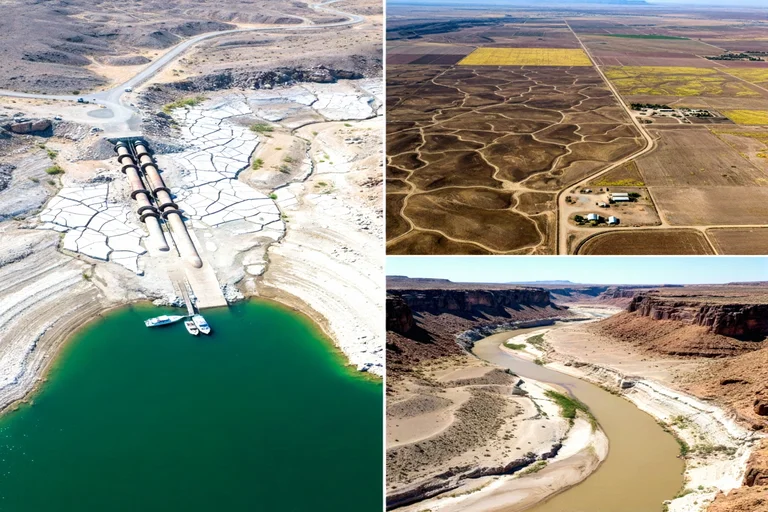
In January 2026, the United Nations issued a stark warning that shook environmental and economic planners worldwide: the era of water crisis is over. We are now in Global Water Bankruptcy 2026. This is not a temporary shortage or an isolated drought; it is a systemic depletion of the planet’s freshwater reserves, a situation in which humanity is consuming more water than the Earth can naturally replace. Rivers, lakes, glaciers, and aquifers—the “water capital” that supports life and economies—are being drained faster than they can regenerate, leaving communities and industries on borrowed water.
What is Global Water Bankruptcy
In simple terms, Global Water Bankruptcy 2026 represents a point of no return where humanity’s demand for freshwater far outstrips the Earth’s ability to replenish it. Think of the planet’s freshwater as a high-interest savings account. For decades, we lived off the “interest” (annual rainfall and snowmelt). Today, however, we are aggressively draining the “capital”—the ancient aquifers, deep-seated glaciers, and vital river systems that took millennia to form.
This isn’t just another temporary drought. The January 2026 UN findings highlight a structural deficit that we cannot fix with a few good rain cycles. We are currently operating on a massive “water debt,” overdrawing from reserves that billions of people rely on for survival. In regions like the American West and Southern Europe, this bankruptcy means we are literally borrowing water from future generations, leaving behind a dry and unstable foundation.
The Concept of Global Water Bankruptcy 2026
Global Water Bankruptcy 2026 fundamentally shifts how we must think about our most vital resource. We used to treat water scarcity as a passing challenge—just a bad year, a dry season, or a temporary drought. The detailed January 2026 United Nations report makes it clear: our planet isn’t just facing temporary shortages anymore; we are in a deep, structural water deficit.
The concept is simple yet alarming. Water management has shifted from responsibly living off the “interest” of renewable freshwater flows to recklessly consuming the “principal” stored deep within our aquifers, glaciers, and reservoirs. Historically, human activity relied mostly on rainfall and surface water. Today, however, widespread over-pumping has turned vital aquifers into depleted bank accounts, ancient glaciers into exhausted savings, and major rivers into fragile, intermittent conduits.
The UN’s detailed hydrological analysis for 2026 is stark: we are withdrawing water from over 35% of the world’s largest aquifers faster than nature can recharge them. This global water bankruptcy translates into dangerous real-world consequences right now.
The US Water Crisis: Dead Pools and Sinking Lands
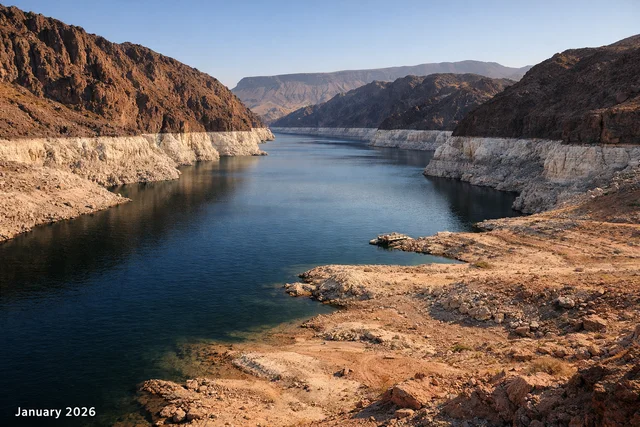
The United States is becoming a chilling, real-time example of Global Water Bankruptcy 2026. In the American West, decades of dependence on the Colorado River have pushed the system to its limits. This is no longer just a conversation about conservation—we are now facing the frightening reality of “dead pools,” where water levels drop so low that dams can no longer release water downstream.
As of January 2026, the situation is critical. Lake Powell and Lake Mead’s combined storage is hovering around 33% of total capacity. This isn’t just a number—it signals our proximity to a complete breakdown in water delivery for millions of people, massive industrial farms, and vital hydroelectric power generation. If these reservoirs reach dead pool levels, the gravity-fed system that keeps the American Southwest running will simply fail, setting off a regional catastrophe.
Furthermore, compounding this is the silent crisis of groundwater depletion. In California’s Central Valley—the heart of US agriculture—the ground is literally sinking. We are pumping water from aquifers at such an aggressive rate that the land is subsiding. Consequently, groundwater tables are dropping by over a meter every year in key areas. From Arizona to California, wells are running dry, forcing farmers to abandon fertile fields and leaving rural communities without basic tap water.
The economic fallout of the Global Water Bankruptcy 2026 is hitting every American household. Since California produces nearly half of the nation’s fruits, nuts, and vegetables, the lack of irrigation has sent grocery prices soaring. Moreover, our energy security is at risk. Hydroelectric power output has dropped, forcing a desperate reliance on more expensive fossil fuels. The American West isn’t just dry—it’s running out of time.
Europe’s Drying Rivers and the 2026 Alpine Drought
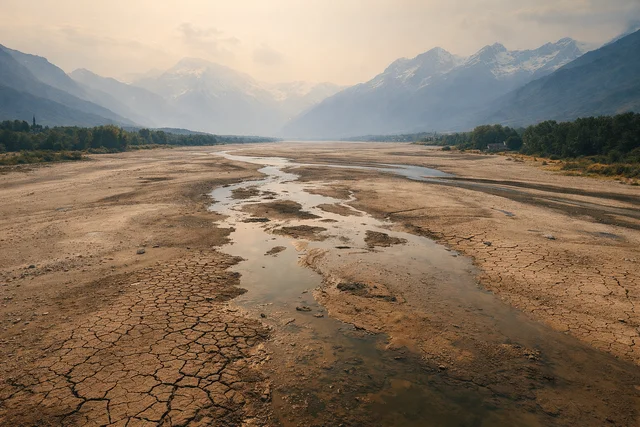
Europe is currently facing its most acute manifestation of Global Water Bankruptcy 2026. The crisis is most visible across the continent’s iconic river systems and Alpine-fed watersheds. The winter of 2026 has been historically dry, with Alpine snowpack levels at their lowest in recorded history. This isn’t just a concern for skiers; it is a direct threat to the freshwater supply of millions. Glacial and snowmelt, which traditionally serve as Europe’s “water towers,” are no longer providing enough flow to sustain the continent through the year.
The Rhine and Danube rivers—the literal arteries of European commerce—are gasping for air. By January 2026, water levels have dropped so low that heavy barges transporting grain, coal, and fuel are forced to operate at barely 30% capacity to avoid grounding. Consequently, these navigation bottlenecks are paralyzing industrial supply chains from Germany to Romania. For the first time, major cities along these rivers are struggling not just with industrial cooling but with maintaining basic water pressure for domestic households.
Southern Europe is the front line of this bankruptcy. In Spain and Italy, reservoirs that should be overflowing from winter rains are sitting at ghostly, below-average levels. Local authorities have been forced to implement strict water rationing, and the sight of dry taps is becoming a daily reality in Mediterranean towns. Europe’s “salad bowl” is in trouble; water-intensive crops like olives, citrus, and rice are facing mandatory irrigation cuts. These shortages are already driving up food prices and causing market volatility across the European Union.
This is the structural reality of Global Water Bankruptcy 2026. The glaciers that feed Europe’s great rivers have lost an alarming 25% of their volume in just two decades. A permanent shift is now underway, where summer meltwater can no longer make up for dry winters. As a result, the battle for every drop—between farmers, factory owners, and residents—is no longer a distant warning but the defining struggle of Europe in 2026.
Beyond Thirst: The Economic Toll of Water Debt
The real-world impacts of Global Water Bankruptcy 2026 extend far beyond just empty rivers and shrinking lakes. This crisis is hitting our economies hard. It stresses agriculture, energy grids, and urban infrastructure across the US and Europe.
Food Production at Risk
Reduced water availability directly impacts crop yields. This forces increased reliance on expensive imports, driving consumer prices higher. In California, for example, deliberately taking just 10% of farmland out of production leads to a sharp rise in produce prices across the country. Similarly, in Southern Europe, water rationing threatens key industries. Olive oil, wine, and fruit producers are facing deep cutbacks, hitting both crucial export revenues and local food markets.
Energy Grids Under Strain
Hydroelectric power relies on steady water flows. In the western United States, shrinking reservoir levels have already cut hydroelectric output, pushing the region to depend more heavily on fossil fuels. In Europe, falling river levels disrupt power plant cooling systems and restrict fuel transport by barges.
Infrastructure and Land Stability
Excessive groundwater pumping causes land subsidence, damaging roads, bridges, and pipelines. In parts of California’s Central Valley, the ground is sinking by as much as 30 centimeters a year, driving up repair costs and disrupting water delivery systems.
Political and Social Pressure
Water scarcity inflames tensions over who gets the last available drops. This leads to intense social and political pressure. Therefore, we are seeing more frequent interstate and even cross-border disputes over water rights in 2026, highlighting the severe governance challenge posed by Global Water Bankruptcy 2026.
Solving the Climate Challenge: The Way Forward
Addressing Global Water Bankruptcy 2026 demands a multi-pronged approach. We cannot rely on a single fix. Instead, we must combine rapid innovation, decisive policy reform, and smart, sustainable management practices to mitigate this accelerating crisis.
Agricultural Shift
Agriculture uses the vast majority of our fresh water. We must reduce water-intensive crops immediately. Implementing ultra-efficient irrigation methods, like drip technology, significantly cuts water usage. Shifting entirely toward drought-resistant crops helps protect yields without dangerously draining vital aquifers.
Recycling and Reuse
Urban and industrial systems have a massive role to play. We can reclaim water for non-potable uses, such as irrigation and toilet flushing. Ultimately, this drastically reduces pressure on precious freshwater sources.
Ecosystem Restoration
Nature provides the best infrastructure. Protecting and restoring wetlands, floodplains, and forests enhances natural water storage capacity. Consequently, these healthy ecosystems help recharge our aquifers more efficiently.
Policy Reform
Our current water management laws are often outdated. We need to update interstate agreements to reflect 2026 hydrological realities. This ensures sustainable allocation and prevents catastrophic overuse in critical regions like the American West.
Smart Technology
We must leverage technology. Advanced sensors, satellite imagery, and AI can track water availability in real time. Therefore, this enables proactive management and early warning systems before droughts become disasters.
Collectively, these strategies can slow the depletion of our water capital. Moreover, they offer a clear path to shift regions facing Global Water Bankruptcy 2026 back toward a sustainable, “interest-only” water usage model.
The era of Global Water Bankruptcy 2026 has arrived, marking a fundamental departure from the traditional water crisis model. In the United States, the Colorado River’s near-dead pools and California’s sinking Central Valley demonstrate how overuse and climate stress converge to threaten food, energy, and livelihoods. In Europe, record-low Alpine snowpacks and shrinking river flows are disrupting commerce, agriculture, and urban water supply.
Global Water Bankruptcy 2026 is more than a warning — it is a call to action. Sustainable water management, innovative technologies, and climate-resilient policies are no longer optional; they are essential. The choices we make today will determine whether future generations inherit a resilient freshwater system or a planet overdrawn and depleted.
Read more related articles: https://www.climatechallange.com/the-global-water-crisis-causes-consequences-and-solutions/
FAQS
Q1: What is Global Water Bankruptcy 2026?
Ans. Global Water Bankruptcy 2026 is a term used in a recent UN report to describe a permanent water shortage. It means that humanity is using Earth’s stored “water capital”—like ancient aquifers and glaciers—faster than nature can refill them. This problem goes far beyond a simple drought. It shows a long-term, structural deficit in our water supply.
Q2: Is the US West truly running out of water in 2026?
Ans. Yes, the water situation in the US West is critical in 2026. As of January, major reservoirs like Lake Mead are nearing “dead pool” status. This means they can no longer release enough water downstream. Because of this, water delivery to several states is at risk. Demand now exceeds the sustainable supply, especially in places like California and Arizona.
Q3: How does the European water crisis affect average consumers?
Ans. The European water crisis is affecting daily life and the economy. Low river levels on the Rhine are stopping essential shipping, which disrupts supply chains. In Southern Europe, especially Spain and Italy, water rationing is becoming common. This is pushing up prices for food products like olive oil and fresh produce across the EU.
Q4: What can we do to help mitigate this global water crisis?
Ans. Individuals can make a difference by recycling greywater at home and using high-efficiency irrigation for gardening. Additionally, supporting policies that focus on water conservation is important. Every drop saved helps reduce the pressure on our rapidly shrinking shared water resources.