Microplastics In The Air How Much Plastic Do We Breathe Daily
Imagine waking up, taking a deep breath of fresh morning air, and unknowingly inhaling tiny shards of plastic. It sounds like a scene from a dystopian movie, but in 2026, it is a harsh reality. While global headlines often focus on plastic bags in our oceans, a much more immediate threat is swirling around us in the very air we breathe. Recent shocking data, including Reuters’ well-known “Plastic Diet” report, suggests that the average person consumes and inhales around 5 grams of plastic each week, roughly equivalent to the weight of a credit card. A large portion of this plastic comes from microplastics in the air, which have now become an invisible yet constant part of our everyday environment.
What are airborne microplastics? (The Invisible Threat)
To understand why your lungs might be at risk, we must first define what airborne microplastics actually are. These are tiny fragments of synthetic polymers, smaller than 5 millimeters, that are light enough to be lifted by wind currents and transported across continents.
However, the real danger lies in nanoplastic particles that are thousands of times smaller than a human hair and completely invisible to the naked eye. According to a recent study published in PNAS, these particles are so small that they behave like gases. Because of their microscopic size, airborne microplastics don’t just stay outside; they penetrate our homes and offices. They are now a permanent part of the “Atmospheric Plastic Fallout,” a term scientists use to describe the constant rain of plastic particles from the sky.
How Much Airborne Plastics Do We Really Breathe Daily
Many people ask how much plastic actually enters our respiratory system each day. While the Reuters report popularized the “5 grams a week” (one credit card) figure, the daily breakdown is even more startling
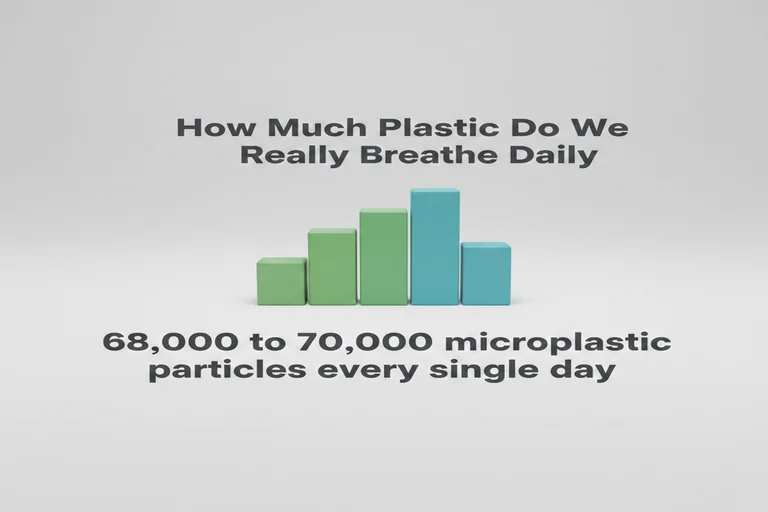
According to research shared by the group, an average person could be inhaling 68,000 to 70,000 microplastic particles every single day. If you live in a densely populated city or spend most of your time in an unventilated office with synthetic carpets, that number can easily double.
In 2026, scientists are focusing on the “inhalation rate” rather than just weight. Because microplastics in the air are so light, we don’t inhale them only occasionally; we take microplastics into our bodies with every single breath, roughly 17,000 to 30,000 times a day. This constant exposure means that airborne microplastics are becoming a chronic part of our internal biology, settling into lung tissue faster than our bodies can clear them out.
The Main Sources: Where is This Microplastic Coming From?
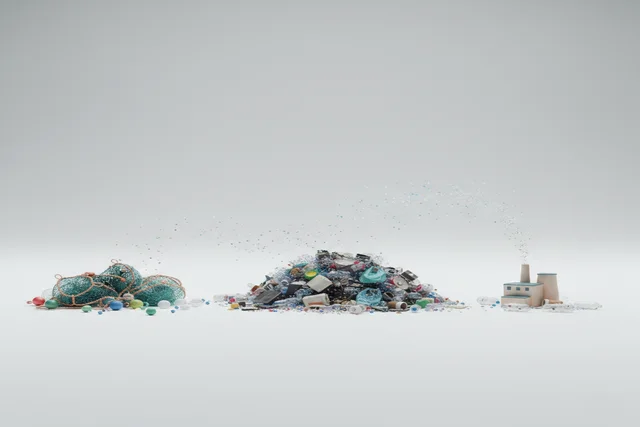
Most people assume that plastic in the air comes from trash, but the reality is far more complex. The 2026 environmental landscape identifies three major sources:
Tire Wear: The Invisible Highway Pollution
Every single time a vehicle moves, a silent environmental disaster occurs. As tires grind against the rough asphalt of the road, the friction shreds microscopic bits of synthetic rubber and plastic polymers into the air. This isn’t just a local problem for people living near highways.
A landmark study published in Nature Communications confirmed that tire wear particles are so light that high-altitude winds can easily carry them. Researchers have found tire debris in remote marine air and even frozen within Arctic ice. This means the simple act of driving to a grocery store contributes to a global cloud of microplastics in the air that can travel thousands of miles before settling into someone else’s lungs.
Synthetic Textiles
Look at the label on your shirt. If it says polyester, nylon, or acrylic, you are wearing plastic. The rise of “fast fashion” has turned our indoor air into a soup of synthetic fibers. Unlike natural cotton or wool, which eventually break down, synthetic fabrics shed thousands of tiny plastic threads every time you move.
Recent observations show that walking across a carpet, folding laundry, or even adjusting your jacket releases a “puff” of fibers that linger in the air for hours. In 2026, this has become a major concern for indoor air quality, as we spend 90% of our time in enclosed spaces where these airborne microplastics reach their highest concentrations.
The Ocean Atmosphere Loop
For decades, we thought the ocean was a “sink” where plastic would stay forever. We were wrong. Scientists now describe the ocean as an “active source” of atmospheric pollution. Through a process called sea spray aerosolization, waves crashing on the shore eject marine microplastics back into the atmosphere. The wind then picks up these particles and carries them back onto land, creating a “boomerang effect.”
Recent 2026 data show that coastal regions and countries with massive coastlines, such as China, Indonesia, and the United States, are seeing the highest concentrations of this ocean-borne plastic air. In fact, research published in Nature Communications shows that even the air over the remote Atlantic and Pacific oceans is now saturated with microparticles. This means that even if a country bans plastic today, its people will still inhale microplastics carried by winds from the world’s oceans, turning it into a weather-driven phenomenon that no border can block.
Health Impact: What Happens After We Inhale Plastic?
The most haunting question of 2026 isn’t just where the plastic goes, but what it does once it enters the human body. When we talk about microplastics in the air, we aren’t just discussing a “breathing nuisance”; we are confronting a serious, systemic health threat.
Deep Lung Accumulation and Respiratory Damage
Our respiratory system has natural filters, but airborne microplastics are designed to bypass them. Particles sized between 1 and 10 micrometers are small enough to “burrow” deep into the alveolar sacs of our lungs, the very place where oxygen enters our blood.
In a shocking recent study, scientists discovered that these particles cause chronic inflammation that doesn’t just go away. Think of it like having microscopic grains of sand constantly scratching your lung tissue. Evidence from wildlife already sounds the alarm; researchers have found microplastics in the lungs of nearly every bird species sampled in urban areas. Because birds have highly efficient respiratory systems, they serve as the “canary in the coal mine” for humans. If their lungs become saturated, our lungs are almost certainly next.
Entry Into the Bloodstream: Beyond the Lungs
While microplastics are concerning, nanoplastics are the real nightmare. These particles are so tiny that they can cross biological barriers. By 2026, medical research has moved from theory to alarming reality: airborne microplastics had been found in the human bloodstream, liver, and even placentas.
The medical community is now investigating a direct link between these internal plastics and a rise in cardiovascular issues. When a plastic particle enters your bloodstream, it can cause “oxidative stress,” potentially triggering strokes or heart attacks. It turns plastic from an environmental nuisance into a systemic biological poison.
Chemical Toxicity: The “Trojan Horse” Effect
Perhaps the most dangerous aspect of breathing plastic is what scientists call the “Trojan Horse Effect.” Microplastics are highly porous and act like tiny magnets for other environmental toxins.
Researchers have found particles coated with more than 28 toxic chemicals, including carcinogens like benzene and hormone-disrupting phthalates. When you inhale microplastics in the air, the plastic particle is merely the delivery vehicle; once inside your lung tissue, it releases these concentrated toxins directly into your cells. This “multiplier effect” means that one single breath can deliver a cocktail of poisons that would otherwise never reach so deep into your body.
Indoor vs Outdoor Concentrations: Why Homes Are Plastic Hotspots
Most people assume that closing doors and windows protects them from pollution. However, in 2026, research shows that indoor concentrations of airborne microplastics can be up to ten times higher than outdoor levels. Our homes have become “plastic traps” due to the high volume of synthetic materials we use daily.
The real culprit is our modern lifestyle. Synthetic carpets, polyester sofas, and nylon curtains constantly release microplastics into the air. Every time you sit on a sofa or walk across a synthetic rug, thousands of microscopic fibers are shed into the stagnant indoor air. Unlike outdoors, where wind disperses particles, indoor spaces let them accumulate.
This is particularly alarming for families with small children. Since babies crawl closer to the floor—where plastic dust settles—their exposure rate is significantly higher. Without proper ventilation, we are essentially breathing a recycled “soup” of polymers, making indoor air quality a critical health concern for 2026.
Reducing Airborne Microplastics: Best Ways to Protect Your Air
Protecting yourself from microplastics in the air doesn’t have to be complicated. In 2026, these four steps are the most effective:
- Upgrade to HEPA Filtration: Standard air filters often miss nanoplastics. Ensure your home and office use HEPA H13 or H14 filters, which are designed to trap particles as small as 0.1 microns.
- Embrace Natural Textiles: Slowly phase out polyester and nylon. Choosing cotton, wool, linen, or silk for your clothing and bedding can greatly reduce the amount of airborne microplastics shed indoors.
- The “Damp Dusting” Rule: Never use a dry feather duster; it only launches plastic particles back into your breathing zone. Use a damp microfiber cloth to trap dust and wash it carefully.
- Increase Ventilation: If you don’t live near a high-traffic highway, open your windows for 15 minutes twice a day to flush out stagnant, plastic-heavy indoor air.
The discovery of microplastics in the air is a defining environmental challenge of 2026. It is a wake-up call that our “Plastic Age” has left a permanent mark on the very atmosphere that sustains us. We can no longer treat air pollution as just smoke or smog; we must recognize it as a synthetic crisis.
By understanding how much plastic we breathe daily, we can start demanding stricter regulations on tire manufacturing and textile production. Your lungs deserve pure oxygen, not a cocktail of polymers. It is time we take the invisible threat of airborne microplastics seriously—for our health, our children, and the future of our planet
Read more related articles: https://www.climatechallange.com/understanding-the-effects-of-microplastics-on-our-environment/
FAQS
Q1. How much plastic do we breathe daily?
Ans. Research suggests an average person inhales up to 70,000 microplastic particles every day. This equals roughly 5 grams of plastic a week—the weight of a credit card—entering our bodies through food, water, and microplastics in the air.
Q2. Can microplastics enter the bloodstream through the air?
Ans. Yes. In 2026, medical studies confirmed that airborne microplastics (specifically nanoplastics) are small enough to cross the blood-air barrier in the lungs, potentially traveling to the heart, liver, and other vital organs.
Q3. What is the biggest source of microplastics in the air?
Ans. The leading source of airborne microplastics is tire wear. As vehicles drive, the friction between tires and the road releases millions of synthetic rubber particles into the atmosphere, which can travel thousands of miles.