Why 2025 Is Ranking Among The Warmest Years Record In History
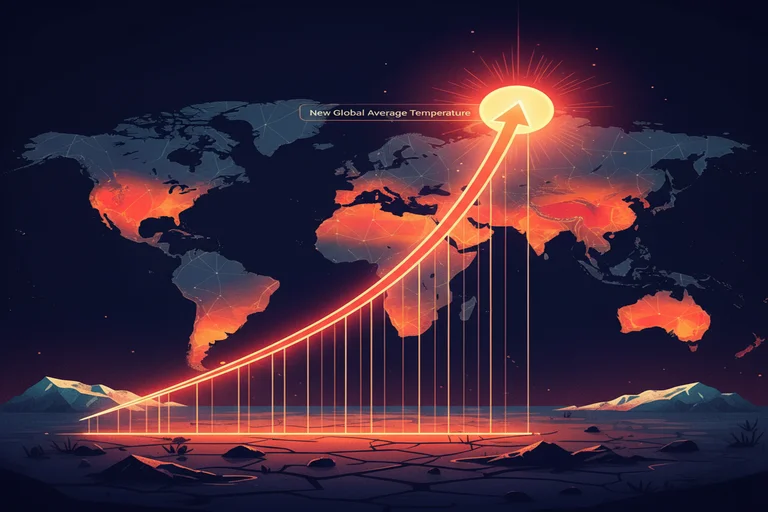
Climate scientists & major organizations like the World Meteorological Organization (WMO) are sounding the alarm as 2025 is ranking among the warmest years on record, possibly the second or third-hottest ever. From rising sea levels to extreme heatwaves, the signs of accelerating global warming are becoming undeniable. Experts attribute this unprecedented warmth to a mix of greenhouse gas emissions, El Niño events, and deforestation, all of which are exerting intense thermal pressure on the planet. Communities, wildlife, and ecosystems are already facing the consequences, highlighting the urgent need for climate action.
What Is Driving the Record-Breaking Temperatures in 2025?
Several factors are converging to make 2025 on track to be the hottest year in recorded history:
A principal driver of soaring global temperatures is the dramatic rise in atmospheric greenhouse gases. In 2024, levels of carbon dioxide (CO₂), methane (CH₄), and nitrous oxide (N₂O) reached record highs—CO₂ alone rose to around 423.9 parts per million.
These gases trap the sun’s heat in the atmosphere, preventing it from escaping back into space—intensifying the greenhouse effect. As a result, more solar energy stays near the Earth’s surface, pushing average temperatures upward. This accumulation is largely driven by human activities: burning fossil fuels, deforestation, agriculture, and industrial processes all contribute large quantities of greenhouse gases.
Because greenhouse gases
Lingering in the atmosphere and ocean for decades or longer, their warming impact is long-term—meaning that emissions from years ago still influence today’s climate.
Elevated Ocean Heat Content
The world’s oceans are acting like giant heat sponges—in 2024 and into 2025, ocean heat content reaches a record high. Over 90% of the excess heat added to Earth’s climate system ends up in the oceans rather than the atmosphere, so warmer oceans slowly release heat over time, keeping global temperatures elevated.
Warming oceans also disrupt global weather patterns, intensify heatwaves, and reduce the ability of seas to absorb CO₂—weakening a natural climate buffer. Moreover, warmer seas accelerate ice‑melt, sea‑level rise, and shifts in marine ecosystems—reinforcing a feedback loop that further amplifies warming.
Natural Climate Variability (ENSO) and Its After‑Effects
Climate variability driven by the El Niño–Southern Oscillation (ENSO) strongly influences year-to-year temperature changes. The powerful 2023–24 El Niño raises global temperatures about 0.2 °C, pushing heat records even higher.
Although 2025 saw a shift toward neutral or even weak cooling conditions (associated with La Niña), global temperatures remained extraordinarily high—indicating that human-induced warming had already raised the baseline so much that natural cooling couldn’t offset it entirely.
This shows that natural climate variability now acts on top of a much warmer planet—so even “normal” years are hotter than what used to be considered extreme. El Niño events still amplify the heat, but the background level is already elevated. So while ENSO still influences global temperatures, it’s no longer the main driver of record heat. Human-caused warming has become the new baseline.
Decline in Reflective Clouds and Changing Aerosols—Lower Planetary Albedo
Lower‑level clouds—especially over tropical and mid‑latitude oceans—have thinned out significantly over the past decade. A drop in these clouds means less sunlight is reflected into space, reducing Earth’s overall reflectivity (albedo) and thus allowing more solar energy to reach and warm the surface.
At the same time, concentrations of human‑made aerosols (tiny particles in the air that help form clouds) have declined due to stricter pollution controls, which reduces the number of condensation nuclei needed to create bright, reflective clouds.
As a result, clouds that do form tend to be fewer in number and less reflective, weakening a previously important natural cooling effect. This shift—fewer bright clouds and a clearer, less reflective atmosphere—is now understood as a key amplifier of global warming, contributing significantly to the record‑high global temperatures in recent years.
Global Temperature Trends in 2025
Recent data shows that 2025 is on track to be the second- or third-warmest year since modern record-keeping began. Between January and August, global near-surface temperatures averaged around 1.42°C above pre-industrial levels. While slightly lower than the 2024 peak, this is still dangerously high.
This warming trend fits the broader pattern seen over the past decade. Every year from 2015 to 2025 has ranked among the 11 hottest on record, showing a clear acceleration in global warming. These rising temperatures are reshaping weather patterns, disrupting water cycles, and reducing agricultural productivity—creating serious challenges for both human communities and natural ecosystems.
Impacts of Rising Temperatures

As global heat climbs, extremes of weather and climate are becoming the new normal—and the impacts are hitting both nature and people hard.
Rising temperatures are making heatwaves more frequent, longer, and deadlier. In 2024 alone, climate change added an average of 41 extra days of dangerous heat worldwide, increasing risks of heatstroke, dehydration, and other heat‑related illnesses for millions of people.
Warming also disrupts water systems and weather patterns. Warmer air holds more moisture, which makes rainfall more intense when it happens—leading to heavier downpours, flash floods, and extreme storms. At the same time, many regions experience stronger droughts as higher temperatures increase evaporation, threatening freshwater supplies and making farming more difficult.
Agriculture and food security are among the most affected sectors. Extreme heat, unpredictable rainfall, and drying soils reduce crop yields and strain livestock — putting nearly 1.2 billion people who rely on farming at risk.
Ecosystems are under pressure. Warming oceans undermine marine life, damaging coral reefs and fisheries, while on land, some species — plants and animals alike — may be unable to adapt fast enough to rising temperatures, leading to habitat loss, migration shifts, or even extinction.
For low‑lying coastal zones and communities, melting glaciers and rising seas add another layer of danger: as ice sheets shrink and seas expand, sea levels rise — increasing risks of flooding, coastal erosion, and displacement for millions living in vulnerable areas.
2024 and 2023: The Hottest Years on record
According to multiple scientific organizations, including NOAA, NASA, and the World Meteorological Organization (WMO), 2024 was the hottest year on record, followed by 2023 as the second hottest. This highlights a decade of unprecedented heat.
2024: Recorded as the warmest year ever, with a global average surface temperature about 1.55°C above the pre-industrial average.
2023: Ranked as the second-warmest year, with a temperature anomaly of 1.18°C above pre-industrial levels.
The data clearly show how global temperatures have been steadily rising, underscoring the urgent need to address climate change.
How Scientists Track This Global Heat
Climate researchers rely on sophisticated tools to measure and analyze temperature trends:
Satellites: Provide accurate global temperature readings from land, ocean, and atmosphere.
- Weather Stations: Ground-level data helps validate satellite observations.
- Ocean Buoys: Track sea surface temperatures, which directly influence global climate patterns.
- Climate Models: Predict future temperature trends and help understand the drivers behind extreme heat.
What Experts Are Warning
Climate scientists warn that the planet is nearing a tipping point. Even if emissions are reduced in the coming years, much of the warming seen in 2025 is already “locked in” by past greenhouse gas accumulation. International cooperation and urgent policy measures are necessary to mitigate the worst impacts of global warming.
2025 Is ranking among the warmest years record, sending a clear message: urgent action is needed. Rising global temperatures, extreme weather events, melting ice, and warming oceans are making the impacts of climate change increasingly unavoidable. These trends are measurable, serious, and require attention from governments, businesses, and individuals alike. By taking proactive steps today, society can slow global warming, protect ecosystems, and safeguard human health for the future.
Read more related articles> https://www.climatechallange.com/paris-agreement-1-5c-threshold-what-it-means-for-our-planet/
FAQS
Q1. Is 2025 going to be a heatwave?
Ans. Summer 2025 brought four heatwaves in the UK, each relatively short and separated by periods of near-normal temperatures. The highest temperature reached 35.8 °C in Faversham, Kent — just below the 35.9°C peak recorded in 1976 and still under the UK’s all-time high of 40.3°C, set in July 2022.
Q2: Why is 2025 considered one of the warmest years on record?
Ans. Rising global greenhouse gas emissions, warming oceans, and fewer reflective clouds have all pushed temperatures to record highs. Natural events like El Niño further amplified the heat in certain regions. Together, these factors are making 2025 one of the hottest years in modern history.
Q3: How does urbanization contribute to rising temperatures?
Ans. Cities trap extra heat because of concrete surfaces, high energy use, and limited green spaces, creating “urban heat islands.” As a result, urban areas become hotter than their surroundings. Smart urban planning and green infrastructure can help reduce these effects.