Extreme Weather Trends To Watch In Early 2026
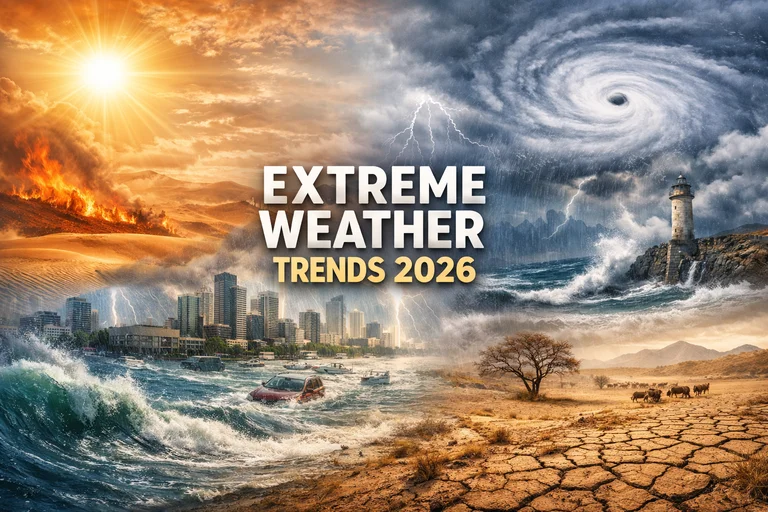
Extreme weather trends in 2026 are shaping up to be some of the most unpredictable events in recent history. From heatwaves to sudden floods, these Extreme Weather Trends 2026 will impact millions across the globe. Understanding them early can help communities, governments, and individuals prepare better. Stay informed as we explore what scientists and meteorologists predict for early 2026 worldwide.
Global Overview of Extreme Weather Trends 2026
Extreme weather is no longer a future threat; it is now happening regularly around the world. Over the past few years, scientists have recorded record-breaking temperatures, stronger storms, and unusual rainfall patterns. Human activities, along with natural climate variations, are driving climate change, and experts expect these changes to continue through 2026.
Rising temperatures, shifting ocean currents, and higher moisture levels in the atmosphere are intensifying these extreme events. From extreme heat waves to unexpected heavy rainfall, no region remains completely safe. By understanding these patterns, communities can better prepare and reduce the risks linked to climate-related disasters.
1. Increasing Frequency and Severity of Heatwaves
One of the most prominent Extreme Weather Trends of 2026 is the rising frequency and intensity of heatwaves around the world. Scientific observations show that global average temperatures are continuing to climb, and regions across multiple continents are experiencing longer, hotter heatwaves than ever before. These extreme heat events not only affect human health but also strain energy systems, agriculture, and water resources.
Urban areas face heightened risk due to the “urban heat island” effect, where concrete and asphalt absorb and retain heat, making cities significantly hotter than surrounding rural areas. Prolonged exposure to these conditions increases the likelihood of heat-related illnesses and mortality, particularly among vulnerable populations such as the elderly and outdoor workers.
In addition to direct health impacts, heatwaves disrupt agriculture and food production. Crops exposed to extreme temperatures for extended periods can fail, reducing yields and driving up food prices. Water scarcity also intensifies as higher temperatures increase evaporation rates, creating pressure on reservoirs, rivers, and groundwater.
The scientific consensus is clear: without adaptation measures, heatwaves will continue to grow in severity. Early warning systems, access to cooling facilities, and public awareness campaigns are essential tools to reduce risks and safeguard communities as part of Extreme Weather Trends 2026.
2. More Intense Rainfall and Flooding Events
Another key aspect of Extreme Weather Trends 2026 is the increase in extreme rainfall and flooding events worldwide. Warmer air holds more moisture, which intensifies storms and leads to heavier precipitation over shorter periods. This creates a higher risk of flash floods, river overflows, and urban drainage failures, impacting millions of people and critical infrastructure.
Regions that previously experienced moderate rainfall are now seeing unprecedented downpours, sometimes triggering multiple flood events in a single season. The combination of saturated soils and continuous heavy rain exacerbates the impact, causing landslides, road collapses, and property damage.
Coastal areas face additional threats as rising sea levels and storm surges amplify flood risks during tropical storms and cyclones. Cities and low-lying communities are particularly vulnerable, requiring immediate adaptation measures like improved drainage systems and flood-resilient construction.
These rainfall extremes also disrupt agriculture and water management. Crops can be destroyed by sudden flooding, while water treatment systems may struggle to handle contaminated runoff. Early warning systems, emergency planning, and climate-resilient infrastructure are essential to reduce the impacts of these increasingly severe Extreme Weather Trends 2026.
3. Stronger Storms and Cyclones
A significant part of Extreme Weather 2026 is the increasing intensity of storms and cyclones globally. Warmer ocean temperatures are fueling more powerful tropical storms, hurricanes, and cyclones, giving them higher wind speeds and heavier rainfall than in previous years. These storms can devastate coastal areas, damage infrastructure, and disrupt transportation and communication networks.
Changes in atmospheric circulation are also causing some storms to linger longer or follow unusual paths, increasing the potential for widespread destruction. Regions that previously experienced moderate storm activity are now at risk of more severe events, highlighting the global reach of extreme weather patterns.
Stronger storms are not just a threat to infrastructure but also to human safety. Flooding, landslides, and storm surges can displace populations, cause casualties, and create long-term economic challenges. Preparing communities with robust evacuation plans, early warning systems, and storm-resilient infrastructure is crucial.
The combination of rising sea levels and more energetic storm systems means that coastal cities and vulnerable regions need to prioritize disaster preparedness. Investing in climate-resilient infrastructure and emergency response systems is essential to mitigate the impacts of these increasingly severe Extreme Weather Trends 2026.
4. Droughts and Water Scarcity
Another major concern in Extreme Weather Trends 2026 is the persistence of droughts and water scarcity across many regions. Rising global temperatures increase evaporation rates from soil, rivers, and reservoirs, reducing water availability and stressing both natural ecosystems and human communities. Extended dry periods are becoming more frequent, impacting agriculture, energy production, and access to clean water.
Regions dependent on rainfall for crop irrigation are particularly vulnerable, as prolonged drought can lead to crop failures, reduced food security, and economic losses. Additionally, water scarcity affects urban populations by limiting drinking water and increasing competition for limited resources.
Wildfires also become more likely during extended droughts, as dry vegetation provides fuel that can rapidly ignite and spread. These fires not only threaten communities but also release large amounts of carbon dioxide, further accelerating climate change.
Addressing drought risks requires proactive water management, including the use of drought-resistant crops, efficient irrigation techniques, and policies promoting sustainable water use. Early planning and adaptation strategies are critical to mitigate the severe consequences of these Extreme Weather Trends 2026.
Preparing for Extreme Weather Events
While extreme weather is inevitable, preparation can significantly reduce its impact. Key strategies include:
Early warning systems: Providing timely alerts to populations before heatwaves, storms, and floods.
Resilient infrastructure: Designing buildings, roads, and bridges to withstand floods, storms, and heat stress.
Community education: Informing the public about emergency plans, safe shelters, and coping strategies.
By implementing these measures, communities can reduce the immediate risks and long-term impacts of extreme weather.
Long-Term Implications
The long-term consequences of Extreme Weather Trends 2026 are profound. Economically, frequent disasters strain public budgets and insurance systems. Health risks rise due to heat stress, water-borne diseases, and respiratory problems linked to wildfires. Additionally, repeated extreme events can lead to social disruption and displacement, particularly in vulnerable regions.
Addressing these challenges requires a combination of mitigation to reduce emissions and adaptation to cope with unavoidable impacts. Climate-informed policies, global cooperation, and public engagement are essential for navigating the increasing volatility of the planet’s weather systems.
Read more related articles: https://www.climatechallange.com/changing-weather-trends-and-climate-transformations/
FAQs
Q1. What are the extreme weather trends for 2026
Ans. These trends include patterns of heatwaves, heavy rainfall, floods, storms, and droughts that are expected to increase in frequency and intensity due to climate change.
Q2. Are extreme weather events increasing globally?
Yes, recent years have seen record-breaking heat, stronger storms, and more intense floods worldwide, reflecting broader climate change impacts.
3. How can communities prepare for extreme weather?
Ans. Early warning systems, resilient infrastructure, and public education are key to reducing risks and protecting lives.
Q4. Are storms becoming stronger or more frequent?
Ans. Storms are generally becoming stronger due to warmer ocean temperatures, although frequency may vary by region.